

Benefits of Collagen with Probiotics: A Doctor's 2026 Guide to Synergy
What if I told you that the high-priced collagen supplement you take every morning might be doing nothing more than fueling your frustration? It's a common clinical reality; patients often ask me about the real benefits of collagen with probiotics because they're tired of persistent bloating and dull skin despite a cabinet full of expensive powders. You likely agree that the wellness market feels like a confusing maze of marketing claims that rarely translate into the radiant skin or joint comfort you were promised.
The truth is that your body doesn't just need the structural "bricks" of collagen; it needs the "masons" to lay them correctly. This guide explains how combining these two elements creates a powerful internal synergy for your skin, joints, and gut. You'll learn why simply swallowing these ingredients isn't enough. I'll explain how proprietary delivery technology ensures biological viability, turning your routine into a functional success. We'll break down the science of the gut-skin axis and provide a practical roadmap to achieving a flat stomach, stronger hair, and the physical mobility you deserve in 2026.
Key Takeaways
- Discover how collagen acts as the body's structural "bricks" while probiotics serve as the expert "construction crew" that ensures these proteins are utilized effectively.
- Master the gut-skin axis by understanding how the benefits of collagen with probiotics can stop "inflammaging" at the source for a truly radiant complexion.
- Learn the critical difference between Type I and Type II collagen so you can accurately target your specific goals, from hair growth to joint cartilage repair.
- Implement the "Glow from Within" protocol, which uses strategic timing and a 30-day consistency rule to trigger measurable biological changes in your body.
- Understand the "Acid Bath" phenomenon and why proprietary micro-encapsulation technology is the only way to ensure your supplements actually reach their destination alive.
Why Collagen and Probiotics are the 2026 Power Couple
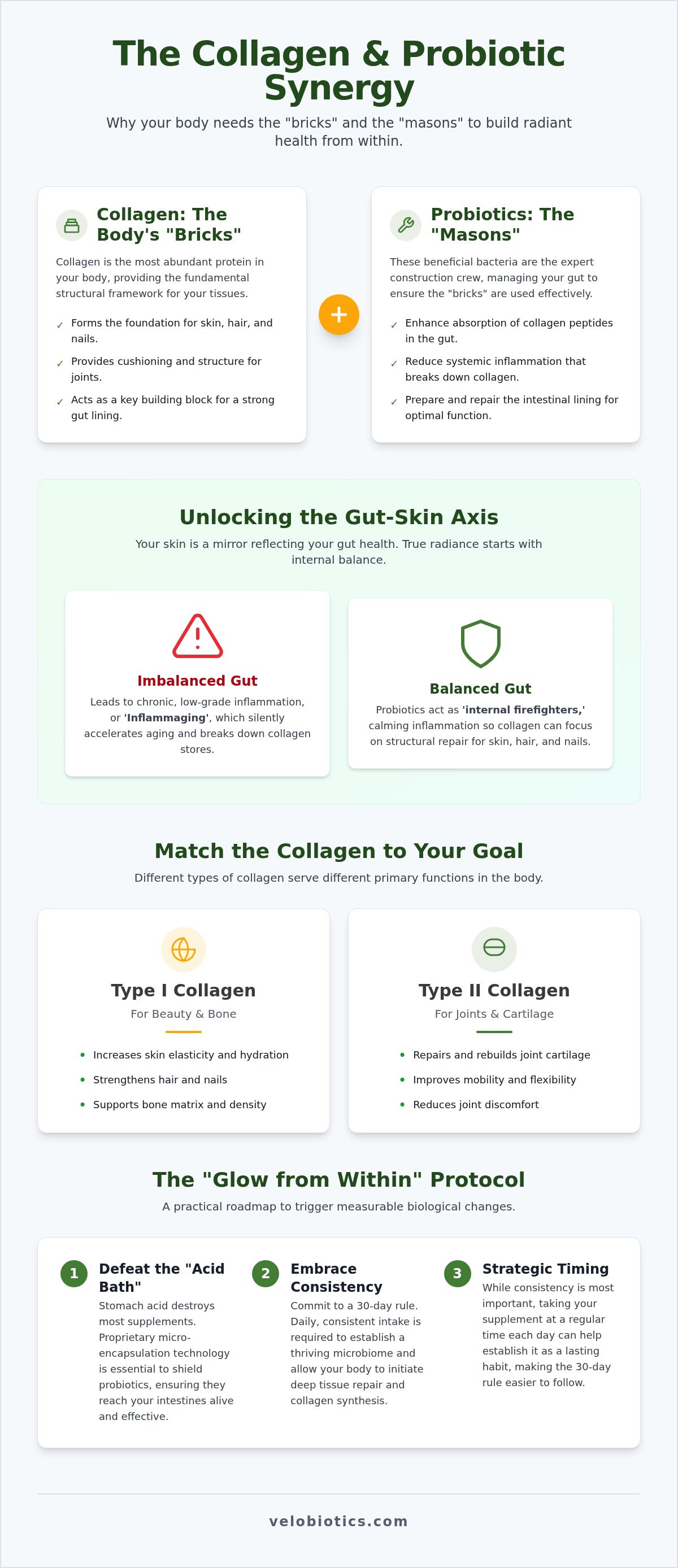
Collagen is the body's most abundant protein, acting as the structural framework or "bricks" that hold our various tissues together. While many people supplement with it to combat the natural signs of aging, the results are often lackluster because the body's internal management system isn't optimized for uptake. This is where probiotics come into play. These beneficial bacteria act as the construction crew, managing the gut environment to ensure that the structural proteins you consume are actually processed and utilized correctly.
The true benefits of collagen with probiotics emerge from the concept of biological synergy. When these two are combined, the probiotics enhance the absorption of collagen peptides by maintaining a healthy and receptive intestinal lining. As a physician and founder, I've observed that this duo represents a significant evolution in clinical nutrition. We've moved beyond simple, isolated supplementation toward a comprehensive, systemic approach that respects how our internal organs communicate with our external features.
To better understand this concept, watch this helpful video:
The Biological 'Handshake': How They Work Together
A thriving microbiome significantly improves the enzymatic breakdown of large proteins into usable, bio-available peptides. Probiotics also facilitate the production of short-chain fatty acids, or SCFAs, which support the gut lining and reduce systemic inflammation. This is vital because collagen alone often isn't enough for individuals dealing with leaky gut issues. The probiotics act as a primer, repairing the surface and allowing the collagen to effectively seal and strengthen the intestinal barrier for long-term health.
What Science Says About the Duo in 2026
Recent clinical findings on the gut-skin axis have validated the shift from single-ingredient products to systemic wellness solutions. In 2026, the health industry has fully embraced bio-available combinations that respect the complexity of our internal systems. Science now confirms that a calm, balanced gut is a mandatory prerequisite for collagen retention. By addressing the environment and the building blocks simultaneously, we can bypass the efficacy gaps that have plagued traditional supplements for years.
The Gut-Skin Axis: A Doctor's View on Radiant Health
In my clinical practice, I often tell patients that their skin is a biological mirror. It’s a direct reflection of what’s happening in the gastrointestinal tract. If your gut is in a state of chaos, your face will show it through redness, breakouts, or premature fine lines. This bidirectional communication system is known as the gut-skin axis. When we discuss the benefits of collagen with probiotics, we aren’t just talking about aesthetics. We’re talking about fixing the internal environment so that your external appearance can thrive.
Reducing 'Inflammaging' with Probiotics
Inflammaging refers to chronic, low-grade inflammation that silently accelerates the aging process. It’s like a slow-burning fire in your tissues. Probiotics act as the body’s internal firefighters. By modulating the immune response in the digestive tract, they reduce the systemic inflammatory load. This is crucial because high levels of inflammation actually trigger enzymes that break down your natural collagen stores. When the gut is calm, your body can finally stop defensive maneuvers and start focusing on the structural repair of your skin, hair, and nails.
Collagen for Gut Lining Repair
While we often think of collagen for its "glow," it’s also a vital component of the gut lining itself. Specific amino acids like glycine and proline, found in high concentrations in 16 Strains Probiotics Collagen Peptides, are the building blocks required to "seal" a porous gut. Glycine, for instance, is not just a building block; it's a precursor to glutathione, which is your body's master antioxidant. If the gut lining is compromised, toxins can leak into the bloodstream, triggering the very inflammation we’re trying to avoid. Probiotics play a supporting role here by maintaining the integrity of that seal over the long term. This creates a feedback loop: the collagen repairs the barrier, and the probiotics protect the repair crew.
This synergy doesn't stop at the skin. Stronger hair and resilient nails are often the first visible signs that your internal environment is balancing out. When you provide the body with bioavailable peptides alongside active bacterial strains, you're optimizing the metabolic pathways responsible for keratin production. Understanding the systemic benefits of collagen with probiotics is the key to moving beyond surface-level beauty. If you’re looking for a gold standard in this type of gut-skin synergy, I recommend exploring specialized formulations like Almasi Probiotics Collagen Powder to support your daily routine.
Type I vs. Type II Collagen: Matching Strains to Your Goals
Not all supplements are created equal, and in my experience, the biggest mistake people make is choosing a generic "collagen" without understanding the types. If you want to maximize the benefits of collagen with probiotics, you have to match the protein type to your specific biological goals. Type I and Type II collagen serve very different masters in your body. While Type I is the architect of your skin and hair, Type II is the dedicated mechanic for your joints.
Strain diversity is the secret weapon of modern clinical nutrition. Think of your gut like a garden. If you only plant one type of flower, the ecosystem is fragile. A 16-strain formulation provides the biological variety needed to handle different metabolic stressors. These strains collaborate to break down the collagen into smaller, highly absorbable fragments. This multi-strain approach is why people often see results with complex formulas when they’ve failed with basic ones. It ensures that no matter your unique gut chemistry, there’s a strain ready to facilitate the absorption process.
The Joint Support Squad: Type II + Specific Strains
Type II collagen is the primary protein in your joint cartilage, acting as the shock absorber for your skeletal system. It’s essential for maintaining the integrity of the "cushion" between your bones. Certain probiotic strains actually assist in the synthesis of B-vitamins and the absorption of minerals like calcium, which are vital for bone and joint health. If you’re dealing with nagging morning stiffness, this combination works to lower joint-specific inflammation. It’s a proactive strategy to keep your mobility high as you age, ensuring your "mechanic" crew has the parts they need to keep the machine running smoothly.
The Beauty Brigade: Type I + Skin-Specific Probiotics
Type I collagen is the undisputed "Gold Standard" for anyone chasing aesthetic improvements. It provides the structural scaffolding for your dermis, the layer of skin responsible for firmness. When you pair Type I with skin-specific probiotics, you create a dual-layered defense against aging. These bacteria help maintain the skin’s acidic mantle, which keeps harmful pathogens out and moisture in. For those focused on long-term skin elasticity and hair thickness, I suggest using Almasi Probiotics Collagen Powder. It’s a targeted way to ensure you're reaping the full benefits of collagen with probiotics for a truly visible transformation.
The 'Glow from Within' Protocol: Practical Daily Tips
Setting a clinical foundation is one thing, but implementing it into a busy life is where many of my patients struggle. To truly reap the benefits of collagen with probiotics, you need a protocol that respects your body’s natural rhythms. Timing is your first lever. While collagen can be taken anytime, I typically recommend morning consumption on a relatively empty stomach. This maximizes peptide uptake before your digestive system is occupied with processing heavy meals. However, consistency is the true king of this protocol. I tell my patients to follow the "30-day rule" because that is the minimum time required for a full cycle of skin cell turnover and for a probiotic colony to stabilize in the gut.
Don't forget to support your "crew" with prebiotics and high-fiber foods. These act as the fuel for the probiotics we discussed earlier. Hydration is also non-negotiable. Collagen works as a humectant, meaning it binds water to the skin; if you're dehydrated, those peptides have nothing to work with. Finally, listen to your gut. Monitor your feedback. If you notice less bloating or more regular digestion within the first two weeks, it's a clear sign that the internal synergy is taking hold. This protocol isn't just about a single scoop; it's about creating an environment where the benefits of collagen with probiotics can actually manifest.
What to Eat to Boost Your Supplement
Think of Vitamin C as the essential co-factor. Without it, your body cannot effectively knit collagen fibers together into a stable structure. I suggest pairing your supplement with citrus, strawberries, or bell peppers. You can also complement your routine with small amounts of fermented foods like kimchi or kefir to provide a diverse background of live cultures. Just as importantly, avoid the "collagen killers" like excessive refined sugar. Sugar triggers a process called glycation, which creates "advanced glycation end-products" that cross-link and damage your existing protein structures. Excessive UV exposure is another culprit that degrades your structural framework from the outside in.
The Doctor's Tip on Mixing
As a scientist, I have to remind you that probiotics are living organisms. Never mix your supplement into boiling hot coffee or tea. High heat can denature the proteins and, more importantly, kill the beneficial bacteria before they even reach your mouth. Instead, get creative with Almasi Probiotics Collagen Powder by whisking it into lukewarm lattes, morning smoothies, or yogurt bowls. Regarding the "empty stomach" debate: while collagen peptides are absorbed well alone, taking your probiotics with a light, fat-containing snack can often help the bacteria survive the stomach's acid bath. If you're ready to start your own 30-day transformation with a formula designed for maximum viability, you can find our doctor-led solutions at velobiotics.com.
Beyond the Powder: Why Viability is the Secret to Real Results
The most sophisticated formula in the world is useless if it never reaches its destination. In my years as a physician, I have seen patients spend thousands on supplements that fail because they ignore a basic biological hurdle: the "Acid Bath." Your stomach is a highly acidic environment designed to break down proteins and neutralize foreign bacteria. While this is great for digestion, it is a death trap for standard probiotics. This is the primary reason why many people don't experience the full benefits of collagen with probiotics. The bacteria simply don't survive the journey.
There is a significant difference between "CFUs at the time of manufacture" and "viable CFUs in the gut." Most brands use the former to impress you with high numbers, but those numbers are often a marketing distraction. A supplement could claim 50 billion bacteria, but if 99 percent of them perish in your stomach acid, you aren't getting the clinical support you paid for. Delivery technology is far more important than the total count. We focus on biological viability, ensuring that the active ingredients are actually utilized by your body rather than just passing through your system.
The Science of Micro-Encapsulation
Our solution to the viability problem is a proprietary micro-encapsulation technology. Think of it as a microscopic, high-tech shield that encases every single probiotic cell. This protective seal remains intact through the harsh, low-pH environment of the stomach and only dissolves when it reaches the more alkaline environment of the small intestine. This time-release mechanism delivers the probiotics exactly where they are needed to colonize and support the breakdown of collagen peptides. This level of precision is why the benefits of collagen with probiotics are only truly realized when the delivery system is as advanced as the ingredients. This technology is what makes Velobiotics a leader in the 2026 health landscape.
Choosing a Trusted Health Partner
We maintain a "Science First" philosophy because the wellness industry is often clouded by vague promises. Our innovations aren't based on what's trendy; they're rooted in rigorous clinical research and a deep understanding of human physiology. You can learn more about our journey and medical heritage by visiting The Velobiotics Story. We believe that transparency regarding efficacy gaps is the only way to build professional trust with our community. If you are ready to move beyond basic powders and experience true synergy, I invite you to explore the full range of probiotic collagen solutions today.
Achieving Lasting Synergy in 2026
We've moved past the era of single-ingredient supplements. By now, you understand that the true benefits of collagen with probiotics lie in the biological handshake between the structural support of Type I and II peptides and the metabolic management of 16 distinct probiotic strains. It's not just about what you swallow; it's about what survives. Our doctor-founded approach ensures that every dose uses proprietary micro-encapsulation technology to bypass the stomach's acid bath and deliver results directly to your gut and skin.
You now have a practical protocol for timing, hydration, and diet to support this internal construction crew. Whether you're aiming for a flatter stomach, more resilient joints, or that elusive glow, the science is clear: viability is the secret to real transformation. Don't let your wellness routine be a matter of guesswork when clinical evidence is available. We believe in providing the tools you need to bridge the gap between laboratory breakthroughs and your daily routine.
Shop the 16-Strain Probiotic Collagen Peptides for Total Wellness to start your own 30-day biological reset. You're just one step away from feeling as strong on the inside as you look on the outside. Let's get to work.
Frequently Asked Questions
Can I take collagen and probiotics at the same time?
You can absolutely take them together; in fact, the synergy is exactly what we want to achieve. Probiotics assist in breaking down the collagen into smaller, more absorbable fragments. Taking them simultaneously simplifies your routine and ensures you receive the full benefits of collagen with probiotics as the beneficial bacteria reach your digestive tract. It's a highly efficient way to support your gut and skin health at the same time.
How long does it take to see results from collagen and probiotics?
You should expect to see initial biological changes within 30 days of consistent use. This timeframe aligns with the natural cycle of skin cell turnover. While digestive improvements like reduced bloating often appear within the first two weeks, structural changes in your hair, nails, and joint cartilage typically require 8 to 12 weeks of daily supplementation. Consistency is the most important factor in allowing these ingredients to reach therapeutic levels in your tissues.
Does collagen help with bloating caused by probiotics?
Collagen can indeed help mitigate bloating by providing the amino acids necessary to repair and seal the gut lining. When your intestinal barrier is strong, your body handles the introduction of new probiotic strains much more efficiently. If you've struggled with gas when starting traditional supplements, the benefits of collagen with probiotics include a smoother transition as the collagen "sealant" prevents undigested particles from triggering an inflammatory response in your system.
Is it better to take collagen with probiotics in the morning or at night?
I generally recommend taking this duo in the morning on a relatively empty stomach to maximize the uptake of collagen peptides. However, if your goal is deep tissue repair, taking them in the evening can also be effective as your body enters its natural restorative phase during sleep. The most important rule is to pick a time that ensures you don't miss a dose. Just remember to avoid mixing them into boiling liquids to keep the bacteria alive.
Are there any side effects to combining these supplements?
Combining these supplements is generally very safe, though some people might experience mild digestive adjustment during the first few days. This usually manifests as slight gas or a change in bowel habits as your microbiome rebalances. These symptoms are typically transient and resolve as your internal "construction crew" settles in. If you have specific medical conditions or are pregnant, it's always a smart move to consult with your healthcare provider before starting any new regimen.
What is the best type of collagen for skin health in 2026?
Type I collagen remains the gold standard for skin health in 2026 because it is the primary structural component of the dermis. While Type II is vital for your joints, Type I provides the specific scaffolding required for skin elasticity and firmness. For the best aesthetic results, look for hydrolyzed peptides paired with skin-specific probiotic strains. This combination ensures the protein is broken down into a bioavailable form that your skin cells can actually use for repair.
Do I need to take a separate probiotic if my collagen already has it?
You usually don't need an additional probiotic if you're using a high-quality, multi-strain formula like our 16 Strains Probiotics Collagen Peptides. A comprehensive blend provides a sufficient variety of beneficial bacteria to manage your gut health and assist with collagen absorption. Taking too many different products can sometimes overcomplicate your internal ecosystem. One well-formulated supplement that focuses on biological viability is often more effective than a handful of unprotected, single-strain pills that might not survive digestion.
Can kids take collagen with probiotics?
While the ingredients are generally safe, children usually produce ample collagen naturally and don't require structural supplementation. However, probiotics can be very beneficial for a child's developing immune system and digestive health. If you're looking for a solution specifically designed for younger family members, I recommend exploring targeted options like Biokid chewable probiotics. Always speak with a pediatrician before introducing supplements to a child's diet to ensure the dosage is appropriate for their specific age and weight.

Disclaimer
Information and statements regarding dietary supplements/products have not been evaluated by the Food and Drug Administration, MCC/SAHPRA, MHRA, TGA or any other drug regulatory authority and are not intended to diagnose, treat, cure, or prevent any disease. Information on this website is provided for informational purposes only and is a result of years of practice and experience by the author. This information is not intended as a substitute for the advice provided by your physician or other healthcare professional or any information contained on or in any product label or packaging. Do not use the information on this website for diagnosing or treating a health problem or disease, or prescribing medication or other treatment. Always speak with your physician or other healthcare professional before taking any medication or nutritional, herbal, or homeopathic supplement, or using any treatment for a health problem. If you have or suspect that you have a medical problem, contact your healthcare provider promptly. Do not disregard professional medical advice or delay in seeking professional advice because of something you have read on this website.