

Boric Acid vs Fluconazole: A Doctor's Guide to Yeast Relief
What if the "gold standard" pill you've been prescribed for years is actually the reason your yeast infection keeps coming back every single month? It's incredibly frustrating to deal with the persistent itching and discomfort that interrupts your daily life, especially when you feel like you're stuck in a revolving door of clinic visits. You've likely wondered about the best path forward: a simple oral tablet or a vaginal suppository. When we look at the clinical data for boric acid vs fluconazole for yeast infection, the choice isn't just about convenience; it's about how your body handles different fungal species.
I understand the exhaustion that comes with recurrent vulvovaginal candidiasis, a condition that affects up to 9% of healthy women. In this guide, I'll break down the science of your internal environment to help you find immediate relief and a long-term strategy for balance. We'll explore why fluconazole acts as a targeted sniper for acute infections while boric acid serves as a renovator for a compromised vaginal ecosystem, particularly when facing resistant non-albicans species. By the end, you'll have a clear, doctor-backed plan to stop the cycle and restore your biological viability for good.
Key Takeaways
- Understand the fundamental differences between fluconazole, a systemic prescription pill, and boric acid, a localized mineral-based antiseptic.
- Compare the clinical trade-offs of boric acid vs fluconazole for yeast infection, including treatment duration and the impact of systemic versus local side effects.
- Learn the "Three Strikes" rule to help you identify when it’s time to move beyond standard antifungals and pivot toward a more comprehensive restoration strategy.
- Discover why managing an active infection is only half the battle and how incorporating a 10-strain probiotic can help prevent the common "rebound" effect.
- Master a practical, doctor-led framework for restoring your vaginal pH and supporting your body's natural defenses against resistant fungal species.
The Contenders: Understanding Fluconazole and Boric Acid for Yeast Infections
When you're dealing with the unmistakable itch and burning of a yeast infection, you want the fastest route to relief. Most women find themselves at a crossroads, choosing between a prescription pill and a vaginal suppository. This debate often centers on the efficacy of boric acid vs fluconazole for yeast infection, but to choose correctly, you have to understand that these aren't just different forms of the same medicine. They represent two entirely different biological strategies. One travels through your entire system, while the other works directly at the site of the imbalance.
The "one-size-fits-all" approach to vaginal health often fails because it ignores the complexity of the microbiome. If you treat every infection with the same tool without considering the specific fungal strain or your body's internal environment, you risk entering a cycle of recurrence. We need to look at how these treatments interact with your physiology to determine which one will actually restore your balance rather than just providing a temporary fix.
What is Fluconazole?
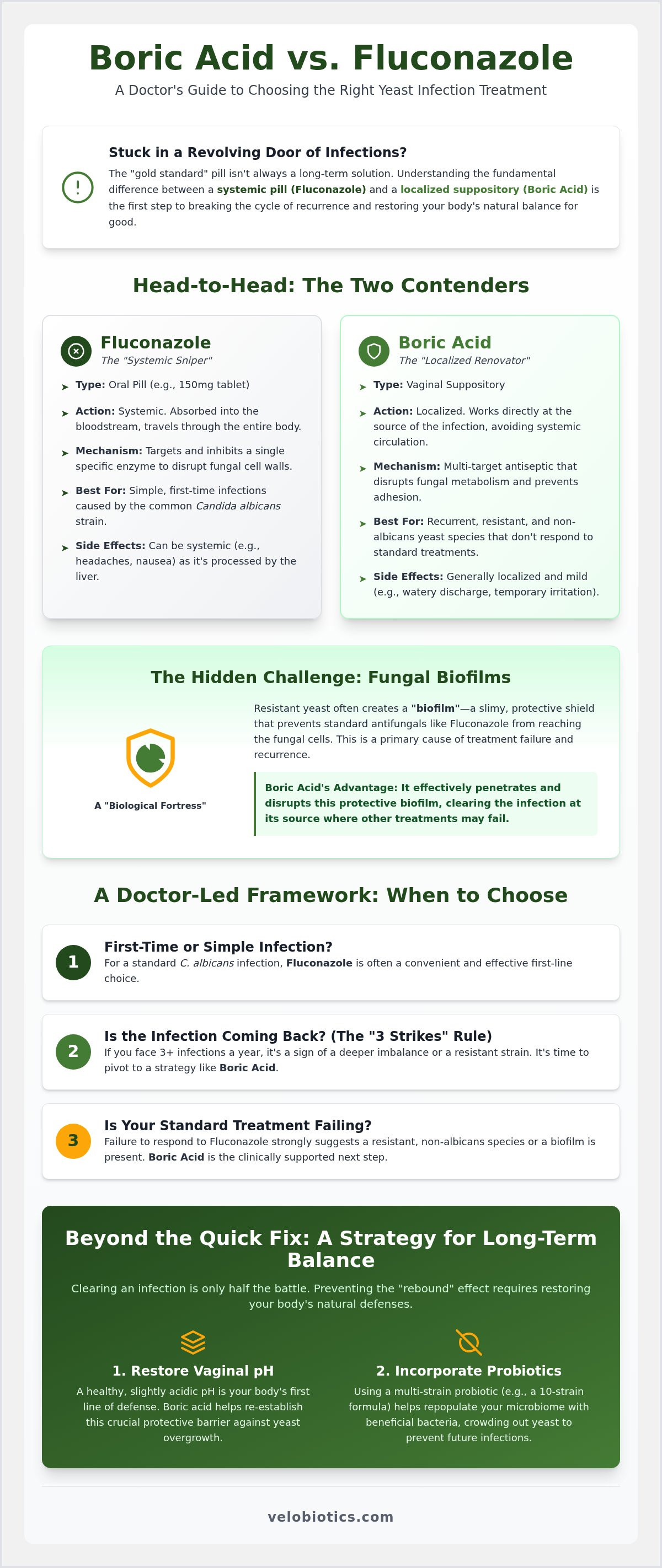
Fluconazole is an oral antifungal medication belonging to the azole class. It's the "heavy hitter" that doctors traditionally reach for first because of its convenience. A single 150mg tablet is absorbed through the gastrointestinal tract, enters your bloodstream, and eventually reaches the vaginal secretions to inhibit the enzyme responsible for fungal cell membrane integrity. While it's highly effective for simple infections caused by Candida albicans, its systemic nature is a double-edged sword. Because the drug must be metabolized by the liver and circulate through the entire body, it can sometimes cause systemic side effects like headaches or nausea before it even reaches the target tissue.
What is Boric Acid?
Boric acid is a mineral-derived antiseptic that has been used in clinical gynecology for over a hundred years. Unlike azole antifungals that target one specific enzyme, boric acid acts as a multi-target agent that disrupts the metabolism of the fungus and prevents it from adhering to the vaginal walls. It's making a massive comeback in modern wellness because it's exceptionally effective against non-albicans species that have developed resistance to standard pills. When used in a targeted delivery system, such as Femina COOKIE FRESH Boric Acid ONLY Suppositories, it provides a localized solution. It focuses its power exactly where the overgrowth is happening, avoiding the need for systemic absorption and supporting a faster return to a healthy pH level.
The fundamental difference lies in the delivery. Fluconazole is a systemic sniper, while boric acid is a localized renovator. If your infection is driven by a resistant strain or a severely disrupted environment, the systemic approach might not have the "biological viability" needed to clear the issue completely, which is why many women find themselves back in the clinic just a few weeks later.
Mechanism of Action: How These Treatments Fight Candida Albicans
To understand why one treatment might work when another fails, we have to look at how they actually engage with the fungus. When comparing boric acid vs fluconazole for yeast infection, the primary difference is their target. Fluconazole is highly specific. It acts like a key designed for one very specific lock, trying to block a single enzyme that yeast needs to build its outer "skin" or cell membrane. Without a strong membrane, the yeast cell eventually leaks and dies. It’s a sophisticated, surgical strike designed for systemic delivery through your whole body.
However, many chronic infections are difficult to manage because yeast doesn't just sit on the surface. It often creates a "biofilm." Think of this as a slimy, protective shield that acts like a biological fortress, preventing standard antifungals from reaching the actual fungal cells hidden underneath. This is where standard pills often fall short. Boric acid, by contrast, acts as a multi-target antiseptic. It doesn't just look for one lock; it physically disrupts the fungal metabolism and penetrates those protective biofilm layers. A Comparative Study on Boric Acid and Fluconazole highlights that this broader mechanism often leads to higher success rates in stubborn cases where the yeast has built a defensive wall.
How Fluconazole Works in the Bloodstream
When you swallow a fluconazole tablet, it has to travel through your digestive system and be processed by your liver before it enters your bloodstream. From there, it slowly diffuses into the vaginal tissues. This journey creates a significant time lag. You might not feel relief for 24 to 72 hours. While it's effective for common Candida albicans, it often struggles with non-albicans strains like Candida glabrata. These strains have evolved to bypass the specific "lock" that fluconazole tries to turn. If the fungus isn't a perfect match for the drug, the treatment simply won't be effective.
The Local Power of Boric Acid Suppositories
Boric acid works exactly where the problem is. By applying it locally, you get direct contact with the overgrowth, which often leads to faster relief from that intense itching. Beyond its antifungal properties, it serves as a powerful pH regulator. Yeast thrives in a less acidic environment, but boric acid helps reset the vaginal vault to its natural, slightly acidic state, typically around pH 4.0 to 4.5. This "cleaning" effect makes the environment inhospitable for yeast to regrow. If you're looking for a way to support this reset, using a targeted boric acid suppository can help manage the immediate symptoms while you focus on long-term balance.
The Head-to-Head Comparison: Efficacy, Speed, and Side Effects
When we look at the clinical data for boric acid vs fluconazole for yeast infection, the first thing most patients notice is the difference in commitment. Fluconazole is often a single 150mg pill, while boric acid typically requires a 7 to 14 day course of nightly suppositories. While the pill wins on convenience, the suppository often wins on speed of comfort. Because boric acid is applied directly to the inflamed tissue, it can begin soothing that intense external itch almost immediately, whereas the oral pill must be metabolized before it can start working on the infection site.
In cases of recurrent vulvovaginal candidiasis (RVVC), which affects between 5% and 9% of healthy premenopausal women, the choice becomes even more critical. If you're dealing with your fourth infection in a year, a single pill might not be enough to clear the deeper colonies of yeast. Antifungal resistance is the process where yeast strains evolve to survive the specific biochemical attacks of drugs, making standard treatments like fluconazole less effective over time. This is why many clinical protocols now suggest pivoting to boric acid for chronic cases, as its multi-target antiseptic action is much harder for yeast to "learn" how to beat.
Efficacy and Speed of Relief
Statistically, both treatments show high success rates for simple infections, but their paths diverge when the environment is compromised. I've found that patients often feel "cleared" faster with a localized approach. While fluconazole stays in your system for several days to finish the job, boric acid is actively resetting the vaginal pH every night you use it. This constant environmental pressure prevents the "rebound" effect often seen when a single dose of antifungal medication isn't quite enough to finish the job.
Side Effects and Contraindications
Safety is where we must be most precise. There is one absolute, non-negotiable rule: never swallow boric acid. It's for vaginal use only and can be toxic if ingested. Beyond that, the side effect profiles are very different. Fluconazole, being systemic, can lead to headaches, nausea, or even changes in liver enzymes if used too frequently. In contrast, boric acid's side effects are strictly local, such as watery discharge or mild stinging.
It's a common myth on forums that boric acid "burns" the skin. In my experience, any stinging is usually due to the mineral interacting with tissue that's already raw and irritated from the infection itself. Finally, we must consider pregnancy. Fluconazole is generally avoided during the first trimester due to potential risks, and boric acid is also not recommended for use during pregnancy. Always consult your provider if you're expecting before starting any treatment regimen.
Decision Framework: When to Choose Boric Acid Over Fluconazole
Choosing between a systemic pill and a localized suppository shouldn't be a guessing game. In my clinical practice, I advise patients to follow a logical progression based on their infection history and symptom patterns. While fluconazole is a convenient first-line defense, it isn't always the most effective long-term solution. To help you navigate the choice of boric acid vs fluconazole for yeast infection, I've developed a simple framework that prioritizes your biological viability and long-term comfort.
The "First Time" Rule is straightforward: if this is your first yeast infection in over a year and your symptoms are moderate, fluconazole is a solid starting point. It’s effective for standard Candida albicans and offers the convenience of a single dose. However, if you find yourself in a "revolving door" of infections, it's time for the "Three Strikes" Rule. If you've experienced three or more symptomatic episodes in a twelve-month period, or if your symptoms return within two weeks of taking a pill, fluconazole has likely met its match. This recurrence suggests either a resistant fungal strain or a compromised vaginal environment that a single systemic dose cannot fix.
Signs You Need Boric Acid
There are specific clinical scenarios where moving beyond oral medication is essential for a successful recovery. You should consider pivoting to boric acid if:
- Your infection returns almost immediately after finishing a course of antifungals.
- You're managing a complex infection that involves both Bacterial Vaginosis (BV) and yeast, as boric acid helps manage the pH for both.
- Laboratory cultures confirm the presence of Candida glabrata or other non-albicans species, which are notoriously resistant to azole-class drugs.
How to Implement Treatment Safely
Transitioning to a localized treatment requires a bit more effort than swallowing a pill, but the results are often more sustainable. For the best outcome, insert the suppository deep into the vaginal vault at bedtime. This allows the mineral to dissolve and coat the tissue while you're horizontal, minimizing leakage and maximizing contact time. Monitor your body’s response closely during the first 48 hours; while mild watery discharge is normal, significant pain is a sign to pause and consult your provider. For a deeper dive into the logistics, you can read my guide on How to Use Boric Acid Suppositories Safely & Effectively.
If you're ready to break the cycle of recurrence, I recommend starting with a high-quality, doctor-formulated option like Femina COOKIE FRESH Boric Acid ONLY Suppositories to reset your internal environment safely and effectively.
Beyond the Quick Fix: Restoring Balance with Boric Acid and Probiotics
Eliminating the immediate fungal overgrowth is only half the work required for lasting health. Whether you've finally decided on boric acid vs fluconazole for yeast infection, you've essentially cleared the biological field. The problem is that a cleared field is an empty field, and nature always fills a vacuum. If you don't actively replant the "good seeds," specifically the Lactobacillus strains that maintain a healthy vaginal microbiome, the yeast will simply move back in the moment your treatment ends. This is the primary reason why so many women find themselves in a cycle of "rebound" infections just weeks after finishing a prescription.
While boric acid is an exceptional tool for breaking down biofilms and resetting pH, it can be somewhat "dry" or irritating when used in its isolated mineral form. It's a powerful antiseptic, but it doesn't provide the restorative support your delicate tissues need during a crisis. To truly stop the cycle of recurrence, we have to look toward a strategy that combines the antiseptic power of boric acid with the restorative power of targeted probiotics. This approach ensures that as we manage the yeast, we're simultaneously rebuilding the protective barrier that prevents the next flare-up.
The Probiotic-Boric Acid Synergy
Probiotics act as the "good police" of your internal environment. They produce lactic acid and hydrogen peroxide, creating a natural defense system that keeps yeast in check. However, not all probiotics are created equal. In my research, I've focused heavily on micro-encapsulation technology to ensure these delicate bacteria actually survive the journey and remain viable at the target site. Without this protection, most probiotics lose their potency before they can do any good. For a deeper look at how these beneficial bacteria manage other common imbalances, see my Probiotics for BV: A Doctor’s Guide.
Why Femina Probiotic COOKIE FRESH is the Modern Standard
The modern clinical standard for vaginal health has moved beyond single-ingredient solutions. By combining medical-grade boric acid with 10 targeted probiotic strains, we've created a "2-in-1" system that manages the overgrowth while immediately seeding the area with beneficial flora. This dual-action approach is much more efficient than taking a pill and hoping for the best. It provides the localized support necessary for long-term maintenance and comfort. If you're ready to move beyond temporary fixes and focus on true biological restoration, you can Try Femina Probiotic COOKIE FRESH Suppositories to experience the difference that a doctor-led, scientifically formulated approach can make for your body.
Empower Your Body to End the Cycle of Recurrence
Navigating the choice between boric acid vs fluconazole for yeast infection doesn't have to be a source of frustration. We've seen that while a systemic pill might offer convenience for a simple infection, localized boric acid provides the targeted strength needed to dismantle biofilms and manage resistant strains. The most critical step in your journey is moving beyond just managing the current itch. You must actively support your microbiome's biological viability to prevent the next flare-up from taking hold.
By choosing a doctor-formulated solution that combines antiseptic power with a 10-strain probiotic blend, you're not just finding temporary relief; you're building a long-term strategy for internal balance. This approach has already supported over 100,000 women in reclaiming their vaginal health. Restore your balance with Femina Probiotic COOKIE FRESH Suppositories and join the community of women who have successfully reclaimed their daily comfort. You deserve to live without the constant interruption of discomfort. Stay consistent, trust the science of your own body, and look forward to a healthier, more balanced future.
Frequently Asked Questions
Is boric acid more effective than fluconazole for yeast infections?
Boric acid is often more effective for recurrent or resistant cases, while fluconazole remains the standard for simple infections. When evaluating boric acid vs fluconazole for yeast infection, clinical data shows that boric acid has a higher success rate against non-albicans species that resist typical azole drugs. It acts as a broad-spectrum antiseptic rather than a targeted antifungal, making it a powerful tool for those stuck in a cycle of chronic infections.
Can I take fluconazole and use boric acid at the same time?
You can use both simultaneously, and in some severe or recurrent cases, I might recommend this "dual-strike" approach to my patients. While fluconazole works systemically through your bloodstream to inhibit fungal growth, boric acid works locally to disrupt biofilms and reset your vaginal pH. Using them together can attack the infection from two different biological angles, although you should always verify this plan with your healthcare provider to ensure it's appropriate for you.
How long does it take for boric acid to work compared to Diflucan?
Boric acid often provides faster relief from external itching because it's applied directly to the affected tissue. However, a full course usually takes 7 to 14 days of nightly use. In contrast, a single 150mg dose of fluconazole is more convenient but can take 24 to 72 hours to begin working as it circulates through your system. When deciding between boric acid vs fluconazole for yeast infection, the suppository wins on speed of comfort.
Why is my yeast infection not going away with fluconazole?
Your infection might be resistant to standard azole treatments or caused by a non-albicans strain like Candida glabrata. Fluconazole is a targeted "sniper" that only works on specific fungal enzymes. If your yeast has built a protective biofilm or evolved to bypass that specific drug mechanism, the pill won't be effective. This is a common sign that you need a multi-target antiseptic like boric acid to physically disrupt and manage the fungal colonies.
Is it safe to use boric acid suppositories every day?
It's safe and typically recommended to use them every night during an active 7 to 14 day treatment course. For long-term maintenance and support against recurrence, some women use them twice a week. However, using them daily for months on end isn't advisable without medical supervision. The goal is to restore your natural balance so your body's own Lactobacillus "police" can eventually take over the job of maintaining a healthy environment.
Does fluconazole kill the 'good' bacteria in my vagina?
Fluconazole is an antifungal, not an antibiotic, so it doesn't directly kill the beneficial Lactobacillus bacteria in your vagina. However, the yeast infection itself and the subsequent "rebound" effect can leave your microbiome in a state of flux. This is why I emphasize using a 10-strain probiotic blend after treatment. Restoring these "good" bacteria is essential for biological viability and ensuring that yeast doesn't simply move back into the empty space.
What happens if I accidentally swallow a boric acid suppository?
Swallowing boric acid is extremely dangerous and can be toxic or even fatal. If accidental ingestion occurs, you must seek emergency medical attention or contact a poison control center immediately. Symptoms of toxicity can include nausea, vomiting, diarrhea, and a distinct red skin rash. Always store your suppositories in a secure place away from children and pets, and remember they are strictly for localized vaginal use to support your internal pH balance.
Can I use boric acid during my period?
You can safely use boric acid during your menstrual cycle. In fact, many women find it helpful because menstrual blood is slightly alkaline, which can raise the vaginal pH and trigger a yeast flare-up. Using a suppository during your period helps maintain the necessary acidity to keep yeast in check and manage discomfort. Just be aware that you might experience slightly more watery discharge as the suppository dissolves and mixes with your natural flow.

Disclaimer
Information and statements regarding dietary supplements/products have not been evaluated by the Food and Drug Administration, MCC/SAHPRA, MHRA, TGA or any other drug regulatory authority and are not intended to diagnose, treat, cure, or prevent any disease. Information on this website is provided for informational purposes only and is a result of years of practice and experience by the author. This information is not intended as a substitute for the advice provided by your physician or other healthcare professional or any information contained on or in any product label or packaging. Do not use the information on this website for diagnosing or treating a health problem or disease, or prescribing medication or other treatment. Always speak with your physician or other healthcare professional before taking any medication or nutritional, herbal, or homeopathic supplement, or using any treatment for a health problem. If you have or suspect that you have a medical problem, contact your healthcare provider promptly. Do not disregard professional medical advice or delay in seeking professional advice because of something you have read on this website.