

Can Collagen Supplements Cause Digestive Issues? A Doctor’s Guide to Bloat-Free Glow
What if your quest for radiant skin is actually the very thing triggering that uncomfortable, mid-morning bloat? It is incredibly frustrating to invest in your wellness routine only to end up feeling like a balloon after your morning smoothie. You have likely heard that collagen is a "gut healer," yet you are left wondering: can collagen supplements cause digestive issues for real? You are not alone in this struggle, and your discomfort is a physiological signal that we need to address with scientific precision rather than guesswork.
I promise that you do not have to choose between your beauty goals and your digestive comfort. In this guide, I will help you identify the specific biological triggers causing your upset and provide doctor-approved strategies to fix them. We will examine the science of peptide bioavailability, the impact of additives in an unregulated market, and how a 2025 clinical trial revealed that 93 percent of participants actually found relief from bloating by optimizing their supplementation. It is time to move past the confusion and build a routine that supports both your skin and your internal environment without the side effects.
Key Takeaways
- Identify the unique physiological signals of collagen bloat and how they differ from standard indigestion to pinpoint the root of your discomfort.
- Explore the biological reasons why can collagen supplements cause digestive issues, focusing on how the complex triple helix structure interacts with your stomach acid.
- Learn to spot hidden GI triggers in your supplements, such as fermentable sugar alcohols and clumping agents that can lead to digestive distress.
- Master practical micro-dosing and enzymatic adaptation strategies to enjoy the beauty benefits of collagen without the unwanted gas.
- Discover the clinical advantages of pairing peptides with specific probiotic strains to enhance bioavailability and protect your gut environment simultaneously.
Common Digestive Side Effects of Collagen: What You Might Experience
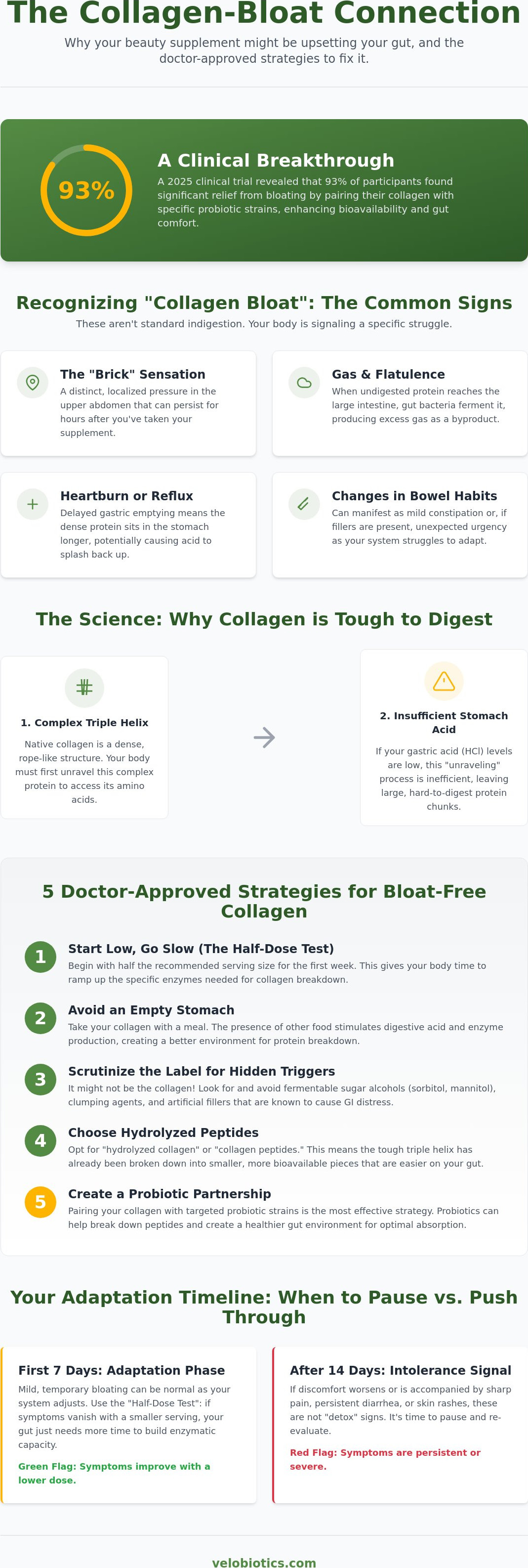
When you start a new beauty regimen, you expect a radiant glow, not a gut that feels like it has swallowed a literal brick. Patients frequently come into my office asking, "Can collagen supplements cause digestive issues?" The answer is nuanced. While collagen is a naturally occurring protein, understanding what collagen is at a molecular level helps explain why your stomach might protest. It is a dense, fibrous triple helix structure. This complexity means it requires significant metabolic effort and specific enzymatic activity to dismantle into absorbable peptides.
The "Collagen Bloat" is a distinct sensation that differs from standard post-meal indigestion. It often manifests as a lingering "heavy stomach" feeling. Because collagen is so structurally resilient, if your gastric acid levels are suboptimal, the protein sits in your stomach longer than intended. This delayed gastric emptying can trigger heartburn or acid reflux, particularly if you toss a scoop into your morning coffee on an empty stomach. You aren't just imagining the discomfort; your body is working overtime to process a very sturdy chain of amino acids.
To better understand how these supplements interact with your gastrointestinal system, watch this helpful video from a gastroenterologist:
Beyond that initial heaviness, you might encounter other physiological shifts as your system adjusts to the increased protein load. These symptoms are common but shouldn't be ignored:
- Gas and Flatulence: If undigested protein chains reach the large intestine, your resident bacteria begin to ferment them. This process creates gas as a byproduct.
- Changes in Bowel Habits: You might notice mild constipation as your body prioritizes protein breakdown, or conversely, unexpected urgency if the supplement contains certain poorly absorbed fillers.
- The "Brick" Sensation: This is the hallmark of can collagen supplements cause digestive issues. It feels like a localized pressure in the upper abdomen that persists for hours after consumption.
The Timeline of GI Distress
Your gut is an incredibly adaptive organ, but it doesn't change overnight. The first 7 days of supplementation are the most critical window. This is when your body attempts to ramp up the production of hydrochloric acid and proteases. If you feel "off" during this first week, it might be a temporary adaptation phase. However, if the strain is cumulative and worsens after 14 days, it is likely a sign of true intolerance or a reaction to the specific peptide size in your powder.
When to Pause vs. When to Push Through
I always suggest my patients try the "Half-Dose" test. If your bloating vanishes when you cut the serving size in half, your gut simply needs more time to build the necessary enzymatic capacity. It's a matter of pacing, not a permanent failure. However, red flags like sharp abdominal pain, persistent diarrhea, or skin rashes are not "cleansing" signs. These are signals to pause immediately. True gut health shouldn't require you to suffer through significant pain for the sake of your skin.
The Science of Digestion: Why Collagen Can Struggle in the Gut
Collagen isn't just another protein powder; it is a structural powerhouse. In its native state, collagen consists of three polypeptide chains wound together in a tight triple helix. Think of it like a thick, industrial-grade nautical rope. For your body to actually use this supplement, your digestive system must unravel that "rope" and chop it into tiny, manageable pieces. This process begins in the stomach, where hydrochloric acid (HCl) acts as the primary chemical catalyst to denature the protein. If your HCl levels are even slightly low, that rope stays largely intact, leading to the "heavy" sensation we discussed earlier.
The transition from a denatured protein to an absorbable nutrient requires specific enzymes called proteases. Some individuals suffer from enzymatic insufficiency, meaning they don't produce enough of these biological "scissors" on demand. This lack of chemical support is a primary reason why can collagen supplements cause digestive issues for certain people. Even when you choose "hydrolyzed" peptides, your gut still has to perform the final breakdown. If your system is overwhelmed by the sheer volume of complex chains, the digestion process stalls, leaving the protein to sit and stagnate in the upper GI tract.
Protein Fermentation and Gas
When collagen isn't fully dismantled in the small intestine, it travels further down into the large intestine. Here, your resident gut bacteria take over. While we want a diverse microbiome, certain opportunistic bacteria thrive on undigested protein. They begin a process called putrefaction, which is essentially protein fermentation. This doesn't just create standard gas; it produces specific sulfur-based byproducts. This is the scientific cause behind that uncomfortable "sulfur" bloat and the localized pressure that makes you feel like your digestion has come to a complete halt.
The Bioavailability Gap
Bioavailability in 2026 refers to the quantifiable percentage of collagen peptides that successfully transit the intestinal epithelium and maintain biological viability within the systemic circulation. Not all supplements are created equal in this regard. Low-quality collagen often has a high molecular weight, measured in Daltons. If you consume 10g of collagen with a high Dalton count, your stomach has to work significantly harder than if you took 5g of precision-engineered, low-Dalton peptides. Current research on collagen supplements confirms that the source and processing method directly dictate whether the protein becomes a beauty benefit or a digestive burden.
If you find that your current powder is sitting heavy, it might be time to support your system with targeted enzymes. You can improve your nutrient utilization by introducing Velo16 Probiotic Digestive Capsules, which help maintain a balanced internal environment and assist in the breakdown of complex protein structures.
Hidden Triggers: Is It the Collagen or the Additives?
When patients ask me, "Can collagen supplements cause digestive issues?" I often start by looking at what else is in the scoop. While we have discussed the biological complexity of the protein itself, the "inactive" ingredients are frequently the true culprits behind your discomfort. In a largely unregulated market, many manufacturers prioritize flavor and shelf-stability over gastrointestinal tolerability. This leads to a cocktail of fillers that can irritate the gut lining or trigger osmotic shifts in the intestines.
One overlooked factor is the physical state of the supplement. Poorly mixed collagen powder can clump together, forming what I call "digestive stones." These are small, semi-solid masses of undissolved protein that resist the natural churning of the stomach. Because the surface area is reduced, your gastric juices can't penetrate the mass effectively. This results in the supplement sitting in your GI tract far longer than it should, leading to fermentation and that localized "brick" sensation in your upper abdomen.
Sourcing also plays a critical role in how your body responds. A clinical study on collagen's digestive effects indicates that while peptides are generally well-tolerated, the presence of contaminants or heavy metals in low-quality sources can trigger inflammatory responses. Whether you choose bovine, marine, or porcine sources, the purity of the extraction process determines the biological viability of the final product and its impact on your microbiome.
The Sweetener Trap
Many "glow" powders are loaded with sugar alcohols like erythritol or sweeteners like stevia to mask the natural earthy taste of collagen. These compounds are notorious for their gassy reputation. Because they aren't fully absorbed in the small intestine, they travel to the colon where they draw in water and provide a feast for gas-producing bacteria. If your "sugar-free" collagen creamer makes you feel like a balloon, it is likely the sweetener, not the protein, causing the distension. Switching to an unflavored, pure peptide powder often resolves these issues immediately.
Bovine vs. Marine: Which is Gentler?
In my clinical experience, marine collagen is often the superior choice for those with sensitive systems. Marine peptides typically have a smaller molecular weight and a shorter particle size compared to bovine sources. This means they require less "unravelling" by your stomach acid and move through the digestive tract with greater ease. Bovine collagen, while excellent for Type I and III support, is a "heavier" protein that can overwhelm a sluggish digestive system. If you have a history of slow transit time or low stomach acid, start with a high-quality marine source to minimize the risk of bloating.
5 Doctor-Approved Strategies to Take Collagen Without the Bloat
If you have struggled with that "heavy stomach" sensation, you might think the only solution is to abandon your beauty routine. However, the question of whether can collagen supplements cause digestive issues often boils down to your administration strategy rather than the protein itself. By adjusting how you introduce these peptides, you can train your gut to handle the load. I recommend starting with a "micro-dosing" approach. Instead of a full 10-gram scoop, start with just one quarter of that amount for the first five days. This allows your body to ramp up its production of protease enzymes without overwhelming the system.
Optimizing your internal environment is equally vital. You can prime your stomach acid by drinking a small glass of water with a squeeze of fresh lemon fifteen minutes before taking your supplement. This slight increase in acidity helps denature the collagen "rope" structure we discussed earlier. Additionally, pay attention to temperature. While cold smoothies are popular, frigid temperatures can cause collagen to seize or clump, making it harder for your enzymes to penetrate. Mixing your powder into lukewarm or warm liquids ensures better solubility and a smoother transit through the GI tract.
The Power of Pairing
Success often lies in what you take alongside your peptides. Vitamin C is a well-known co-factor for collagen synthesis, but it also acts as a mild digestive aid by supporting healthy stomach acid levels. For those with particularly sensitive systems, pairing your supplement with natural digestive enzymes like bromelain from pineapple or papain from papaya can provide the extra "biological scissors" needed to prevent fermentation. I generally advise taking collagen on a slightly damp stomach, perhaps with a small piece of fruit, rather than a completely empty or overstuffed one.
The Role of Probiotics in Protein Utilization
A healthy microbiome acts as a biological "second stomach" for collagen, providing the final enzymatic push needed to convert peptides into usable amino acids. Specific strains, such as those in the Lactobacillus family, are particularly adept at assisting in the breakdown of tough protein chains. By maintaining a robust population of beneficial bacteria, you ensure that any undigested protein is processed quickly rather than sitting in the colon to cause gas. To ensure your gut has the microbial support it needs to process complex proteins efficiently, consider adding Velo16 Probiotic Digestive Capsules to your daily wellness protocol.
Finally, do not forget the "Sweep" method. Collagen is a dense protein that requires adequate hydration to move through the intestines. If you increase your collagen intake, you must proportionally increase your water and fiber consumption. This prevents the protein from slowing down your transit time, which is a common reason why can collagen supplements cause digestive issues like mild constipation. Aim for an extra eight ounces of water for every scoop of collagen you consume to keep your digestive tract clear and functional.
The Future of Bioavailable Collagen: Why Probiotic Strains Matter
Modern science is rapidly moving beyond the era of "just collagen." We now understand that biological viability depends on a symbiotic relationship between peptides and the microbiome. When we ask if can collagen supplements cause digestive issues, we are often looking at the protein in isolation. The real answer lies in your gut's readiness to receive it. By 2026, the industry has shifted toward multi-strain formulas that prepare the intestinal environment for high-density protein chains. This ensures that the amino acids actually reach your systemic circulation instead of becoming fuel for gas-producing bacteria.
A significant breakthrough in this field is the use of proprietary micro-encapsulation technology. This process creates a protective seal around both the probiotics and the collagen peptides. It acts as a biological shield, ensuring these active ingredients survive the harsh, acidic environment of the stomach. Without this protection, both the beneficial bacteria and the delicate peptide structures can be degraded before they reach the small intestine. This technology effectively bridges the gap between ingestion and actual utilization, solving the fundamental problem of digestive distress that plagues standard powders.
The 16-strain advantage is not just about numbers; it is about enzymatic diversity. Each specific probiotic strain contributes a different set of tools for breaking down complex molecules. A diverse microbiome provides a broader range of proteases, which are the enzymes specifically tasked with dismantling collagen ropes. This diversity leads to better skin results because you are finally absorbing the building blocks you have been paying for. When your gut is optimized, your "beauty from within" routine becomes a functional reality rather than a source of discomfort.
Why We Combined 16 Strains with Collagen
We developed Almasi Probiotics Collagen Powder to address the root cause of protein intolerance. By combining Type I and II collagen with a robust profile of 16 probiotic strains, we ensure the gut lining is fortified and ready for absorption. This is the clinical difference between our symbiotic approach and standard, single-ingredient powders that often sit heavy in the stomach. If you are already dealing with significant bloating or irregular habits, starting with Velo16 Probiotic Digestive Capsules can help stabilize your internal environment before you scale up your collagen intake.
Actionable Next Steps for Your Wellness Routine
Transitioning to a probiotic-enhanced regimen is the most effective way to stop wondering can collagen supplements cause digestive issues and start seeing results. If you are currently struggling with bloat, I recommend a simple 3-day gut reset. On day one, pause all collagen. On day two, focus on high hydration and soluble fiber. On day three, reintroduce a half-dose of a probiotic-enhanced collagen. You can learn more about our commitment to ingredient viability by exploring the Velobiotics Story. This methodical approach allows your microbiome to adapt without the inflammatory response common to low-quality supplements.
Reclaiming Your Radiant Routine Without the Bloat
You shouldn't have to sacrifice your digestive comfort for skin elasticity and joint health. We have explored how the structural complexity of peptides can overwhelm a sluggish gut, especially when hidden fillers and fermentable sugar alcohols are involved. By addressing enzymatic gaps and prioritizing biological bioavailability, you can enjoy the glow without that uncomfortable, heavy sensation in your stomach. While you may have previously wondered can collagen supplements cause digestive issues, you now have the scientific tools to optimize your intake and support your internal environment.
The solution lies in a physician-formulated approach that bridges the gap between protein and probiotic support. Our 16-strain probiotic delivery system ensures maximum viability, protecting both the microbiome and the active peptides. By utilizing Type I and II collagen for comprehensive support, you can finally achieve your wellness goals without the GI side effects. Don't let a poorly designed supplement stand in the way of your results or your confidence.
Discover 16-Strain Probiotic Collagen for Bloat-Free Beauty
It's time to feel as good as you look. Your journey to a healthier, more vibrant self starts with a gut that is ready to thrive. You have the knowledge; now it's time to take the next step toward a more balanced life.
Frequently Asked Questions
Is it normal to feel bloated after taking collagen?
Yes, bloating is a frequent response when your body isn't yet equipped to break down such a dense, structural protein. Collagen is a molecular heavyweight. If your stomach acid isn't primed or your enzymatic "scissors" are dull, the protein sits in your GI tract longer than it should. This delay leads to the fermentation and pressure that most users describe as the "collagen brick" sensation during their first week.
Can collagen cause constipation or diarrhea?
It can cause both, depending on your unique gut chemistry and the specific product formulation. Constipation often occurs when you increase your protein intake without a proportional increase in water and fiber. Conversely, diarrhea is usually a reaction to "flavor fillers" like erythritol or other sugar alcohols. These additives draw excess water into the colon, leading to urgency and loose stools rather than a smooth digestive transit.
Does liquid collagen cause fewer digestive issues than powder?
Not necessarily. While liquid versions are marketed as more "absorbable," the delivery format doesn't change the fundamental protein structure. Many liquid collagen shots contain high concentrations of preservatives and artificial sweeteners to maintain shelf life and taste. These additives are often more irritating to the gut lining than a clean, unflavored powder. A high-quality powder mixed into a warm liquid is often the gentlest approach for sensitive systems.
How long does collagen bloat last?
Most users find that the acute "brick" sensation in their stomach lasts about two to four hours after ingestion. If you're asking can collagen supplements cause digestive issues that persist for weeks, the answer usually relates to your gut's adaptation period. This transition typically takes seven to fourteen days. If the bloat continues beyond this window, it's likely a sign that the specific peptide size or additives aren't compatible with your system.
Can I take collagen if I have IBS or a sensitive stomach?
Absolutely, but you need to be highly strategic about your source. If you have a sensitive system, you shouldn't just grab any jar off the shelf. Avoid bovine sources, as they are structurally more complex and harder to dismantle. Instead, look for marine collagen or a symbiotic formula that pairs peptides with probiotics. This approach helps your gut handle the protein load without the typical irritation associated with standard, high-dose powders.
What is the best time of day to take collagen for digestion?
Mid-morning or with a light snack is usually the "sweet spot" for maximum comfort. Taking collagen on a completely empty stomach can trigger acid reflux in some individuals, while taking it after a massive dinner adds too much structural protein for your enzymes to handle at once. By taking it with a small amount of food, you trigger natural digestive juices that help unravel the protein strands more efficiently.
Does collagen cause weight gain or just water retention bloat?
Collagen is a protein, not a fat or a high-calorie carbohydrate, so it doesn't cause fat gain. The "weight" you might feel is almost always temporary water retention or gas trapped in the intestines. This happens because undigested peptides can be osmotic, meaning they draw water into the gut. Once your digestion becomes more efficient at breaking down the amino acid chains, this perceived weight and distension quickly vanish.
Can I be allergic to collagen supplements?
Yes, allergic reactions are possible, especially if you have existing sensitivities to fish, shellfish, or eggs. Marine collagen is a common trigger for those with seafood allergies, while other sources might be derived from porcine or poultry. True allergic reactions usually manifest as hives, itching, or swelling. If you experience these symptoms rather than just standard bloating, you should stop use immediately and consult your physician to identify the specific allergen.

Disclaimer
Information and statements regarding dietary supplements/products have not been evaluated by the Food and Drug Administration, MCC/SAHPRA, MHRA, TGA or any other drug regulatory authority and are not intended to diagnose, treat, cure, or prevent any disease. Information on this website is provided for informational purposes only and is a result of years of practice and experience by the author. This information is not intended as a substitute for the advice provided by your physician or other healthcare professional or any information contained on or in any product label or packaging. Do not use the information on this website for diagnosing or treating a health problem or disease, or prescribing medication or other treatment. Always speak with your physician or other healthcare professional before taking any medication or nutritional, herbal, or homeopathic supplement, or using any treatment for a health problem. If you have or suspect that you have a medical problem, contact your healthcare provider promptly. Do not disregard professional medical advice or delay in seeking professional advice because of something you have read on this website.