

Can You Take Probiotics With Your Morning Coffee? A Doctor's Guide
What if your daily brew is quietly neutralizing the beneficial bacteria you just swallowed? As a practicing physician, one of the most frequent questions patients ask me is: can you take probiotics with your morning coffee without flushing your supplement budget straight down the drain? If you cherish that first steaming mug to kickstart your day, the prospect of overhauling an established morning ritual or sorting through contradictory advice online is undeniably frustrating.
Nobody wants to waste money on delicate live cultures only to watch heat and stomach acid render them useless before breakfast. You shouldn't have to compromise between your favorite caffeine routine and your digestive comfort. In this guide, you'll discover the biological reality of combining probiotics with coffee and learn practical timing rules to protect beneficial bacteria from premature destruction. Together, we'll examine exact thermal limits, map out a simple doctor-approved morning schedule, and explore the delivery methods that keep your microbes fully viable where you need them most.
Key Takeaways
- If you wonder whether can you take probiotics with your morning coffee, washing standard capsules down with a hot brew creates a lethal thermal shock that destroys live bacteria.
- Heat past 115°F (46°C) and caffeine-induced stomach acid form a double threat that neutralizes delicate strains before they ever reach your lower intestine.
- Practicing a simple 30 to 45-minute buffer between taking standard cultures with cool water and pouring your morning cup preserves baseline bacterial survival.
- Advanced microencapsulation shields vulnerable microorganisms from thermal degradation and digestive juices, guaranteeing optimal viable delivery without forcing you to sacrifice your morning caffeine.
Can You Take Probiotics With Morning Coffee? The Short Medical Answer
Let's get straight to the point: if you wash down standard supplements with a freshly brewed mug, the answer is a firm no. Probiotics are living, delicate microorganisms, not inert chemical vitamins. When exposed to sudden spikes in temperature, their fragile cellular machinery breaks down quickly.
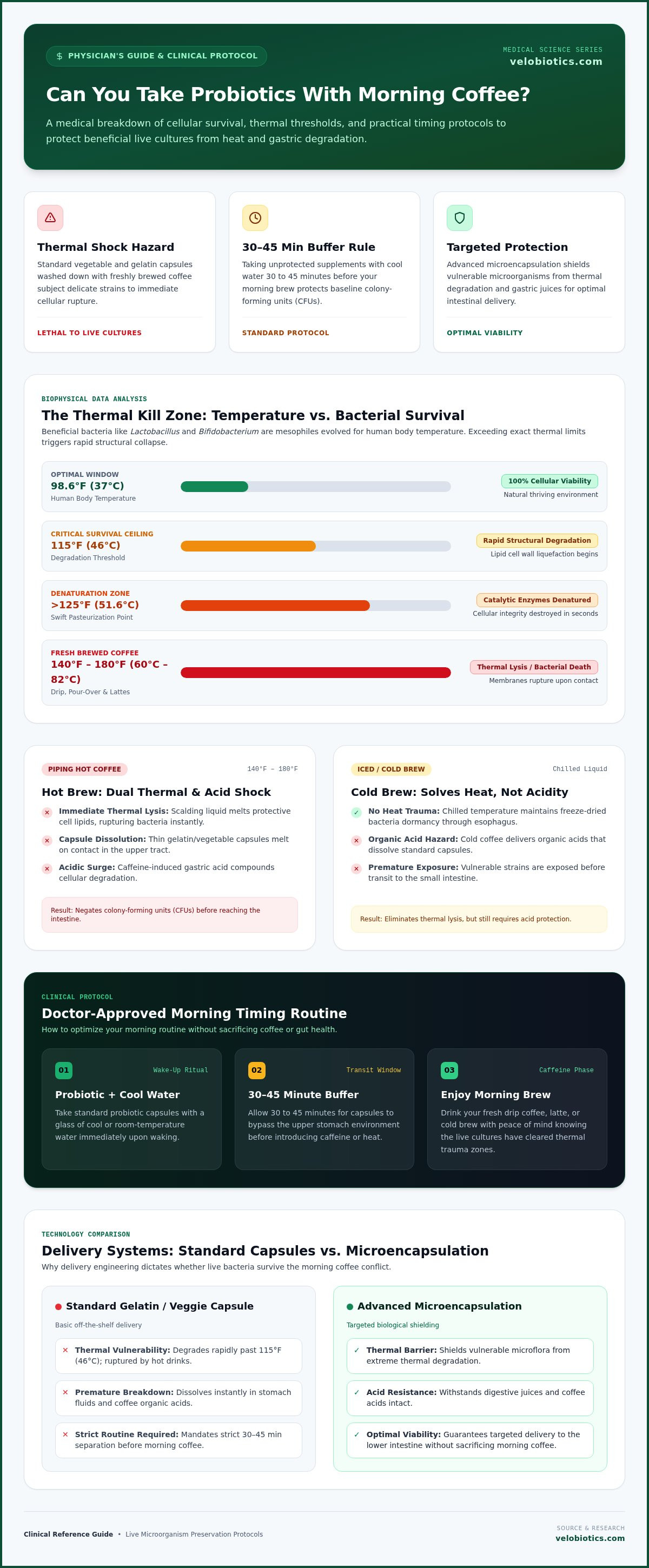
Freshly brewed drip coffee, lattes, or pour-overs typically register between 140°F and 175°F (60°C to 79°C). That is far past the thermal survival limit for friendly bacteria, which begin degrading rapidly once temperatures exceed 115°F (46°C). Gulping a piping hot drink alongside ordinary capsules slashes your viable colony-forming units (CFUs), diminishing their ability to support your daily digestive comfort.
To see how morning beverage routines and digestive habits intersect, check out this quick overview:
The Core Problem: Fragile Microorganisms Meet Hot Liquid
Beneficial bacterial strains like Lactobacillus and Bifidobacterium evolved to thrive inside human bodies, not kettles. Most off-the-shelf supplements use thin vegetable or gelatin capsules designed to dissolve almost immediately in liquid. When scalding fluid floods your upper digestive tract, it causes rapid thermal lysis. This ruptures delicate cell membranes and denatures critical bacterial proteins on contact.
Why Habitual Convenience Often Sabotages Supplement Value
Lining up your daily supplements beside your morning mug feels like efficient habit-stacking. Unfortunately, this convenience often neutralizes active cultures before they ever meet natural gastric acid. Wondering whether can you take probiotics with your morning coffee is really an inquiry into cellular survival. Protecting your wellness investment doesn't mean abandoning caffeine; it simply requires giving your microbes a fighting chance to stay intact.
The Science of Heat: What Coffee Temperature Does to Live Bacteria
Microscopic organisms inside your supplements are mesophiles, meaning they flourish within a moderate window close to human body temperature at 98.6°F (37°C). Decades of clinical research, including reviews from the National Center for Complementary and Integrative Health highlighting diverse probiotic health benefits, remind us that living microflora must arrive fully viable to do their job. Once their ambient environment climbs past 115°F (46°C), structural degradation accelerates rapidly. Liquid past 125°F initiates swift pasteurization, denaturing catalytic enzymes and destroying cellular integrity in seconds.
The Thermal Kill Zone: Degrees That Matter
Freshly prepared coffee regularly registers between 140°F and 180°F (60°C to 82°C). Swallowing an unprotected capsule alongside a hot beverage creates immediate cellular trauma. The temperature of 115°F (46°C) represents the critical ceiling for probiotic survival. Heat above this line liquefies protective lipid layers within cell walls, causing bacteria to burst and die. This is why asking if can you take probiotics with your morning coffee comes down to thermal physics; hot coffee pasteurizes standard capsules inside your digestive tract before they stand a chance.
Hot Brew vs. Iced Coffee: Is Cold Brew Actually Safe?
Grabbing an iced cold brew eliminates the thermal destruction caused by a hot mug. Chilled liquids keep freeze-dried bacteria dormant, letting them bypass the esophagus without heat-induced lysis. That solves half the problem. Cold coffee still brings organic acids into your stomach that can dissolve basic gelatin capsules before they reach your small intestine. Choosing targeted formulas built with advanced delivery protection ensures beneficial strains safely endure both temperature extremes and chemical exposure so your morning routine stays intact.
Acidity and Gut Motility: How Coffee Changes Your Digestive Environment
Temperature is only the first obstacle your supplements face. Beyond thermal shock, morning coffee fundamentally alters the biochemical terrain of your stomach. Unroasted beans and brewed liquid carry an inherently acidic pH level, typically hovering between 4.85 and 5.10. While that mild acidity alone wouldn't instantly destroy bacteria, what happens next inside your stomach makes all the difference.
Caffeine triggers gastric neuroendocrine pathways, specifically prompting the release of the hormone gastrin. Gastrin then signals parietal cells in your stomach lining to ramp up production of concentrated hydrochloric acid. Within minutes of taking your first sips, baseline gastric fluid drops to an aggressive pH of 1.5 to 2.0. Unshielded cultures simply cannot survive in that caustic bath. To explore the mechanics of bacterial survival under low pH conditions, check out our guide on probiotics that survive stomach acid.
The Acidity Compounding Effect in the Stomach
Many people assume a splash of milk or cold water neutralizes coffee's digestive impact. It doesn't. When asking whether can you take probiotics with your morning coffee, you must account for this acid surge. Standard freeze-dried cultures encounter exogenous chlorogenic acids from the brew and endogenous hydrochloric acid simultaneously. Most conventional strains fail to survive prolonged exposure below pH 3.0 unless protected by specialized delivery systems.
Caffeine, Peristalsis, and Digestive Transit Time
Caffeine also acts as an intestinal stimulant. It prompts smooth muscle tissue along your colon and small bowel to contract rhythmically, a physiological process known as peristalsis. This increased motility creates several distinct challenges for standard supplements:
- Accelerated gastric emptying dumps unshielded capsules into the duodenum before protective coatings dissolve properly.
- Heightened peristaltic waves flush live microbes through the small intestine too quickly.
- Rushed transit deprives beneficial bacteria of the dwell time needed to adhere to the epithelial mucosa and colonize your tract.
Fast transit might keep your bowels moving, but it actively works against unprotected bacterial colonization.
A Doctor's Protocol: How to Time Your Coffee and Probiotics
You don't need to quit your beloved brew to support your microbiome. As a physician, I know asking people to abandon their morning ritual usually leads to skipped supplements rather than better habits. Instead of stressing over whether can you take probiotics with your morning coffee simultaneously, implement a realistic schedule that preserves bacterial viability. To better understand how living strains navigate your system, explore our clinical guide on probiotics for digestive health.
Here are three practical timing strategies you can test based on your daily lifestyle:
The Pre-Coffee Window: Hydration First
Make a large glass of cool or room-temperature water your first morning act. Take your standard probiotic immediately upon waking, when overnight gastric acid sits at resting, diluted levels. Allow 30 to 45 minutes for the capsule to pass into your duodenum before pouring that hot cup. This simple buffer clears the upper digestive tract, keeping your cultures away from fresh heat and caffeine-triggered acid.
The Post-Coffee Strategy: Allowing the Stomach to Settle
If you head straight for the espresso machine the moment your eyes open, reverse the protocol. Enjoy your coffee first, then wait roughly 60 minutes before taking your daily capsule. This delay lets active stomach contractions settle and allows elevated hydrochloric acid to buffer back toward baseline. Pairing your delayed dose with a light breakfast, like oatmeal or fruit, provides an additional physical shield against lingering acidity.
Evening Supplementation: The Ultimate Friction-Free Workaround
Moving your probiotic to dinner or bedtime eliminates morning scheduling friction entirely. Your gut motility naturally slows during sleep, creating an ideal, calm environment for bacterial strains to establish themselves along mucosal surfaces. Consistency matters far more than the clock. If morning timing causes daily headaches, make the evening switch. If you want true freedom from rigid morning countdowns, shop microencapsulated probiotics today to safeguard your routine.
Beyond Timing: How Advanced Microencapsulation Solves the Coffee Conflict
Traditional supplement manufacturing leaves delicate microorganisms exposed to environmental stressors like heat, ambient moisture, and digestive fluids. Most people don't realize that standard colony-forming unit (CFU) figures on bottles describe bacterial counts at the time of manufacture, not what actually survives transit into your lower bowel. As a physician and researcher, seeing this efficacy gap drove me to rethink supplement design entirely. You can read about this journey in the Velobiotics story, which started from clinical frustration with fragile, ineffective supplements.
The Biological Shield: Patented SCO2 Technology
Instead of relying on fragile vegetable shells, Velobiotics uses globally patented Supercritical Carbon Dioxide (SCO2) microencapsulation. Born from over 15 years of R&D collaboration with South Africa's CSIR, this process encloses active cultures in a protective polymer "velo" coating. The micro-shield withstands acidic gastric fluids and thermal spikes, remaining intact until it encounters the higher pH of the small intestine. There, the protective layer releases the cultures safely at their target destination.
1000X Delivery Guaranteed: Real Viability at the Target Site
Ordinary unshielded cultures suffer massive die-off when exposed to coffee heat or low gastric pH. By contrast, patented SCO2 microencapsulation technology guarantees delivery of up to 1000x more viable probiotics to the gut. With this level of biological protection, asking whether can you take probiotics with your morning coffee is no longer a stressful dilemma. Your cultures stay protected regardless of beverage timing. You can find comprehensive daily microbiome support in Velo16 Probiotic Digestive Capsules, formulated to support digestive comfort without requiring strict meal routines. Every formula is 100% shelf-stable and requires no refrigeration, giving you dependable viability that easily fits your day.
Protect Your Morning Ritual and Your Microbiome
Navigating your daily wellness habits shouldn't feel like a medical compromise. When you evaluate whether can you take probiotics with your morning coffee, the lesson is clear: standard bacteria cannot withstand the double assault of 140°F heat and surging stomach acid without adequate protection. If you use traditional capsules, separating them from your morning cup by 30 to 45 minutes gives your beneficial cultures their best baseline chance of survival.
You don't have to keep playing the timing game, though. Advanced delivery systems have solved this biological hurdle. Through patented Supercritical Carbon Dioxide (SCO2) microencapsulation technology, delicate bacteria are shielded inside a protective polymer coating that guarantees up to 1000x more viable probiotics reach your digestive tract compared to standard cultures. These formulations remain 100% shelf-stable without requiring refrigeration. Protect your gut microbiome with patented microencapsulated probiotics at Velobiotics, and enjoy every sip of your morning brew with total confidence.
Frequently Asked Questions
Can you take probiotics with iced coffee instead of hot coffee?
Yes, iced coffee removes the immediate risk of thermal destruction since temperatures remain below the critical 115°F threshold. However, iced beverages are still acidic and prompt your stomach to produce hydrochloric acid. If you use standard, unprotected supplements, waiting 30 minutes after your dose before drinking iced coffee is still recommended to protect delicate bacterial strains from harsh digestive juices.
How long should I wait to drink coffee after taking my probiotic?
You should wait 30 to 45 minutes after taking a standard probiotic before drinking hot coffee. This brief window allows the capsule to dissolve and move past the stomach into the duodenum before hot fluids arrive. If you drink your coffee first, wait roughly 60 minutes afterward so elevated gastric acid levels can return to their dilute baseline.
Will adding milk or creamer to coffee protect probiotic bacteria?
Adding cold milk or dairy creamer slightly lowers the beverage temperature, but it rarely cools hot brewed coffee below the safe threshold of 115°F. While milk proteins provide a small buffering effect against stomach acid, they cannot shield unencapsulated cultures from thermal damage. It is far safer to rely on cool water for swallowing standard capsules.
What happens if I accidentally swallow my probiotic with hot coffee?
Accidentally washing a capsule down with hot coffee will not harm your body, but it likely neutralizes most live bacteria in that dose. The high heat denatures delicate bacterial enzymes and breaks cell walls before the organisms reach your gut. Don't double your dose immediately; simply resume your normal routine the following morning using cool water.
Can caffeine reduce the effectiveness of gut health supplements?
Caffeine can indirectly lower supplement efficacy by accelerating digestive motility. When peristalsis speeds up, gastrointestinal contents move rapidly through the small intestine. This accelerated transit gives delicate organisms less time to latch onto epithelial walls and colonize. It also triggers parietal cells to secrete concentrated stomach acid, creating a hostile environment for conventional, unshielded bacteria.
Is it better to take probiotics on an empty stomach or with breakfast?
For standard probiotics, taking them on an empty stomach with cool water first thing in the morning is usually best because resting acid levels remain low. However, if your morning routine centers on hot brew, you might wonder whether can you take probiotics with your morning coffee or if breakfast is required. A light meal helps buffer stomach acid if you take supplements after coffee.
Do all probiotic brands die when exposed to hot beverages?
Most ordinary freeze-dried brands perish when exposed to hot liquids, but advanced microencapsulated formulations do not. Products shielded by patented Supercritical Carbon Dioxide (SCO2) microencapsulation utilize a protective polymer coating that withstands heat and gastric acid. This ensures the full CFU count stated on the label safely reaches your gut, eliminating worries about whether can you take probiotics with your morning coffee.

Disclaimer
Information and statements regarding dietary supplements/products have not been evaluated by the Food and Drug Administration, MCC/SAHPRA, MHRA, TGA or any other drug regulatory authority and are not intended to diagnose, treat, cure, or prevent any disease. Information on this website is provided for informational purposes only and is a result of years of practice and experience by the author. This information is not intended as a substitute for the advice provided by your physician or other healthcare professional or any information contained on or in any product label or packaging. Do not use the information on this website for diagnosing or treating a health problem or disease, or prescribing medication or other treatment. Always speak with your physician or other healthcare professional before taking any medication or nutritional, herbal, or homeopathic supplement, or using any treatment for a health problem. If you have or suspect that you have a medical problem, contact your healthcare provider promptly. Do not disregard professional medical advice or delay in seeking professional advice because of something you have read on this website.