

Do Men and Women Need Different Probiotics? A Doctor’s Guide to Gender-Specific Gut Health
What if I told you that your current "one-size-fits-all" probiotic is likely ignoring half of your unique biological needs? Most people feel overwhelmed by the wall of supplements at the store, wondering if the pink or blue labels are just clever marketing or actual science. You've probably felt that frustration after spending money on high-CFU bottles that didn't stop the persistent bloating or digestive discomfort. Many patients ask me, do men and women need different probiotics, or is it just a way to charge more for different packaging?
As a doctor, I've seen how the $114 billion global probiotics market often prioritizes volume over biological viability. The truth is that your hormonal and anatomical "ecosystem" determines which specialized strains will actually deliver results. This guide explores the scientific truth behind gender-specific gut health, from the gut-testosterone axis in men to the critical vaginal-gut connection in women. You'll learn exactly which strains to look for and how to ensure they survive the stomach acid gauntlet to reach their target destination. We'll move beyond the marketing hype to look at the clinical data, including why certain Lactobacillus strains are non-negotiable for female health while specific metabolic boosters serve the male physiology better.
Key Takeaways
- Understand why the generic probiotic approach often fails by identifying the specific biological differences between male and female microbial ecosystems.
- Discover the definitive answer to the question, "do men and women need different probiotics," by exploring how targeted strains support the gut-vagina connection and the gut-testosterone axis.
- Learn how to protect women's intimate wellness by using specific Lactobacillus strains that maintain the vaginal pH as a critical biological gatekeeper.
- Identify why men's supplements must prioritize advanced delivery technology to survive the "stomach acid gauntlet" and promote metabolic resilience.
- Gain a practical 2026 checklist for selecting supplements based on clinical strain specificity and biological viability rather than just high CFU numbers.
Is the "One-Size-Fits-All" Probiotic a Medical Myth?
Every human body hosts a unique colony of trillions of microbes known as the human microbiome. Think of it as your internal fingerprint; no two are exactly alike. While we share a foundational set of "good bugs," the environment they inhabit changes significantly based on your biological sex. This leads to the central question: do men and women need different probiotics to achieve optimal health? The answer lies in the ecosystem of your body, where variables like pH levels, organ size, and chemical messengers dictate which bacterial strains will thrive and which will simply perish. A gender-specific probiotic is a targeted tool for unique physiological environments.
To better understand how to select the right supplement for your needs, watch this helpful breakdown from a clinical perspective:
The Common Ground: What Every Gut Needs
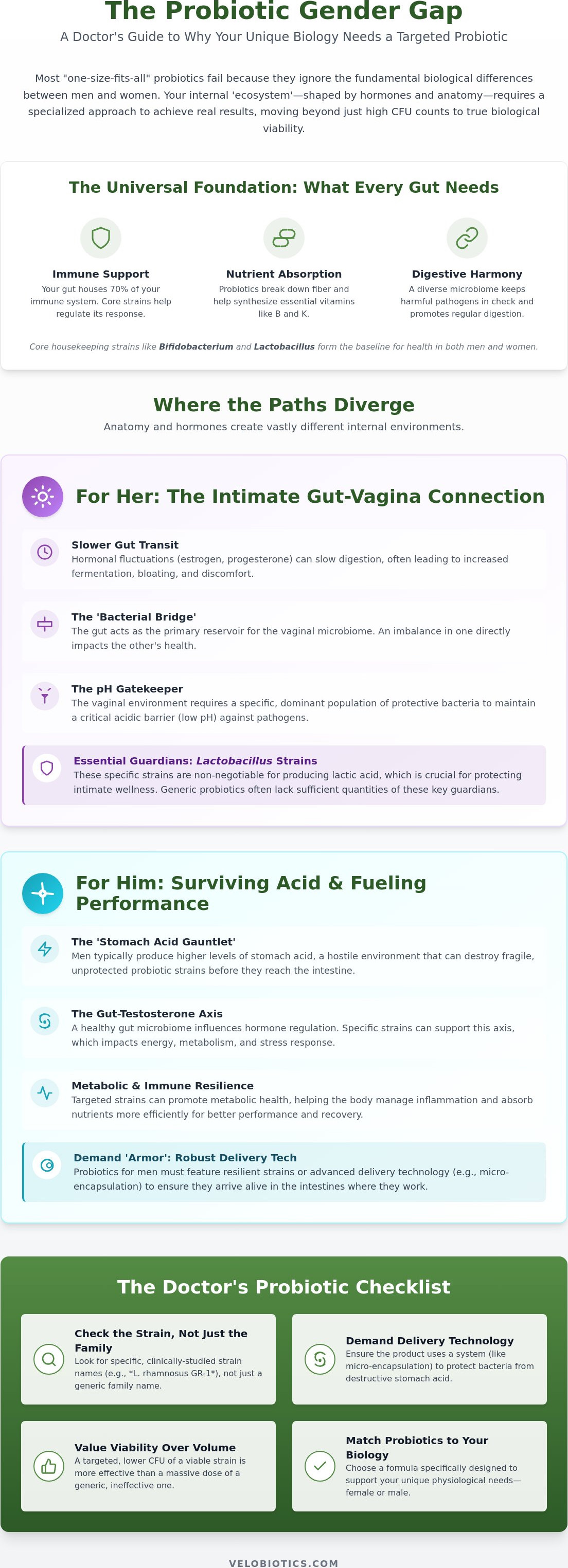
Foundational gut health is the engine that drives your immune system and digestion, regardless of your chromosomes. We all rely on core "housekeeping" strains like Bifidobacterium and Lactobacillus to break down fiber, synthesize vitamins, and keep harmful pathogens at bay. High microbial diversity is the gold standard for health in both men and women. Think of these core strains as the basic infrastructure of a city. Without stable roads and electricity, the city can't function. Similarly, without this baseline stability, your body can't absorb nutrients efficiently, leaving you feeling sluggish and prone to inflammation. It's the essential starting line, but for many people, it isn't the finish line.
Where the Paths Diverge: Anatomy and Hormones
This is where the generic approach starts to crumble. Men typically produce higher levels of stomach acid, creating a more hostile environment that can destroy fragile bacteria before they ever reach the large intestine. This "stomach acid gauntlet" means men often require more robust delivery systems or specific strains that exhibit high resilience. Conversely, women often experience slower gut transit times. This delay in digestion is often influenced by estrogen and progesterone fluctuations during the menstrual cycle or menopause. Slower transit can lead to increased fermentation and that all-too-familiar feeling of persistent bloating and discomfort. Testosterone also plays a role, as it influences gut motility and the way the body handles metabolic stress and inflammation. Understanding these biological shifts helps us realize that while the core machinery is similar, the environmental conditions are vastly different.
The Female Microbiome: Why Women Need Targeted Support
Women's health isn't just a subset of general medicine; it's a unique physiological landscape that requires a specialized approach. When patients ask me, do men and women need different probiotics, I point to the intimate proximity of the gastrointestinal and vaginal tracts. This anatomical reality creates a "bacterial bridge" where microbes constantly migrate and communicate. Research has demonstrated that there are clear sex-dependent effects in how our immune systems respond to specific bacterial interventions. For women, the gut acts as a primary reservoir that helps populate the vaginal microbiome, making the concept of "Cookie Fresh" intimate balance a direct result of what's happening in your digestive system.
Vaginal pH is the ultimate gatekeeper for a woman's health. While the gut thrives on diversity, the vaginal environment requires a very specific, dominant population of protective bacteria. If this balance shifts, the door opens for opportunistic pathogens. This is why a generic probiotic often fails women; it doesn't prioritize the specific strains needed to maintain that critical acidic barrier.
Lactobacilli: The Guardians of Intimate Wellness
In the vaginal ecosystem, Lactobacillus rhamnosus and Lactobacillus reuteri are the primary defenders. These strains are biological powerhouses that ferment glycogen into lactic acid. This process keeps the vaginal pH between 3.8 and 4.5, an environment too acidic for harmful bacteria to survive. To support this naturally, I recommend focusing on supplements that use advanced delivery systems to ensure these strains reach their destination. You might consider exploring targeted intimate wellness solutions to maintain this delicate internal harmony alongside your daily routine.
Hormonal Shifts: From Menstruation to Menopause
Your hormonal cycle dictates your digestion. When estrogen levels drop significantly just before menstruation, the gut lining can become more sensitive, leading to the "period bloat" many women find so frustrating. During menopause, the permanent decline in estrogen can shift the microbial balance entirely, which can even impact bone density and skin elasticity. Probiotics serve as a tool for hormonal resilience during these transitions. By stabilizing the gut, we can mitigate the systemic inflammation that often accompanies these shifts. This confirms that do men and women need different probiotics is a question of biological necessity, as a man's microbiome doesn't have to navigate these complex monthly or life-stage hormonal fluctuations.
The Male Microbiome: Performance, Acid, and Testosterone
While we've explored the intricate hormonal shifts in women, the male physiology presents its own set of biological hurdles. When men ask me, do men and women need different probiotics, I immediately point to the "Stomach Acid Gauntlet." Men typically secrete higher levels of gastric acid than women. This is a double-edged sword; while it helps break down the higher protein intake often found in male diets, it's a lethal environment for standard, unprotected probiotic supplements. If the beneficial bacteria aren't shielded by advanced micro-encapsulation technology, they're neutralized before they ever reach the lower gastrointestinal tract. Your gut isn't just a tube for food; it's a chemical factory that requires robust, resilient workers to stay operational.
Beyond simple digestion, we're uncovering a powerful link between gut health and male hormonal balance. Recent clinical data has highlighted sex-dependent effects on immune responses, suggesting that the male microbiome plays a direct role in regulating systemic inflammation. For men, this means that a healthy gut is a prerequisite for cardiovascular health and optimal testosterone production. When the gut is inflamed, the body's resources are diverted away from hormone synthesis to manage the internal fire, leading to fatigue and reduced physical performance.
The Gut-Hormone Axis in Men
New research into the "gut-testis axis" shows that specific microbial strains can influence androgen levels and fat metabolism. Men looking to maintain lean muscle mass and high energy levels need a microbiome that supports metabolic resilience. This isn't just about "good bacteria"; it's about having the right strains to process high-protein meals without causing systemic stress. Utilizing a high-potency supplement like 16-strain digestive capsules can provide the diversity needed to handle these metabolic demands while protecting your heart and hormone levels.
Digestive Resilience and Heartburn
Men are statistically more prone to issues like gastric ulcers and acid reflux, often due to higher acid production and lifestyle factors. Probiotics act as a biological shield, reinforcing the mucosal lining of the stomach and intestines to prevent erosion. To avoid that "gut-heavy" fatigue after a large meal, I recommend men focus on strains that specifically aid in protein breakdown and reduce gas production. If you're constantly reaching for antacids, you're merely treating the symptom. The real solution involves repopulating your gut with resilient bacteria that can thrive in your high-acid environment, ensuring you extract maximum performance from every meal you eat. This biological reality confirms that do men and women need different probiotics is a question of performance, not just marketing.
Choosing the Right Supplement: The Doctor’s 2026 Checklist
Walking down the supplement aisle often feels like taking a high-stakes chemistry exam without a study guide. You're hit with massive numbers, complex Latin names, and flashy packaging. Most of my patients start by looking for the highest "CFU" count, assuming that 100 billion must be better than 10 billion. This is the biggest myth in the industry. If those bacteria aren't alive when they reach your gut, the number on the bottle is irrelevant. While we've established that do men and women need different probiotics is a scientific "yes" based on your unique anatomy, the real secret to success is biological viability.
Micro-encapsulation is the only way to guarantee 100% delivery to the lower intestine. Without this protection, your supplement is just an expensive snack for your stomach acid. In 2026, we've moved past the need for refrigeration as the primary indicator of quality. Advanced shelf-stable technology now allows for high-potency formulas that remain active at room temperature, provided they are shielded from environmental stressors like moisture and heat.
The Survival Factor: Micro-encapsulation Explained
Research consistently shows that up to 90% of standard, unprotected probiotics die within minutes of hitting your stomach acid. It's a brutal environment designed to break things down. Our technology acts like a microscopic "protective suit" for each individual bacterium. Unlike liquid or standard capsule delivery systems that dissolve too early, these shielded microbes stay dormant until they reach the alkaline environment of the small and large intestines. This ensures that the 16 strains you paid for actually show up to work where they're needed most.
Decoding the Label: What to Ignore and What to Value
When you're reading a label, look for a multi-strain profile rather than a single-strain "hero" product. A 16-strain formulation provides the microbial diversity necessary to support both the gut-vagina connection in women and the metabolic demands in men. You should also look for included prebiotic fiber, which acts as the essential "fuel" for your new bacteria to colonize effectively. Avoid supplements packed with artificial colors, titanium dioxide, or unnecessary fillers that can trigger the very bloating you're trying to fix. If you want to stop guessing and start seeing results, I recommend choosing a formula with clinically proven delivery technology to ensure every capsule counts.
Precision Wellness: Integrating Probiotics into Your Lifestyle
Understanding the biological "why" behind the question do men and women need different probiotics is only the first step toward clinical-grade health. The real transformation occurs when you integrate these scientific insights into your daily routine with precision. I typically recommend taking your probiotic first thing in the morning on an empty stomach. While our micro-encapsulated technology ensures survival regardless of food intake, starting your day with a focused dose of beneficial bacteria helps establish a healthy microbial rhythm. You should also consider the "gut-skin axis" synergy. Pairing your probiotics with collagen peptides can significantly enhance gut lining integrity and skin elasticity, creating a comprehensive wellness protocol from the inside out.
Tracking your progress is essential for a successful 30-day gut reset. Watch for the "Big Three" markers of success: a predictable digestive rhythm, a significant drop in post-meal bloating, and a boost in cognitive clarity. If you've spent years feeling sluggish or uncomfortable, these changes might feel like a revelation. In reality, they're simply the result of a balanced internal ecosystem finally receiving the specific support it requires. Consistency is your greatest ally during this period, as it takes time for new bacterial colonies to stabilize and begin influencing your systemic health.
The Velobiotics Strategy: His-Biotics vs. Her-Biotics
Our approach centers on gender-specific multivitamin integration to ensure no biological need is left unmet. Her-Biotics is specifically formulated with cranberry extract to provide essential urinary tract support alongside its 16-strain probiotic core. This addresses the unique anatomical vulnerabilities women face. Conversely, His-Biotics prioritizes immune and metabolic vitamins to meet the higher energy demands and cardiovascular needs of the male body. This isn't just about adding bacteria; it's about providing the specific co-factors your body needs to utilize those bacteria effectively. Integrating these into your morning ritual ensures your microbiome and your nutrient levels are optimized simultaneously.
Practical Daily Habits for a Thriving Microbiome
A thriving microbiome requires a supportive environment beyond supplementation. I advocate for a "Diversity Diet" that includes at least 30 different plant-based foods per week to provide a wide array of prebiotic fibers. Stress management is equally vital, as chronic cortisol elevation can negatively alter your microbial composition. For women, using Femina Cookie Fresh provides targeted, intimate support during times of hormonal flux or after swimming in chlorinated pools. By combining these daily habits with targeted technology, you'll see why the answer to do men and women need different probiotics is so fundamental to achieving your peak physical and mental potential.
Empower Your Microbiome for the Long Term
Your journey to better gut health doesn't have to be a guessing game. We've explored how biological sex influences everything from stomach acid levels to hormonal gut motility, proving that the "one-size-fits-all" approach is a medical myth. By now, the answer to the question, do men and women need different probiotics, should be clear; your unique biological environment demands a targeted solution. True health isn't about chasing the highest CFU count on a label. It's about ensuring those bacteria actually survive the stomach acid gauntlet to reach their destination.
Our formulas are crafted by medical doctors and utilize advanced micro-encapsulation technology. This ensures 1000x better survival of our 16 diverse probiotic strains compared to standard, unprotected supplements. Whether you're supporting the gut-vagina connection or optimizing your metabolic resilience, you deserve a supplement that works as hard as you do. Don't leave your wellness to chance when science has already provided the roadmap. Take the Velobiotics Quiz to find your perfect probiotic match and start your 30-day reset today. You've got the tools to thrive, so let's get your gut back on track.
Frequently Asked Questions
Do men and women really need different probiotic strains?
Yes, biological differences in anatomy and hormones mean that do men and women need different probiotics to target their specific physiological needs. While core digestion is similar, women require strains that support the gut-vagina connection, while men need resilient strains that can survive a more acidic gastric environment. Matching the strain to your gender-specific "ecosystem" ensures the bacteria actually perform their intended function instead of being wasted.
Can a man take a woman’s probiotic (and vice versa)?
It's generally safe to cross-use supplements, but you won't get the specialized benefits designed for your body. A man taking a woman's probiotic is essentially paying for Lactobacillus strains meant for vaginal pH balance that his body doesn't need. Conversely, a woman taking a man's formula might miss out on the hormonal support or urinary tract protection essential for her health. For the best results, stick to a formula designed for your biology.
How long does it take to see results from a gender-specific probiotic?
Most patients begin to notice significant improvements in digestion and a reduction in bloating within two to four weeks of consistent use. Microbial colonization isn't an overnight process; it takes time for the new "good bugs" to establish themselves and crowd out harmful pathogens. By the 30-day mark, you should see a predictable digestive rhythm and improved energy levels as your body begins to absorb nutrients more efficiently from your diet.
What are the best probiotic strains for women’s hormonal health?
Lactobacillus rhamnosus and Lactobacillus reuteri are the gold standard for women's health. These specific strains migrate from the gut to the vaginal tract, where they produce lactic acid to maintain a healthy, acidic pH. This protective barrier is crucial during estrogen fluctuations. Additionally, Bifidobacterium strains help manage "period bloat" by improving gut motility, which often slows down during certain phases of the menstrual cycle.
Do probiotics for men help with testosterone or muscle growth?
Recent clinical data suggests a strong link between gut health and the "gut-testis axis," which influences testosterone production. By reducing systemic inflammation, probiotics allow the body to prioritize hormone synthesis and muscle recovery rather than fighting internal fires. Strains like Lactobacillus plantarum have been studied for their ability to improve metabolic resilience, helping men process high-protein diets more effectively to support lean muscle growth and athletic performance.
Is it better to get probiotics from food or supplements?
Fermented foods like yogurt and kimchi are excellent for daily maintenance, but they often lack the strain specificity and high dose needed to solve specific health issues. Most food-based probiotics also struggle to survive the "stomach acid gauntlet." Targeted supplements using micro-encapsulation ensure that a precise dose of 16 diverse strains actually reaches your lower intestine alive. For corrective health goals, a high-quality supplement is the more reliable clinical choice.
What happens if I take a probiotic that doesn’t survive stomach acid?
If a probiotic dies in your stomach, it simply becomes expensive waste that your body digests like any other protein. Dead bacteria cannot colonize your gut or provide any of the immune-boosting or digestive benefits you're looking for. This is why the question do men and women need different probiotics must include a focus on delivery technology. Without a protective "suit" like micro-encapsulation, up to 90% of standard probiotics never make it past the stomach.
Can probiotics help with vaginal odor or pH balance?
Yes, probiotics are highly effective at restoring the natural acidic balance required to prevent vaginal odor and discomfort. When Lactobacillus strains dominate the microbiome, they produce hydrogen peroxide and lactic acid, which keep the environment at a healthy pH level. For immediate support, targeted suppositories can work alongside oral capsules to repopulate the area quickly. Maintaining this microbial balance is the most natural way to ensure long-term intimate wellness and confidence.

Disclaimer
Information and statements regarding dietary supplements/products have not been evaluated by the Food and Drug Administration, MCC/SAHPRA, MHRA, TGA or any other drug regulatory authority and are not intended to diagnose, treat, cure, or prevent any disease. Information on this website is provided for informational purposes only and is a result of years of practice and experience by the author. This information is not intended as a substitute for the advice provided by your physician or other healthcare professional or any information contained on or in any product label or packaging. Do not use the information on this website for diagnosing or treating a health problem or disease, or prescribing medication or other treatment. Always speak with your physician or other healthcare professional before taking any medication or nutritional, herbal, or homeopathic supplement, or using any treatment for a health problem. If you have or suspect that you have a medical problem, contact your healthcare provider promptly. Do not disregard professional medical advice or delay in seeking professional advice because of something you have read on this website.