

Do Probiotics Improve Collagen Absorption? A Doctor’s Guide to Gut-Skin Synergy
What if your expensive collagen supplement is simply passing through your system without ever reaching your skin cells? It is incredibly frustrating to invest in high end powders only to see zero change in your skin elasticity or nail strength, especially when you are also dealing with that uncomfortable post supplement bloating. Many of my patients come to me asking, do probiotics improve collagen absorption, or is it just another wellness trend? The reality is that your gut is the gatekeeper of your beauty. If your microbiome is out of balance, those collagen peptides often end up as expensive waste rather than building blocks for your complexion.
I understand the confusion surrounding supplement timing and biological efficacy. In this guide, I will break down the scientific mechanism behind gut skin synergy and show you how to optimize this duo for maximum health results. You will discover exactly how specific bacterial strains act as a biological foreman to repair your absorption machinery and facilitate protein uptake. We will also cover a practical protocol to help you achieve visible improvements in skin firmness and gut comfort, ensuring your body finally utilizes every milligram of the nutrients you provide.
Key Takeaways
- Identify why your current collagen supplements might be failing due to intestinal inflammation and the structural complexity of large protein molecules.
- Discover how specific beneficial bacteria answer the question: do probiotics improve collagen absorption by secreting enzymes that facilitate the breakdown and transport of amino acids?
- Uncover the science of the Gut-Skin Axis and how a healthy microbiome reduces systemic oxidative stress to protect your skin's structural integrity.
- Learn a practical protocol for choosing high-viability, multi-strain supplements that survive the digestive gauntlet to deliver real results.
- Gain clarity on how advanced delivery technology bridges the gap between what you swallow and what your body actually utilizes for skin, hair, and nails.
The Collagen Absorption Challenge: Why Your Supplement Might Be Wasting Away
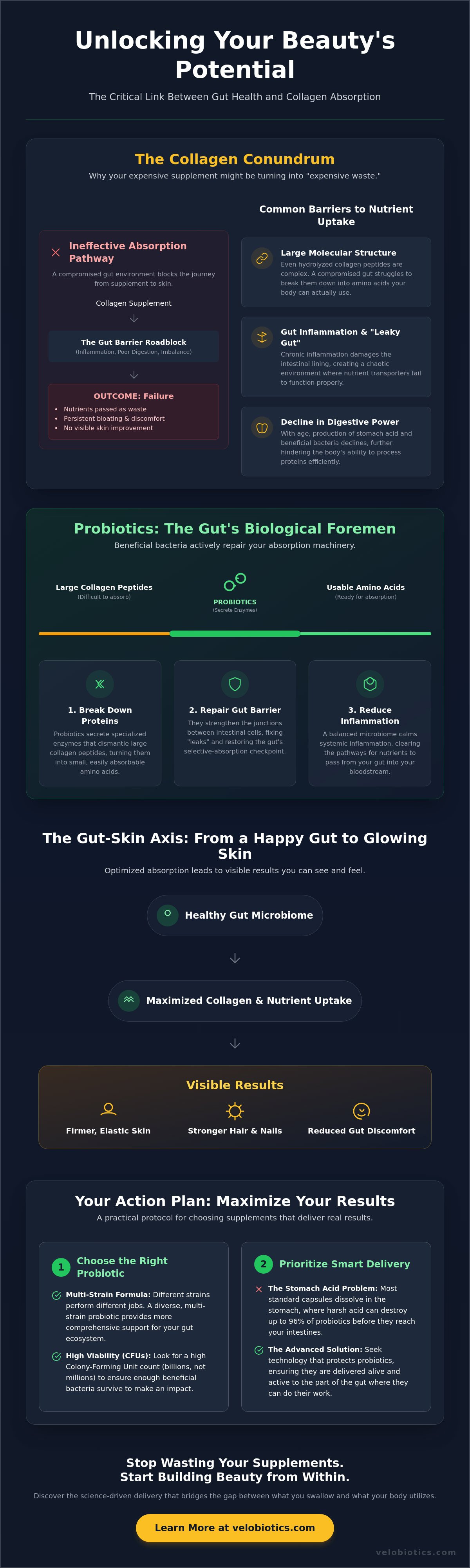
Most people think that swallowing a scoop of powder is the end of the journey. In reality, it's just the beginning of a complex biological gauntlet. Collagen is a structural protein made of long, tightly wound chains. Even when we use hydrolyzed collagen peptides, which are technically broken into smaller pieces, they remain relatively large and complex molecules. Your digestive tract must perform a series of precise chemical reactions to turn these peptides into usable amino acids. If your internal environment is compromised by poor enzyme production or an imbalanced microbiome, you aren't building skin elasticity; you are simply creating "expensive urine" instead of glowing skin.
This leads many of my patients to wonder, do probiotics improve collagen absorption by fixing the underlying digestive environment? Before we can answer that, we need to understand the biological hurdles that prevent these proteins from reaching your skin cells. To better understand how your gut health influences the way you process these nutrients, watch this helpful video from Doctor Mike:
The Biology of Protein Digestion
Digestion begins with hydrochloric acid in the stomach denaturing the collagen, which uncoils the proteins for enzyme action. If your stomach acid is insufficient, these molecules remain too large to pass through the intestinal wall. In the context of peptide uptake, bioavailability refers to the specific proportion of collagen that successfully crosses the intestinal barrier to reach the bloodstream. Without proper breakdown, these large protein chains simply bypass the absorption sites in your small intestine.
Common Barriers to Nutrient Uptake
Chronic gut inflammation often leads to "leaky gut," where the junctions between intestinal cells become compromised. This creates a chaotic environment where the body fails to recognize and transport nutrients efficiently. You might notice signs like persistent bloating after supplements or skin that remains dull despite your efforts. These are clear indicators that your gut flora is not optimized to facilitate proper protein processing and nutrient transport.
As we age, our natural production of digestive juices and beneficial Probiotics tends to decline, further complicating the absorption process. Understanding if and how do probiotics improve collagen absorption requires looking at how we can restore the integrity of these absorption sites. Utilizing a high quality multi-strain probiotic is a practical first step in ensuring your body actually utilizes the nutrients you provide for maximum health results.
Probiotics as Gatekeepers: How Gut Bacteria Optimize Nutrient Uptake
Think of your gut lining as a high security checkpoint. In a healthy state, this barrier is selective, allowing vital nutrients like amino acids to pass while keeping toxins out. However, when the gut is inflamed or the microbiome is out of balance, these "gates" become sluggish or damaged. This is where the synergy between bacteria and protein becomes critical. So, do probiotics improve collagen absorption? The answer lies in their role as biological foremen that physically repair the infrastructure of your digestive tract.
A balanced microbiome does more than just sit there. It actively manages the environment where nutrient transport happens. By reducing systemic inflammation, beneficial bacteria ensure that the transporters responsible for moving collagen peptides across the intestinal wall aren't blocked by inflammatory debris. This creates a clear path for those expensive supplements to actually reach your bloodstream and, eventually, your skin cells.
Repairing the Intestinal Lining
The intestinal wall is held together by "tight junctions," which are essentially the biological glue of your gut. Probiotics like Lactobacillus and Bifidobacterium are essential for maintaining these junctions. When these bacterial colonies are thriving, they support the mucosal barrier and prevent the "leaky" conditions that lead to nutrient malabsorption. A sealed, healthy gut is a non negotiable requirement if you want your collagen peptides to reach their destination rather than being lost during transit. Without this structural integrity, even the highest quality collagen won't provide the results you expect.
Enzymatic Assistance from Beneficial Bacteria
Many people don't realize that probiotics act as "mini factories" within the small intestine. They produce specific protease enzymes that help break down complex protein chains into smaller, more soluble peptides. This bacterial fermentation process increases the solubility of the collagen, making it much easier for your body to process. When patients ask me, do probiotics improve collagen absorption, I often explain that these bacteria are providing the enzymatic "scissors" your body might be lacking. To ensure your system has the diverse toolkit it needs for this process, consider a comprehensive solution like 16 Strains Probiotics Collagen Peptides, which combines these elements for maximum efficacy.
This interaction is a core component of the Gut-Skin Axis. This two way communication street means that a calm, efficient gut sends signals that lead to calmer, more resilient skin. By optimizing the "gatekeepers" of your gut, you aren't just improving digestion; you are fundamentally changing the biological signaling that dictates how your skin ages and repairs itself.
The Gut-Skin Axis: Why Probiotics and Collagen Are a Biological Power Couple
The relationship between your digestive tract and your complexion is not just a physical connection. It is a complex, high speed biochemical conversation known as the Gut-Skin Axis. While we have discussed how bacteria help with the physical breakdown of proteins, their role in signaling is equally vital. When patients ask, do probiotics improve collagen absorption, I often explain it through the "bricks and builder" analogy. Collagen provides the raw materials (the bricks), while probiotics act as the expert builders who ensure those materials reach the construction site and are used effectively to maintain your skin's structural integrity.
A major part of this synergy involves signaling molecules called Short-Chain Fatty Acids (SCFAs). When beneficial bacteria ferment fibers in your gut, they produce SCFAs like butyrate. these molecules travel through the bloodstream to the skin, where they help maintain hydration and strengthen the skin barrier. This internal signaling reduces oxidative stress, which is essentially the "biological rust" that breaks down your existing collagen fibers. By creating a calm internal environment, probiotics ensure that the new collagen you consume isn't immediately destroyed by a stressed system.
Reducing Inflammation for Better Skin Elasticity
Chronic, low grade inflammation is the primary driver of "inflammaging," a process where the skin loses its snap and develops fine lines prematurely. Probiotics act as a biological fire extinguisher for this internal heat. By stabilizing the gut microbiome, they prevent inflammatory signals from reaching the skin and degrading the dermal matrix. Probiotics preserve the structural integrity of collagen by modulating the immune response and preventing the premature degradation of fibers caused by systemic inflammation. This protection is what allows the absorbed peptides to actually do their job of firming the skin.
Synergistic Effects on Hair and Nails
Your hair and nails are essentially "extrusions" of your internal health. They rely heavily on keratin, a protein that requires a steady supply of specific amino acids derived from collagen. If your gut isn't processing your supplements correctly, your follicles and nail beds are the first to be deprived of these raw materials. When you optimize the Gut-Skin Axis, you ensure that the building blocks from your collagen reach these peripheral tissues. Practical signs that this synergy is working include a noticeable reduction in nail brittleness and a faster growth rate for hair. When the "builder" and the "bricks" work together, the results are visible from the roots of your hair to the tips of your toes.
Maximizing Your Results: A Practical Protocol for Combining Collagen and Probiotics
Achieving the best return on your supplement investment requires more than just random consumption. We must address the issue of biological viability. If a probiotic cannot survive the harsh, acidic environment of the stomach, it cannot reach the small intestine to facilitate protein transport. This is a primary reason why many people ask, do probiotics improve collagen absorption but see no results; they are often using products that lack a protective delivery system.
To bridge this gap, follow this four step protocol:
- Select a high viability, multi strain probiotic.
- Use hydrolyzed collagen peptides, specifically Type I and III.
- Prioritize morning intake for optimal gut motility.
- Maintain consistent hydration to support the mucosal lining.
The Doctor’s Daily Supplement Schedule
I recommend taking your collagen and probiotic duo first thing in the morning on an empty stomach. This timing takes advantage of lower stomach acid levels and optimal morning gut motility. If you have a sensitive stomach, a small amount of healthy fat, like a teaspoon of MCT oil, can help without hindering absorption. This ensures the bacterial colonies have the best chance of transit to the lower GI tract where they can begin their work.
You must include a source of Vitamin C. This is a non negotiable co factor for collagen synthesis; without it, your body cannot effectively "knit" those amino acids into new skin fibers. Also, avoid washing your supplements down with high heat liquids like boiling tea or coffee. Excessive heat can denature the collagen peptides and, more importantly, kill the live probiotic cultures before they even leave your mouth. Stick to room temperature water or a cool smoothie for the best results.
What to Look for on the Label
When scanning a label, don't just look at the CFU (Colony Forming Unit) count. While a high number matters, strain diversity is more important. A "16 Strains" formulation provides a much broader enzymatic toolkit than a single strain product, ensuring better coverage for various digestive challenges. This diversity is key to answering do probiotics improve collagen absorption in a way that actually changes your skin's appearance and elasticity.
You should also distinguish between collagen types. Type I and III are the gold standard for skin, hair, and nails, whereas Type II is primarily for joint cartilage. For those seeking a clinically backed, all in one solution, I recommend the 16 Strains Probiotics Collagen Peptides to ensure both the "builder" and the "bricks" arrive at their destination intact. By following this structured approach, you ensure your body finally utilizes the nutrients you provide for visible, lasting results.
The Velobiotics Advantage: Science-Driven Delivery for Skin, Hair, and Gut Health
When we ask, do probiotics improve collagen absorption, we are really asking about biological viability. It isn't enough to simply combine these two powerhouses in a capsule; we must ensure they actually reach the absorption sites in the small intestine. At Velobiotics, we have dedicated our research to solving the fundamental problem of ingredient survival. Our proprietary technology acts as a protective seal, ensuring that the active cultures and peptides remain intact through the volatile environment of the upper digestive tract.
Why Delivery Technology Matters
Most standard probiotics fall into what I call the "Stomach Acid Trap." Research indicates that up to 90% of unprotected bacterial cultures are destroyed by gastric acid before they ever reach the gut. This is the primary reason why many consumers feel their supplements are ineffective. We bridge this gap using advanced micro-encapsulation. This process shields the "biological foreman" until it is safely released in the alkaline environment of the intestines. You can learn more about our clinical background and the science behind our mission by reading the Velobiotics Story.
For those seeking a streamlined approach, our 16 Strains Probiotics Collagen Peptides offers an all in one solution. It combines high quality collagen with a diverse array of protected bacterial strains to maximize uptake and skin elasticity. If you prefer a more versatile format for your daily routine, the Almasi Probiotics Collagen Powder 200 g provides the same premium protein with the added benefit of gut supporting cultures that are actually delivered to where they are needed most.
A Compassionate Approach to Wellness
As a doctor and founder, my goal has always been to provide evidence based solutions that actually work. We don't believe in vague wellness promises. Instead, we focus on empirical data and proprietary delivery systems that solve real biological challenges. By choosing dual action formulas, you simplify your daily routine while ensuring your body gets exactly what it needs to thrive. I encourage you to take charge of your gut skin axis today. When you provide your body with the right tools and the right delivery system, visible health results are not just a possibility; they are a clinical certainty.
Empower Your Gut for Lasting Skin Radiance
We've established that the secret to visible results isn't just about what you ingest, but what your body actually utilizes. By addressing the "Stomach Acid Trap" through proprietary micro-encapsulation technology, we ensure that your supplements don't go to waste. You now understand that the gut-skin axis relies on a delicate balance of diverse bacterial strains to facilitate the transport of protein peptides into your bloodstream. When patients ask do probiotics improve collagen absorption, the scientific answer is a resounding yes, provided you use a delivery system designed for biological viability.
Stop guessing about your supplement timing and start following a research-driven protocol that prioritizes intestinal integrity. Our doctor-founded approach focuses on 16 clinically studied probiotic strains to provide the comprehensive enzymatic support your digestive tract needs. You have the power to transform your skin elasticity and gut comfort by choosing high-viability solutions that bridge the gap between clinical breakthroughs and your daily routine.
Ready to see the difference for yourself? Explore our Doctor-Formulated 16-Strain Probiotic Collagen Peptides and start your journey toward a more resilient complexion today. You deserve a wellness routine that works as hard as you do.
Frequently Asked Questions
Can I take probiotics and collagen at the same time?
You can absolutely take probiotics and collagen at the same time; in fact, doing so is often more effective than taking them separately. This combination allows the beneficial bacteria to begin optimizing the digestive environment right as the protein peptides arrive. Since probiotics help break down complex molecules, they act as a biological primer for the collagen. This ensures the transition from your stomach to your bloodstream is as efficient as possible.
How long does it take to see results from taking collagen and probiotics together?
Most people start noticing improvements in gut comfort within 2 to 4 weeks, while visible changes in skin elasticity typically take 8 to 12 weeks of consistent use. This timeline aligns with the natural turnover of your skin cells and the time required for bacterial colonies to stabilize. Consistency is the most critical factor here. You are rebuilding your internal infrastructure, so don't expect overnight miracles; biological repair is a steady process.
Do I need a specific strain of probiotic to help with collagen absorption?
While no single strain does it all, a multi strain approach is far superior because different bacteria perform different enzymatic tasks. Strains from the Lactobacillus and Bifidobacterium families are particularly effective at strengthening the gut barrier and secreting the proteases needed for protein breakdown. When patients ask, do probiotics improve collagen absorption, I explain that a diverse team of 16 or more strains provides the most comprehensive support for nutrient uptake and skin health.
Is it better to take collagen and probiotics on an empty stomach?
Taking this duo on an empty stomach, usually first thing in the morning, is ideal for maximizing the survival of the probiotic cultures. Lower stomach acid levels at this time mean the bacteria can transit more safely to the small intestine. If you have a sensitive stomach, a small amount of water or a light, non acidic snack won't hurt. The goal is to get the builders to the site before the heavy lifting of daily digestion begins.
Can probiotics help with the bloating sometimes caused by collagen powder?
Yes, probiotics are excellent for reducing the gas and bloating that some people experience when starting a collagen regimen. Bloating often occurs when large protein molecules sit in the gut too long without being properly broken down. By introducing beneficial bacteria that produce digestive enzymes, you speed up this process and prevent fermentation of undigested proteins. This makes the entire supplementation experience much more comfortable and effective for your digestive system.
What happens if I take collagen without probiotics?
If you take collagen alone, you may still see some benefits, but you risk significant nutrient waste if your gut health is compromised. Without a balanced microbiome to facilitate transport, many of those peptides simply pass through your system unabsorbed. You might find yourself asking, do probiotics improve collagen absorption, after realizing your expensive powder isn't yielding the skin or nail results you expected. Probiotics act as the necessary insurance policy for your supplement ROI.
Is liquid collagen better for absorption than powder or capsules?
The format of the collagen, whether liquid, powder, or capsule, is less important than the degree of hydrolyzation and the health of your gut. Liquid collagen is often marketed as superior, but if your intestinal lining is inflamed, the absorption rate remains low regardless of the delivery method. Focus on high quality peptides and a protected probiotic delivery system instead of the physical state of the supplement. Biological viability in the gut is the real secret to success.
How does stomach acid affect the efficacy of my probiotic and collagen combo?
Stomach acid is a double edged sword; it is necessary for denaturing collagen proteins but it is deadly for most standard probiotics. This is why using micro-encapsulated technology is vital. It allows the collagen to begin its breakdown process in the stomach while shielding the live bacteria until they reach the safety of the small intestine. Without this protection, you are likely losing the majority of your probiotic's functional benefits before they ever reach their destination.

Disclaimer
Information and statements regarding dietary supplements/products have not been evaluated by the Food and Drug Administration, MCC/SAHPRA, MHRA, TGA or any other drug regulatory authority and are not intended to diagnose, treat, cure, or prevent any disease. Information on this website is provided for informational purposes only and is a result of years of practice and experience by the author. This information is not intended as a substitute for the advice provided by your physician or other healthcare professional or any information contained on or in any product label or packaging. Do not use the information on this website for diagnosing or treating a health problem or disease, or prescribing medication or other treatment. Always speak with your physician or other healthcare professional before taking any medication or nutritional, herbal, or homeopathic supplement, or using any treatment for a health problem. If you have or suspect that you have a medical problem, contact your healthcare provider promptly. Do not disregard professional medical advice or delay in seeking professional advice because of something you have read on this website.