

How Long for Probiotics to Help Bloating? A Doctor's Guide
Your probiotic might be dying before it even reaches your gut. While many supplements boast high colony counts on the label, the reality is that harsh stomach acid acts like a biological furnace, incinerating the very bacteria meant to help you. If you are struggling with persistent abdominal pressure and wondering how long until probiotics start working for bloating, the answer isn't just about time; it is about biological viability.
I understand the frustration of feeling like a balloon while wondering if your supplements are actually doing anything at all. You shouldn't have to guess if your gut health routine is working or waste money on ineffective formulas. In this guide, I will share the realistic timeline for achieving digestive comfort, including the initial 48 hour adjustment period your body needs to recalibrate. We will look at how patented SCO2 micro-encapsulation ensures 1000x more viable bacteria survive the acid gauntlet to colonize your system. You will learn exactly what to expect as you nourish your second brain and reclaim a flatter, more comfortable stomach.
Key Takeaways
- Most patients notice a shift in digestive comfort within 48 to 72 hours, though it can take 2 to 4 weeks of consistent colonization to see how long until probiotics start working for bloating in chronic cases.
- Discover why standard supplements often fail in the stomach and how patented SCO2 technology ensures 1000x more viable bacteria actually reach your gut.
- Understand the biological battle between healthy flora and gas-producing bacteria to see how colonization physically deflates abdominal pressure.
- Learn practical strategies to accelerate your progress, including the best time to take your dose and how to use prebiotics as fuel for your new colonies.
- Identify why multi-strain formulas offer the most robust defense against digestive discomfort and how to select a targeted solution for your specific needs.
How Long Until Probiotics Start Working for Bloating? The Realistic Timeline
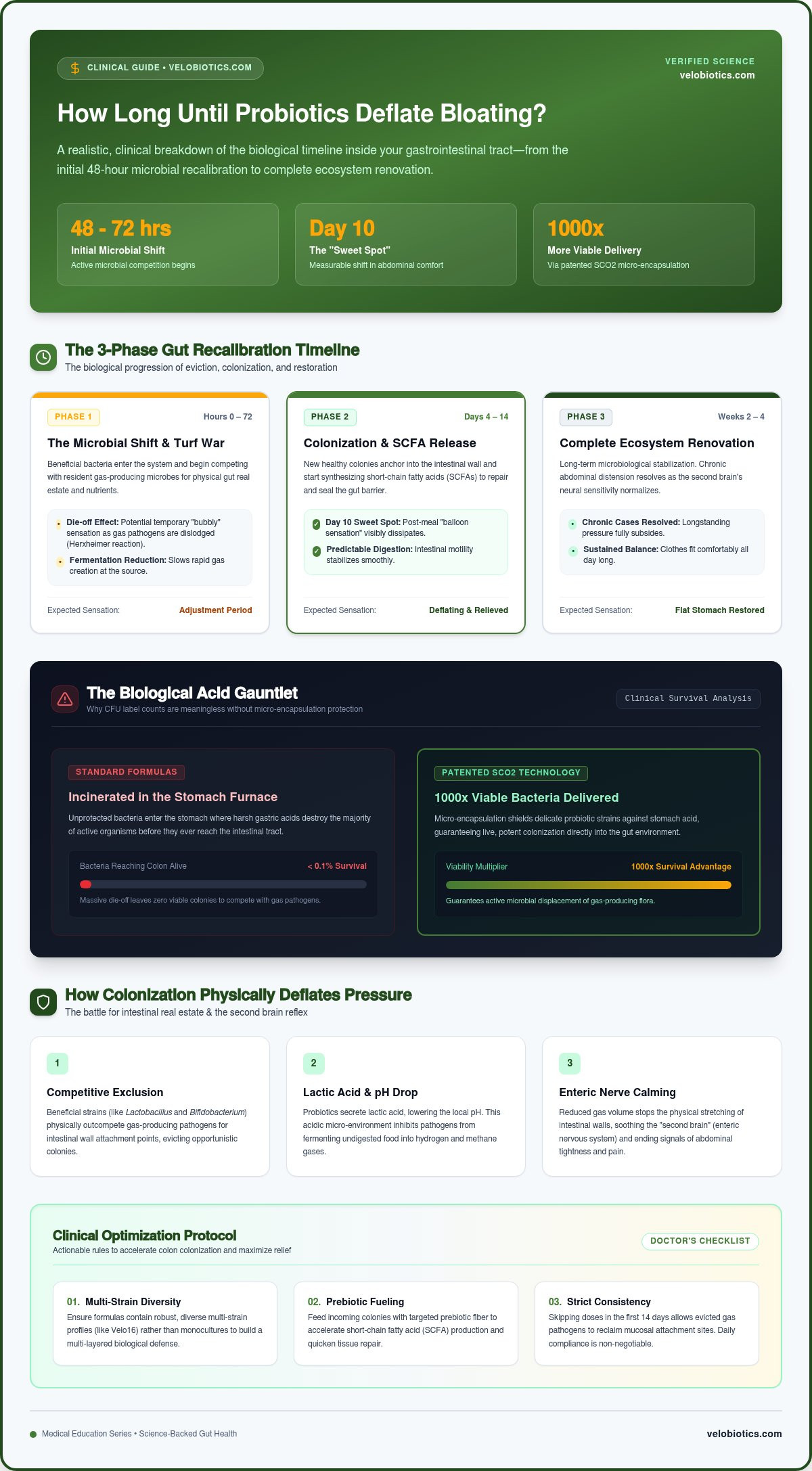
Patients often ask me for a specific date on the calendar when their clothes will finally fit comfortably again. While everyone wants an overnight miracle, the biological reality is a bit more nuanced. It is a process of eviction and renovation within your gut. Most people begin to feel a shift within the first 48 to 72 hours, but achieving a truly flat stomach and restored digestive comfort usually requires a consistent commitment of two to four weeks. The speed of your results depends heavily on whether those beneficial probiotic microorganisms actually survive the trip through your stomach acid.
To better understand how these microbes interact with your system and why quality matters, watch this expert breakdown:
Phase 1: The First 72 Hours (Initial Microbial Shift)
During these first few days, your internal landscape is undergoing a significant transition. You might actually feel slightly more gassy or "bubbly" at first. This is often called a die-off effect or a Herxheimer reaction. It happens when the new, healthy bacteria begin to compete with the resident gas-producing microbes for space and nutrients. Think of it as a microscopic turf war. Effective microbial competition occurs when beneficial strains outcompete gas-producing pathogens for nutrients, directly slowing the fermentation process that causes abdominal distension. If your supplement uses patented SCO2 micro-encapsulation, this phase starts more effectively because the bacteria arrive at their destination alive and ready to work.
Phase 2: Days 4 to 14 (Colonization and Comfort)
By the end of the first week, the new tenants are starting to move in permanently. This is the colonization phase. These probiotics begin producing short-chain fatty acids, which play a massive role in maintaining the integrity of your gut lining and supporting overall digestive comfort. You will notice that the balloon-like feeling after meals starts to dissipate and your digestion feels more predictable. Consistency is your best friend here. Skipping doses at this stage is like stopping a house renovation halfway through; the old, gas-producing bacteria are just waiting for a chance to move back in. When considering how long until probiotics start working for bloating, remember that day 10 is often the "sweet spot" where the physiological shift becomes undeniable.
Restoring balance isn't just about feeling better for an afternoon. It is about shifting the entire ecosystem of your second brain. Using a high-potency formula like Velo16 Probiotic Digestive Capsules ensures that you are providing enough diverse strains to handle this colonization phase effectively. This isn't a temporary fix; it's a foundational change in your biological environment.
The Biological Mechanism: How Probiotics Deflate Bloating
Bloating isn't just a cosmetic issue; it's a physiological response to a microbial imbalance. Within your gastrointestinal tract, a constant struggle for "gut real estate" occurs between beneficial flora and opportunistic, gas-producing pathogens. When these pathogens dominate, they ferment undigested food particles, releasing gases like hydrogen and methane that stretch the intestinal walls. This stretching triggers the enteric nervous system, often called the "second brain," sending signals of discomfort and pressure to your actual brain. Understanding this mechanism helps clarify how long until probiotics start working for bloating, as the process requires a physical displacement of these gas-producing colonies and a recalibration of your nervous system's sensitivity.
Breaking Down Gas-Producing Microbes
Specific strains such as Lactobacillus and Bifidobacterium act as natural "peacekeepers" in the gut. They produce lactic acid and other substances that lower the local pH, creating an environment where gas-causing microbes simply cannot thrive. This competitive exclusion is a cornerstone of digestive health. According to this NIH fact sheet on probiotic strains and gut health, the specificity of the strain matters immensely. Some strains are better at producing enzymes that help break down complex carbohydrates before they can reach the lower colon and ferment. By improving the efficiency of your digestion at a molecular level, you reduce the raw material available for gas production. To ensure these strains actually survive to do this work, I recommend looking into probiotics for digestive health that utilize advanced delivery systems.
Improving Gut Motility
One of the primary causes of trapped gas is slow gut motility. When digestive transit time increases, food remains in the colon longer than it should. This provides an extended window for fermentation. Probiotics interact with the smooth muscles of the gut and the enteric nervous system to encourage regular, rhythmic contractions. This signaling keeps the "conveyor belt" moving, preventing the stagnation that leads to that heavy, distended feeling. By supporting the gut barrier, these microbes also help reduce local inflammation that can cause the gut to feel hypersensitive to normal gas levels. When your transit time is optimized, the pressure dissipates naturally. It's not just about adding "good" bacteria; it's about restoring the functional rhythm of your entire digestive system. This biological reset is why consistency is so vital when you are tracking how long until probiotics start working for bloating in your own routine.
The Survival Crisis: Why Standard Probiotics Often Fail
Most people walk into a health store, grab a bottle with the highest number on the front, and assume more is better. This logic makes sense in most parts of life, but in the world of gut health, the label is often a fantasy. The reason you might still be asking how long until probiotics start working for bloating after weeks of use is simple: the bacteria likely died in your stomach. I call this the "Survival Gap," and it is the single biggest reason why standard supplements fail to deliver digestive comfort.
Your stomach is an incredibly hostile environment, designed specifically to break down organic matter with a pH ranging from 1.5 to 3.5. Standard vegetable or gelatin capsules are no match for this "Acid Gauntlet." They typically dissolve within minutes of ingestion, exposing the delicate probiotic strains to a literal bath of acid. Research, including Cleveland Clinic's clinical guide to probiotic use, highlights that while these microorganisms are vital, their successful administration depends entirely on their ability to reach the lower intestine alive. Without protection, you can lose between 90% and 99% of your probiotic payload before it even leaves the stomach.
There's also a persistent myth that refrigeration is a hallmark of quality. In reality, if a probiotic requires constant cooling to stay alive on a shelf, it is far too fragile to survive your 98.6 degree body and high acid stomach. True technological advancement is found in shelf stability. When a supplement is engineered correctly, it doesn't need a fridge; it needs a shield. If the bacteria can't survive a room temperature shelf, they won't survive the journey to your colon.
The Velobiotics 1000x Delivery Guarantee
We solved this biological hurdle using a globally patented process called Supercritical Carbon Dioxide (SCO2) micro-encapsulation. Instead of a simple capsule that melts away, each individual bacterium is shielded in a microscopic, protective seal. This "Velo" coating is acid resistant, meaning it remains intact throughout the stomach's harsh environment. It only breaks down once it reaches the alkaline environment of the gut, where colonization actually happens. This technology allows us to provide 1000x more viable bacteria than standard, unprotected supplements.
When the CFU count on the label actually equals the count that reaches your colon, the timeline for relief accelerates. You aren't just hoping for a few survivors to make it through; you're sending in a full, living army to restore balance. If you're tired of "dead" supplements, starting with a protected formula like Velo16 Probiotic Digestive Capsules is the fastest way to bridge the survival gap and finally deflate that persistent bloat.
Practical Optimization: How to Make Probiotics Work Faster
While our SCO2 technology ensures your probiotics survive the "acid gauntlet" we discussed earlier, your daily habits act as the accelerator or the brake for your results. When patients ask me how long until probiotics start working for bloating, I explain that while delivery is guaranteed, the speed of colonization depends on the environment you provide. You are essentially a microbial gardener; you've planted the seeds, but now you must provide the right soil and water to help them thrive.
When to Take Your Probiotic
I generally recommend taking your supplement first thing in the morning on an empty stomach. This timing minimizes the period the capsule spends in the stomach, allowing for faster transit into the small intestine where the bacteria can begin their work. Because micro-encapsulated probiotics are shielded from acid, you can take them at any time of day with or without food while still ensuring maximum biological delivery. Consistency is the real secret here. Your gut operates on a circadian rhythm, so taking your dose at the same time every day helps your microbiome sync with your natural digestive cycles and metabolic peaks.
Dietary Synergy for Bloat Reduction
Your new bacteria need fuel, which we call prebiotics. Think of these as the "fertilizer" for your internal garden. However, you should be careful with high-fiber foods if you're currently experiencing significant pressure. Some common prebiotics like onions or garlic are high-FODMAP and can actually increase gas in the short term. I suggest starting with gentle, low-FODMAP prebiotics like green bananas, oats, or blueberries to support your new colonies without adding extra abdominal distension.
Hydration is equally critical for a flatter stomach. Water helps move trapped gas through the system and keeps the intestinal lining hydrated, which is where your beneficial bacteria live and replicate. On the flip side, excessive sugar and processed fats act as "probiotic killers." Processed sugars are particularly problematic because they cause rapid fermentation, feeding the very gas-producing pathogens we're trying to evict. If you're consuming refined carbohydrates while taking a probiotic, you're essentially fighting against your own progress. By reducing these triggers for just 14 days, you allow the beneficial strains to gain a permanent foothold in your system.
To give your gut the best possible start with a protected, clinical-strength formula that reaches its destination alive, view our 16-strain digestive capsules.
Targeted Solutions for Digestive Comfort
Choosing a supplement shouldn't feel like a guessing game. When patients ask me how long until probiotics start working for bloating, I remind them that the specific strains you ingest determine the functional outcome. If you are dealing with chronic dysbiosis, an imbalance where gas-producing microbes have overstayed their welcome, you need a diverse, multi-strain approach to reclaim your digestive comfort. A single-strain product is rarely enough to navigate the complex ecosystem of the human gut.
The Velo16 and GutSlim Approach
For those seeking comprehensive support, I recommend Velo16 Probiotic Digestive Capsules. This formula provides 16 distinct strains, creating a broad-spectrum defense that addresses multiple facets of gut health simultaneously. By introducing a wide variety of beneficial flora, you increase the likelihood of successful colonization across different sections of the intestinal tract. This diversity is essential for breaking the cycle of fermentation and trapped gas.
If your primary concern is the physical distension that makes your clothes feel tight by mid-afternoon, GutSlim Probiotics Tummy Toner is engineered for that specific challenge. It focuses on the strains most effective at improving motility and reducing the volume of gas produced during digestion. By targeting the biological roots of "belly bloat," this formula helps bridge the gap between clinical research and your daily desire for a flatter, more comfortable stomach.
Why Viability is the Ultimate Metric
In my years of research, I've found that the most important number isn't the CFU count on the box; it is the number of living bacteria that actually reach your colon. This is the "Nourish Your Second Brain" philosophy in action. Your enteric nervous system depends on a healthy microbial environment to function properly. When you use a shelf-stable technology that doesn't require refrigeration, you're choosing a product designed for the realities of modern life. You can travel, work, and maintain your routine without worrying that your "live" cultures have turned into dead weight.
The peace of mind that comes with our 1000x Delivery Guaranteed promise means you can stop wondering if your supplement is working and start noticing the results. You deserve a solution that is as rigorous as the science behind it. Whether you are at the start of your 48 hour adjustment period or three weeks into your journey toward balance, the right delivery system makes all the difference. Empower your gut today with Velobiotics Targeted Wellness and experience the relief that comes from true biological viability.
Reclaim Your Digestive Freedom
Achieving a flatter stomach isn't just about waiting. It's about ensuring your supplements actually survive the journey to your gut. While you might notice an initial shift within 48 hours, it often takes two to four weeks of consistent colonization to fully resolve chronic pressure. Most standard probiotics fail because they dissolve in stomach acid. Our globally patented SCO2 technology protects every bacterium instead. This ensures that the CFU count you see on the label is exactly what reaches your colon.
If you've been wondering how long until probiotics start working for bloating, remember that viability is the true driver of speed. Experience the 1000x difference in digestive comfort with Velobiotics. With our 1000x Delivery Guaranteed and shelf-stable formulas that require no refrigeration, you can finally stop guessing and start healing. You have the tools to nourish your second brain. Live without the constant weight of digestive discomfort. Your journey to a more balanced life begins with a single, protected dose.
Frequently Asked Questions
Can probiotics make bloating worse before it gets better?
Yes, it is common to experience a temporary increase in gas during the first 48 to 72 hours. This initial adjustment phase occurs as the beneficial bacteria begin to compete with gas-producing pathogens for space and nutrients. I often describe this as a microscopic turf war in your gut. Once the healthy flora establish their colonies, the digestive pressure typically subsides, leading to the long-term comfort you are looking for.
What is the best time of day to take a probiotic for bloating?
I recommend taking your probiotic first thing in the morning on an empty stomach to ensure the fastest transit through the digestive system. However, because our SCO2 micro-encapsulation protects the bacteria from stomach acid, you have more flexibility than with standard supplements. The most important factor for success is consistency. Taking your dose at the same time every day helps maintain a steady population of beneficial microbes in your system.
How do I know if my probiotic is actually working?
You will know your probiotic is working when you notice a gradual reduction in abdominal distension and a decrease in the frequency of trapped gas. When asking how long until probiotics start working for bloating, most patients report feeling lighter within the first week. Other positive indicators include more regular bowel movements and a general sense of digestive ease after meals, signifying that the healthy bacteria have successfully colonized your gut.
Do I need to keep my bloating probiotics in the fridge?
No, you don't need to refrigerate our probiotics. We utilize globally patented SCO2 micro-encapsulation, which ensures the bacteria remain shelf-stable and viable at room temperature. If a probiotic requires refrigeration, it's often a sign that the bacteria are too fragile to survive your 98.6 degree body temperature or harsh stomach acid. Our technology provides a velo coating that protects the payload until it reaches the alkaline environment of your gut.
Can I take probiotics with digestive enzymes for faster relief?
Yes, combining probiotics with digestive enzymes can be a highly effective strategy for rapid relief. While probiotics focus on long-term gut colonization and balancing your microbiome, digestive enzymes help break down complex carbohydrates and proteins immediately. This dual approach reduces the amount of undigested food available for fermentation by gas-producing bacteria. It's a practical way to manage acute symptoms while your new microbial colonies are still establishing themselves in your system.
Why does Velobiotics claim 1000x more delivery than other brands?
Our 1000x delivery claim is rooted in our patented SCO2 micro-encapsulation technology. Standard probiotics often lose 90% to 99% of their viable bacteria to stomach acid before they ever reach the colon. Because our velo coating is acid-resistant, it ensures that the CFU count listed on our label is the exact count that reaches your gut. This functional superiority allows for much more efficient colonization compared to unprotected capsules that dissolve too early.
Is it safe to take probiotics for bloating every day?
It is not only safe but highly recommended to take your probiotics daily. Consistency is vital for maintaining a healthy microbiome and supporting the second brain in your gut. Daily supplementation ensures a steady supply of beneficial strains to replace those naturally lost through digestion and stress. By making it a permanent part of your routine, you create a stable environment that prevents gas-producing pathogens from regaining a foothold in your digestive tract.
What should I do if my bloating hasn't improved after a month?
If you don't see improvement after 30 days of consistent use, it's time to evaluate other factors. While our 1000x delivery ensures the bacteria reach your gut, underlying issues like SIBO or food intolerances may require a more targeted clinical approach. I suggest reviewing your intake of processed sugars and high-FODMAP foods. If symptoms persist, consult a healthcare professional to investigate potential biological hurdles that might be interfering with your microbial balance.

Disclaimer
Information and statements regarding dietary supplements/products have not been evaluated by the Food and Drug Administration, MCC/SAHPRA, MHRA, TGA or any other drug regulatory authority and are not intended to diagnose, treat, cure, or prevent any disease. Information on this website is provided for informational purposes only and is a result of years of practice and experience by the author. This information is not intended as a substitute for the advice provided by your physician or other healthcare professional or any information contained on or in any product label or packaging. Do not use the information on this website for diagnosing or treating a health problem or disease, or prescribing medication or other treatment. Always speak with your physician or other healthcare professional before taking any medication or nutritional, herbal, or homeopathic supplement, or using any treatment for a health problem. If you have or suspect that you have a medical problem, contact your healthcare provider promptly. Do not disregard professional medical advice or delay in seeking professional advice because of something you have read on this website.