

Natural Remedies for Yeast Infection: A Doctor’s Science-Backed Guide to Relief (2026)
What if the "quick fix" antifungal cream you just bought is actually making your vaginal microbiome more vulnerable to the next round of itching? If you are one of the 5% to 8% of women dealing with four or more infections a year, you know that temporary relief isn't enough. You want to stop the fire, not just dim it. Finding effective natural remedies for yeast infection isn't about following a wellness trend; it's about clinical-grade science and restoring the pH-driven ecosystem where yeast simply cannot flourish.
I understand the frustration of recurrent discharge and that persistent, embarrassing burn that standard OTC treatments can't seem to solve permanently. In this guide, I'll show you exactly which home solutions are backed by research, including the specific protocols for boric acid and the critical role of probiotic survival. We'll explore the "probiotic gap" and how to ensure beneficial bacteria actually reach their destination alive to restore your internal balance. You'll walk away with a physician-led strategy to achieve immediate symptom relief and a long-term plan to prevent future flare-ups for good.
Key Takeaways
- Identify the three science-backed natural remedies for yeast infection that focus on restoring your pH balance rather than just temporarily masking symptoms.
- Follow my clinical 3-day and 7-day protocols to reset your vaginal microbiome and stop mild infections before they become chronic issues.
- Understand the "Gut-Vagina Connection" and how simple dietary shifts can cut off the fuel supply that allows Candida to overgrow.
- Learn why standard probiotics often fail and how clinical-grade delivery systems ensure beneficial bacteria reach their destination alive and ready to work.
- Discover the "Cookie Fresh" approach to combining pH-resetting antiseptics with active probiotics for a complete, home-based recovery strategy.
Why Your Body Needs Balance, Not Just a 'Cure' for Yeast Infections
Think of your vagina as a high-performance engine; it requires a very specific environment to run smoothly. A Vaginal yeast infection isn't usually an invader from the outside world. It is actually an internal ecosystem that has lost its equilibrium. Most patients come into my clinic thinking they've "caught" a fungus, but Candida albicans is a resident that normally behaves itself. It only turns into a troublemaker when your internal defenses drop, allowing this commensal organism to overgrow and trigger that signature fire and itch.
The "probiotic gap" is the stark difference between the number of colony-forming units listed on a supplement bottle and the actual amount of live bacteria that survives the harsh journey through your digestive tract to reach its target. To find real relief, we have to look at natural remedies for yeast infection that transform the environment so the yeast simply cannot flourish.
To better understand how this biological ecosystem works, watch this helpful video:
The Vaginal Microbiome: Your Internal Defense Force
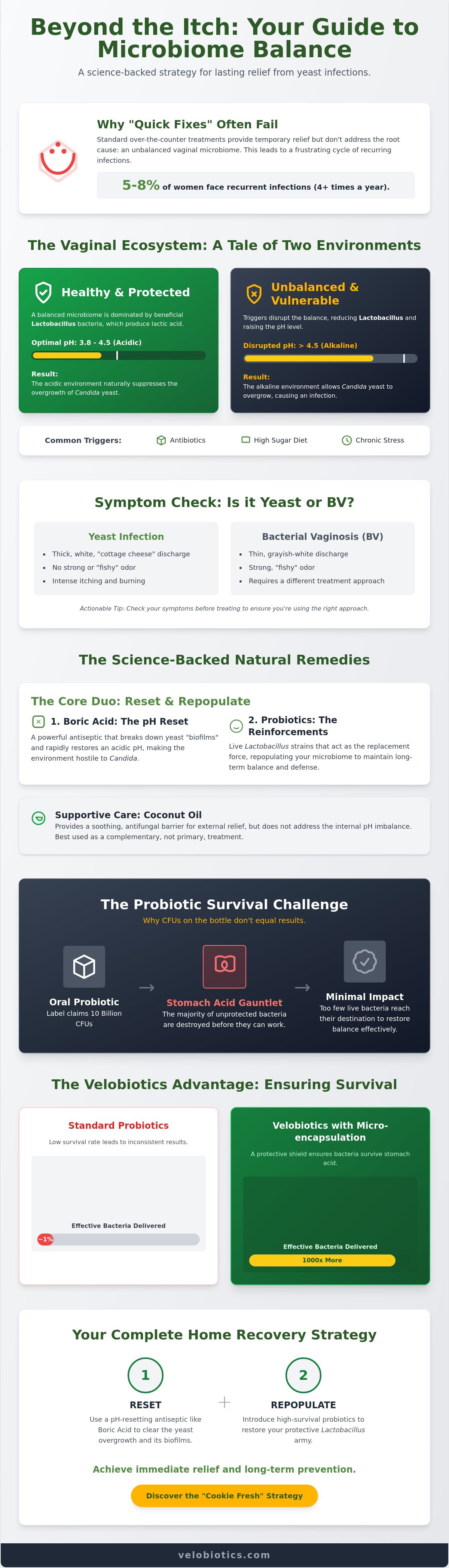
Your primary guards are Lactobacillus bacteria. These tiny powerhouses produce lactic acid to keep your pH in the acidic sweet spot of 3.8 to 4.5. When you take antibiotics, consume high amounts of sugar, or live in a state of chronic stress, you essentially evict these guards. Without them, the environment becomes alkaline, and yeast begins to bloom. Actionable Tip: Check your symptoms before treating. If your discharge is thick and white like cottage cheese but has no strong smell, it is likely yeast. If it is thin, grayish, and has a fishy odor, you are probably dealing with Bacterial Vaginosis (BV), which requires a different approach.
Why Natural Remedies Often Fail (And How to Fix It)
I see many women try "kitchen remedies" like garlic cloves or plain yogurt. While these contain beneficial compounds, they simply aren't concentrated enough to win a war against a full-blown overgrowth. Clinical-grade natural remedies for yeast infection are different because they are standardized for potency and safety. For example, using a targeted solution like Femina Probiotics COOKIE FRESH provides a precise delivery of boric acid to reset pH while introducing probiotics to repopulate the area. This scientific approach is far more reliable than DIY methods that often lead to further irritation.
The Heavy Hitters: Natural Remedies That Science Actually Supports
When it comes to natural remedies for yeast infection, we need to move past the anecdotal "it worked for my friend" and look at what the clinical data actually tells us. In my practice, I focus on the 'Big Three': Boric Acid, Probiotics, and Coconut Oil. These aren't just wellness trends; they are biological tools that interact with your microbiome to restore order. While coconut oil provides a soothing, antifungal barrier, the real heavy lifting is done by ingredients that actively shift the vaginal environment back to its acidic, protective state.
Boric acid works as a powerful antiseptic that breaks down the "biofilms" yeast uses to hide from treatments. Probiotics, on the other hand, act as the replacement force for your lost Lactobacillus. However, the biggest challenge with probiotics is survival. If you take an oral supplement, those delicate bacteria must survive a bath of stomach acid. If they don't reach the target alive, they can't flourish. This is why vaginal delivery or high-tech micro-encapsulation is often superior for rapid relief.
Boric Acid: The Gold Standard for Recurrent Yeast
Boric acid has become a front-line recommendation for a reason. It is particularly effective against non-albicans yeast strains, which are often resistant to standard over-the-counter antifungal creams. According to clinical resources like MedlinePlus, understanding when symptoms require professional intervention is key, but for many, boric acid provides the pH reset needed to stop the cycle of recurrence. It's vital to remember the safety rule: never ingest boric acid. It is strictly for vaginal use. If you are looking for a pure, targeted option, you might consider boric acid only suppositories to reset your internal chemistry without unnecessary additives.
Probiotics: Repopulating the 'Good Guys'
To keep yeast from coming back, you must repopulate your internal defense force. We look for specific, well-researched strains like Lactobacillus rhamnosus and L. reuteri. These are the specific "good guys" that produce the lactic acid your body needs. The problem with standard supplements is the "probiotic gap," where most of the CFU count dies before it ever does you any good. Look for products that use patented delivery systems to ensure these bacteria survive the journey. When you use a high-quality probiotic suppository with boric acid, you are essentially doing two jobs at once: clearing the overgrowth and immediately seeding the area with the protective bacteria it's been missing. This dual-action approach is far more effective than just trying to kill the yeast alone.
Practicality is everything when you're in discomfort. While oral probiotics are great for long-term gut health, vaginal suppositories provide the most direct route for relief. By introducing the bacteria exactly where they are needed, you bypass the digestive system entirely. This ensures that the beneficial strains can start adhering to the vaginal wall and producing protective compounds within hours, not days. Always check for a high CFU count and clinical-grade ingredients to ensure you are getting the most out of your natural remedies for yeast infection.
The 'Doctor’s Protocol' for Natural Yeast Infection Relief
In my clinical experience, the most common mistake patients make is treating boric acid and probiotics as two separate, unrelated options. Effective natural remedies for yeast infection work best when they follow a logical sequence: clear the overgrowth, reset the chemistry, and then repopulate the defense force. For mild symptoms, a 3-day protocol is often sufficient. If you are dealing with a more stubborn or recurrent flare-up, I recommend extending this to 7 days to ensure the Candida colonies are fully managed.
Step one is the pH reset. Using a clinical-grade suppository like Femina Probiotics COOKIE FRESH at bedtime allows the boric acid to work while you sleep, breaking down biofilms and lowering the vaginal pH to a level where yeast cannot survive. Step two involves supporting the gut-vagina axis by taking a high-survival oral probiotic. This ensures that beneficial strains are constantly being introduced to your system, helping with restoring your vaginal microbiome from the inside out. Finally, step three focuses on external comfort. A thin layer of organic coconut oil can act as a soothing antifungal carrier to protect irritated skin while the internal treatment does the heavy lifting.
Dos and Don'ts of Home Application
Precision matters when you're managing an infection at home. Always use a clean, single-use applicator for suppositories to avoid reintroducing bacteria. Don't use scented soaps, bubble baths, or douches; these are microbiome disruptors that wash away your protective Lactobacillus. During an active flare-up, a sugar-free diet is essential. Yeast thrives on glucose, so cutting out processed sugars for a few days literally starves the overgrowth. Wear breathable cotton underwear to prevent the moisture trap that allows fungi to flourish. Skip the synthetic fabrics until you are completely symptom-free.
When to Stop the Home Remedies and See a Professional
While natural remedies for yeast infection are highly effective for uncomplicated cases, you must know when to call for backup. If you experience fever, chills, or sharp pelvic pain, stop home treatment immediately. These are "red flag" symptoms that suggest the infection may have spread or that you are dealing with something more complex. According to the Mayo Clinic, a professional diagnosis is vital if you aren't sure of the cause, as masking a more serious issue like a UTI or an STI can lead to long-term complications. If your symptoms don't improve after a week of consistent protocol, you need a lab culture to identify the specific strain of yeast or bacteria involved. Persistent infections require a targeted approach that only a clinical test can provide.
Lifestyle Tweaks to Prevent Yeast from Returning
Stopping a single flare-up is a biological victory, but the real goal is a long-term defense strategy. To achieve this, we must address the "Gut-Vagina Connection." Your digestive system acts as a primary reservoir for the microbes that eventually populate the vaginal tract. When your gut microbiome is out of sync, it's only a matter of time before those imbalances migrate. This is why the most effective natural remedies for yeast infection aren't just topical; they're systemic. By managing your internal environment, you make your body a hostile place for Candida overgrowth.
Dietary choices play a massive role in this ecosystem. High-glycemic diets, rich in processed sugars and refined flours, are essentially a fuel source for yeast. In my practice, I've seen that reducing sugar intake can significantly lower the frequency of recurrent infections. Focus instead on "Vaginal Superfoods" that support a healthy pH. Fermented foods like kimchi, kefir, and unpasteurized sauerkraut introduce beneficial bacteria, while leafy greens provide the fiber your existing microbiome needs to thrive. Don't forget the impact of stress. High cortisol levels can spike your blood sugar and suppress your immune response, giving yeast the perfect window to flourish.
The Probiotic Maintenance Routine
A daily probiotic is far superior to a reactive one. Waiting until you feel an itch to take action is like trying to build a fire while you're already shivering. The key is consistency and survival. When you're choosing the right probiotic for women, look for products that guarantee the bacteria actually reach your gut alive. Most standard store-bought supplements die in the stomach. A high-survival supplement ensures that the colony-forming units (CFUs) actually make it to their destination to provide ongoing protection and vitality.
Intimate Hygiene Without the Chemicals
Your vagina is a self-cleaning organ. The "Water Only" rule for internal cleansing is the safest way to maintain your delicate pH. Most commercial "feminine washes" or "pH-balanced" soaps are actually the enemy of your microbiome. They often contain surfactants and fragrances that strip away protective Lactobacillus, leading to the very infections they claim to prevent. Similarly, be selective with lubricants. Many contain glycerin or other sugars that can cause pH spikes. Stick to water-based, chemical-free options to keep your internal defenses intact. To maintain this delicate balance daily, you can invest in clinical-grade microbiome support that works with your body's natural chemistry.
Advanced Natural Relief: The Velobiotics Survival Advantage
When searching for natural remedies for yeast infection, the biggest hurdle isn't finding the right ingredients; it's finding a way to make them survive. As a doctor, I've seen countless patients spend a fortune on high-CFU probiotics only to see zero results. This happens because of the "probiotic gap." Most beneficial bacteria are incredibly delicate. Without protection, up to 99% of them die the moment they hit your stomach acid. If they don't reach your system alive, they can't colonize or protect your microbiome. This is where clinical technology changes the game.
Our patented Velobiotics™ technology uses a unique micro-encapsulation process that acts like a protective suit for every single bacterium. This innovation provides 1000x more delivery compared to standard non-encapsulated probiotics. By ensuring these "good guys" survive the harsh journey through your digestive tract, we bridge the gap between what's on the label and what actually reaches your microbiome. It is the difference between a supplement that looks good on paper and one that actually delivers results you can feel.
Cookie Fresh: The Ultimate pH Reset
The "Cookie Fresh" philosophy was born from a simple clinical observation: clearing an infection is only half the battle. You also have to prevent the next one. This is why I developed the Femina Probiotic Cookie Fresh Suppositories. Instead of treating boric acid and probiotics as separate steps, we combined them. The boric acid works immediately to break down biofilms and reset your vaginal pH, while the micro-encapsulated probiotics begin building a long-term defense force. This dual-action approach provides immediate relief from odor and itching while ensuring your microbiome has the vitality to resist future overgrowth. It is a sophisticated, clinical-grade solution for those who are tired of the "quick fix" cycle.
A Doctor's Final Word on Intimate Wellness
Your intimate health is a vital sign of your overall well-being. It's not something to be embarrassed about or something to treat with "kitchen remedies" that lack scientific rigor. You have the power to manage your microbiome, but you need the right tools to do it effectively. Shifting the conversation about natural remedies for yeast infection from "hope" to "empirical evidence" is why I started this journey. We are dedicated to high-tech innovation because we believe that science is the best partner for your health.
If you want to learn more about how we are solving the probiotic survival problem, I invite you to read the Velobiotics Story. You don't have to settle for recurrent infections or treatments that don't work. Empower your microbiome today with technology designed to help you flourish. Your journey to lasting balance starts with choosing science over slogans.
Take Control of Your Microbiome Health Today
Restoring your internal balance doesn't have to be a guessing game of messy home experiments. By focusing on a clinical-grade pH reset and ensuring your beneficial bacteria actually reach their destination alive, you can break the cycle of recurrent itching and discomfort. We've explored how identifying the root cause and supporting the gut-vagina connection are the most effective natural remedies for yeast infection. It's about moving from temporary fixes to a long-term strategy that lets your body's natural defenses flourish.
As a doctor, I'm proud to offer solutions that are clinically formulated to solve the probiotic survival gap. Our patented technology provides 1000x more delivery compared to standard non-encapsulated brands; this gives you the dual-action support of boric acid and probiotics in one simple step. Ready to stop the burn for good? Experience the science of survival with Femina Cookie Fresh Probiotic Suppositories and help your beneficial bacteria reach your system alive. You have the power to feel like yourself again, and I'm here to help you get there.
Frequently Asked Questions
Can I use apple cider vinegar to treat a yeast infection?
You shouldn't apply apple cider vinegar directly to your vaginal tissue because its high acidity can cause chemical burns and severe irritation. While some people find relief using a diluted ACV soak for external itching, it doesn't reach the source of the overgrowth inside the canal. It's much safer to use a clinical-grade pH balancer that's specifically formulated for delicate mucosal membranes rather than a kitchen staple.
Is it safe to put yogurt in my vagina for relief?
Putting yogurt in your vagina is a messy DIY approach that I don't recommend because it often contains trace sugars that actually feed the yeast. Even plain, unsweetened yogurt doesn't have the high concentration of specific Lactobacillus strains needed to effectively repopulate your microbiome. You'll get much faster and more reliable results by using a targeted probiotic suppository designed for internal delivery.
How long do natural remedies take to work compared to Monistat?
Natural remedies for yeast infection generally take between three and seven days to show significant results, which is a similar timeframe to standard over-the-counter antifungal creams. While some chemical treatments might offer a faster numbing sensation, natural protocols focus on resetting your internal chemistry. This approach helps ensure the relief is permanent by addressing the environment that allowed the yeast to flourish in the first place.
Can probiotics prevent a yeast infection while taking antibiotics?
Yes, taking a high-survival probiotic while on antibiotics is one of the most effective ways to protect your internal balance. Antibiotics are like a wildfire in your internal forest; they kill the bad bacteria but also wipe out the protective Lactobacillus. Just make sure to space your probiotic dose at least two hours away from your antibiotic to ensure the live cultures aren't destroyed before they can colonize.
Does coconut oil actually kill Candida?
Organic coconut oil contains lauric acid and caprylic acid, which have been shown in laboratory studies to disrupt the cell walls of Candida. It acts as an excellent antifungal carrier for soothing external skin irritation and creating a protective barrier. However, it works best as a supportive tool alongside internal pH-resetting treatments rather than as a standalone cure for a deep-seated infection.
What is the fastest natural way to stop vaginal itching?
If you're looking for the fastest way to stop the itch, start with a cold compress for immediate numbing followed by a boric acid suppository. The cold compress calms the local nerve endings while the boric acid begins to lower your pH to a level where yeast stops active growth. This two-step approach handles the immediate discomfort while simultaneously starting the biological cleanup process.
Can I use boric acid if I am pregnant or breastfeeding?
You must avoid using boric acid if you are pregnant because it is potentially toxic to a developing fetus. If you're breastfeeding, the clinical data is less certain, so you should always consult your OB-GYN before starting any new suppository protocol. For my pregnant patients, I typically recommend focusing on oral probiotics that support the microbiome without the use of antiseptic suppositories.
What happens if a natural remedy doesn't clear the infection?
If the fire hasn't gone out after seven days of consistent treatment, you need to see a healthcare professional for a lab culture. Persistent symptoms can sometimes mimic a yeast infection when you're actually dealing with Bacterial Vaginosis (BV) or a subclinical STI. A professional test is the only way to identify resistant fungal strains and ensure you're using the correct treatment for your specific situation.

Disclaimer
Information and statements regarding dietary supplements/products have not been evaluated by the Food and Drug Administration, MCC/SAHPRA, MHRA, TGA or any other drug regulatory authority and are not intended to diagnose, treat, cure, or prevent any disease. Information on this website is provided for informational purposes only and is a result of years of practice and experience by the author. This information is not intended as a substitute for the advice provided by your physician or other healthcare professional or any information contained on or in any product label or packaging. Do not use the information on this website for diagnosing or treating a health problem or disease, or prescribing medication or other treatment. Always speak with your physician or other healthcare professional before taking any medication or nutritional, herbal, or homeopathic supplement, or using any treatment for a health problem. If you have or suspect that you have a medical problem, contact your healthcare provider promptly. Do not disregard professional medical advice or delay in seeking professional advice because of something you have read on this website.