

Probiotic & Collagen for Gut Lining: 2026 Repair Guide
What if the reason your expensive supplements feel like a total waste of money isn't the quality of the ingredients, but a biological "trap door" in your digestive tract? If you're struggling with chronic bloating or the feeling that your nutrition is just passing through you, you're not alone; over 80% of consumers reported digestive issues this past year. Understanding the probiotic and collagen benefits for gut lining is the first step toward closing that door. It's frustrating to feel like you're doing everything right while your body remains in a state of inflammatory rebellion, but the science of biological viability offers a clinical way out.
In this 2026 guide, I'll show you how to combine specific collagen peptides with high-viability probiotic strains to create a synergistic "seal and heal" effect. We'll cut through the confusion surrounding the recent Dietary Supplement Innovation Act to provide a clear, science-backed plan for structural repair. You'll learn exactly how to strengthen your intestinal barrier, improve nutrient uptake, and finally silence the systemic inflammation that's been holding your health hostage. My goal is to bridge the gap between complex laboratory breakthroughs and your daily routine with actionable, clinical insights that actually work.
Key Takeaways
- Understand how "Tight Junctions" act as the high-security gatekeepers of your immune system and why their failure leads to chronic bloating.
- Discover the specific probiotic and collagen benefits for gut lining through a "Brick and Mortar" synergy that uses amino acids to fuel cellular regeneration.
- Learn why a clinical 16-strain probiotic blend combined with Type I and II collagen is significantly more effective than generic supermarket options.
- Uncover the "Viability Gap" and how proprietary micro-encapsulation technology ensures your repair kit survives stomach acid to reach the lower GI tract.
- Implement a doctor-designed daily protocol to time your supplementation perfectly for maximum nutrient absorption and intestinal barrier strength.
The Gatekeeper: Understanding Your Gut Lining and Why It Fails
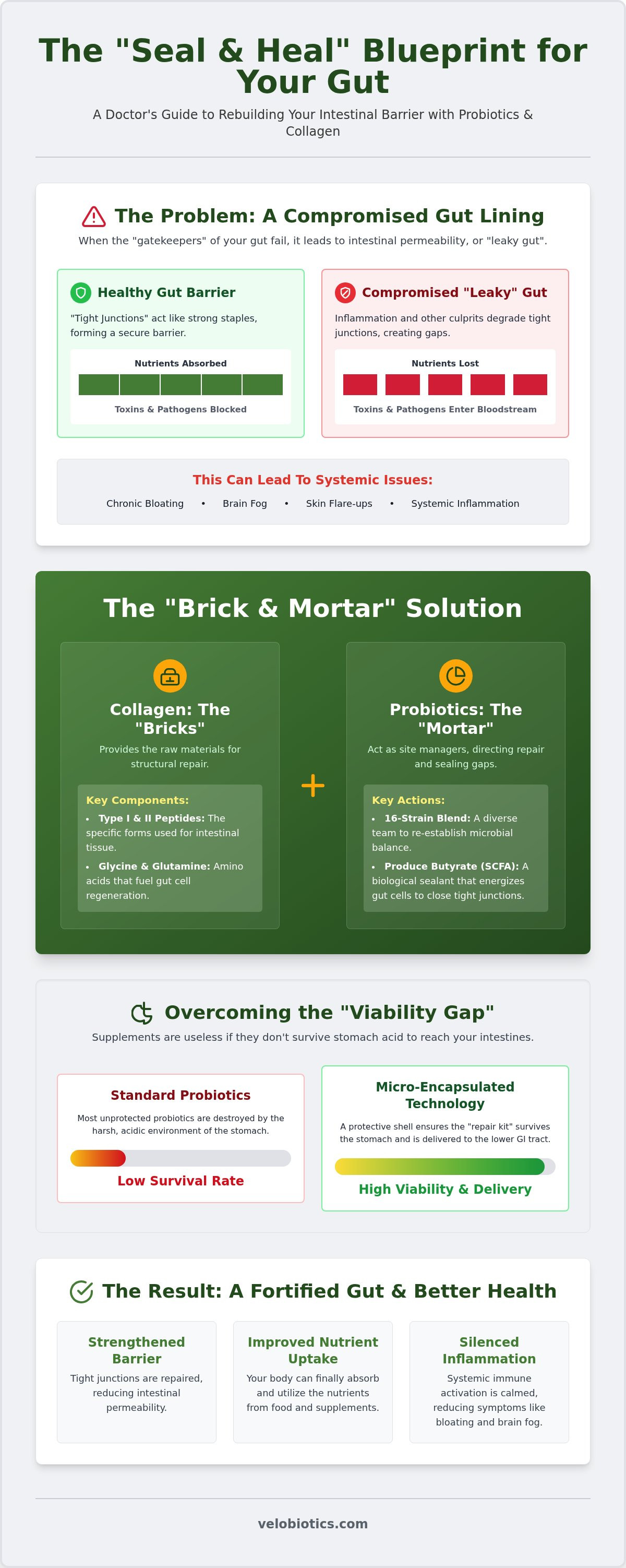
As a doctor, I view the gut lining as a high-security gatekeeper for your immune system. It is a single layer of cells that acts as a sophisticated filter, deciding which molecules are friends and which are foes. This barrier relies on "Tight Junctions," which are microscopic proteins that keep food particles in and toxins out. Think of these junctions as industrial-strength staples holding your intestinal wall together. When these staples remain intact, your body absorbs nutrients efficiently while keeping pathogens at bay. However, when the gatekeeper is compromised, the "gate" stays open, leading to a cascade of systemic health issues.
Culprits like chronic stress, highly processed diets, and bacterial dysbiosis are constantly hammering at this wall. When the balance of your microbiome shifts, it triggers localized inflammation that degrades these essential proteins. This structural failure often manifests as brain fog, persistent bloating, and sudden skin flare-ups. To understand the path to recovery, we have to look at Understanding Your Gut Lining and how it functions as a biological filter. Exploring the probiotic and collagen benefits for gut lining isn't just about following wellness trends; it is about providing the specific raw materials required for cellular repair.
The Anatomy of Intestinal Permeability
Your mucosal barrier is the first line of defense, acting as a protective "shield" for the delicate cells beneath. Problems often start when a protein called zonulin is overproduced. Zonulin acts as the "key" that accidentally unzips your gut lining by signaling the tight junctions to pull apart. I define intestinal permeability as the structural root of systemic inflammation. Once that barrier is breached, undigested proteins enter the bloodstream, forcing your immune system into a state of permanent high alert. This constant immune activation is why a "leaky" gut often feels like a full-body crisis rather than just a digestive one.
Why "Standard" Wellness Solutions Often Fall Short
Many people make the mistake of treating symptoms like bloating or gas while ignoring the underlying structural damage. You wouldn't keep mopping a floor without fixing the leaky pipe above it. A healthy gut lining is essential for absorbing the very nutrients you take to heal. If your intestinal wall is compromised, even the best supplements might pass through without being utilized by your cells. You aren’t what you eat; you are what you successfully absorb. This is why understanding the probiotic and collagen benefits for gut lining is critical. You need both the "builders" (probiotics) and the "bricks" (collagen) to restore biological viability. Using a targeted formula like Velo16 can help re-establish the microbial balance required for these structural repairs to take hold and last.
The Synergy Effect: How Probiotics and Collagen Work Together
Most health enthusiasts treat their supplement cabinet like a cafeteria, picking one item for skin and another for digestion. If you want to see real results, you have to stop viewing these as isolated tools. To unlock the full probiotic and collagen benefits for gut lining, you need to understand their "Brick and Mortar" relationship. In this clinical construction project, collagen provides the physical bricks (the structure), while probiotics act as the site managers and the mortar that holds everything together. Without the manager, the bricks just sit in a pile; without the bricks, the manager has nothing to build with.
The amino acids found in collagen, specifically Glycine and Glutamine, act as the primary fuel for gut cell regeneration. Your enterocytes, the cells lining your intestines, have a high turnover rate and require a constant supply of these building blocks to stay healthy. Simultaneously, your "management crew" of probiotics ferments dietary fibers to produce Short-Chain Fatty Acids (SCFAs) like butyrate. This butyrate acts as a biological sealant, providing the energy your gut cells need to keep those tight junctions closed. A balanced microbiome also acts as an antioxidant shield. By neutralizing free radicals, these bacteria prevent the oxidative stress that prematurely breaks down your body's collagen stores. If you're looking for a way to jumpstart this process, exploring high-viability options at Velobiotics can ensure these elements actually reach their destination.
Collagen: The Building Blocks of the Basement Membrane
Your gut lining isn't just a wall; it's a dynamic, elastic membrane. It requires specific amino acids to maintain its structural integrity under the mechanical stress of digestion. Glutamine is particularly vital here because it acts as a "plug" for the microscopic holes associated with increased permeability. Beyond the wall itself, collagen supports the production of the protective mucus layer. This layer is your stomach’s first defense against acid and enzymes. When this mucus is thick and healthy, your underlying cells are shielded from the "burn" of daily digestion.
Probiotics: The Microbiome Managers
Beneficial bacteria do much more than just occupy space. They actively signal your body to increase its natural collagen synthesis. Scientific reviews on how probiotics fortify the intestinal barrier confirm that specific strains can actually "talk" to your DNA to encourage repair. I always recommend a 16-strain approach because a diverse microbiome is a resilient one. Single-strain "supermarket" probiotics often lack the complex signaling required for total barrier restoration. For a deeper dive into which strains survive the journey, read my full Probiotics for Digestive Health guide. Using a multi-strain formula ensures that every "gap" in your management team is covered, leading to a more robust and responsive immune gatekeeper.
Choosing the Right Tools: Type I & II Collagen + 16-Strain Probiotics
In my clinical experience, choosing the right tools is where most people stumble. They buy a generic tub of collagen and hope for the best. But if you want to experience the full probiotic and collagen benefits for gut lining, you have to look at the molecular level. Standard proteins are often too large for the body to utilize effectively. This is why we focus on peptides; these are collagen molecules that have been broken down into smaller chains that your gut can actually absorb. Without this "pre-digestion" step, you're just putting a heavy load on an already stressed digestive system. Understanding the probiotic and collagen benefits for gut lining requires looking past the marketing hype and focusing on biological viability.
It's not just about what you take, but how it interacts with your biology. A Scientific review on diet and gut barrier function highlights that the success of any repair protocol depends on the specific delivery of these nutrients. If your probiotics die in the stomach acid, or your collagen isn't bioavailable, the repair process never starts. This is why delivery technology is the "secret sauce" for survival. You need a delivery system that acts as a protective shield, ensuring these active ingredients reach the lower GI tract intact.
Type I & II Collagen: A Comprehensive Repair Kit
Type I is the most common form of collagen, providing excellent structure for skin and connective tissues. For the gut, however, Type II is the unsung hero. It specifically targets the mucosal lining and the underlying basement membrane of the digestive tract. I always recommend non-GMO, clean-sourced collagen to ensure you aren't introducing pesticides or additives that irritate a sensitive gut. Combined Type I & II peptides provide the most robust structural support for a damaged intestinal wall.
The Power of 16 Clinical Strains
Diversity is the hallmark of a healthy gut. While "supermarket" probiotics might offer one or two strains, they lack the specialized skills needed for total barrier restoration. A 16-strain blend ensures that different sections of the digestive tract receive the support they need. This variety creates a more stable intestinal wall that can better resist pathogens. You can find this specific combination in our 16 Strains Probiotics Collagen Peptides, which is designed to bridge the "viability gap" using micro-encapsulation technology. This protective shield ensures that the management crew and the building blocks arrive exactly where they are needed most.
A Doctor’s Daily Protocol for Gut Lining Restoration
Knowing the science is only half the battle; the real transformation happens when you apply these clinical insights to your daily life. I recommend starting your morning with micro-encapsulated probiotics on a completely empty stomach. This allows for maximum transit speed through the upper digestive tract, ensuring the bacteria reach the lower intestines where they can begin their management work. This protocol is designed to harness the full probiotic and collagen benefits for gut lining by aligning with your body’s natural circadian rhythms when your system is most receptive to repair.
Around mid-day, incorporate your collagen peptides into a smoothie or a warm beverage. This timing supports the afternoon peak in cell turnover, giving your body the raw fuel it needs right when the construction crew is most active. However, you must avoid "barrier breakers" during this repair phase. Refined sugar and alcohol act like chemical sandpaper on your delicate intestinal wall. Sugar specifically feeds the pathogenic bacteria that produce the very toxins your lining is trying to keep out. Adopt a "30-Day Gut Reset" mindset. Consistency is far more important than a massive one-time dosage. Your gut lining didn't fail overnight, and it won't seal overnight either. By following this rhythm, you give your body the steady stream of resources it needs for structural integrity. To begin your journey with a clinical edge, you can explore our research-driven repair kits here.
Timing for Maximum Absorption
Taking probiotics before breakfast helps them bypass the heavy digestive activity and high acid levels triggered by a substantial meal. When you're ready for your mid-day collagen, the best way to mix it is to ensure the peptides remain bioavailable. Use lukewarm, not boiling, water for your collagen to protect the delicate peptides from heat-induced denaturation. If the water is too hot, you risk breaking down the very amino acids your gut needs to plug those microscopic holes. A gentle stir in a room-temperature liquid keeps the structural integrity of the peptides intact for better absorption.
Lifestyle Habits That Seal the Deal
Hydration is non-negotiable for maintaining the gut’s mucosal "slip," which acts as a lubricant and protective shield for the underlying cells. Without adequate water, the mucosal barrier thins, leaving your tight junctions exposed. Additionally, managing your cortisol levels is vital; high stress signals the body to increase permeability, creating a "stress-leak" that undoes your hard work. To truly maximize the probiotic and collagen benefits for gut lining, you must address these environmental factors alongside your supplementation. For a deeper look at the technology behind these protocols, read my guide on Probiotics That Survive Stomach Acid to understand how we solve the problem of biological viability.
The Velobiotics Advantage: Ensuring Your Repair Kit Actually Arrives
As a doctor, I've seen countless patients invest in high-end supplements only to see zero clinical improvement. The reason usually isn't the ingredients; it is what I call the "Viability Gap." Most standard probiotics are incredibly fragile. Research shows that up to 90% of standard, unprotected probiotics never reach your gut lining because they are destroyed by the harsh, acidic environment of the stomach. If the "management crew" dies before they reach the construction site, the repair process never begins. By understanding the probiotic and collagen benefits for gut lining, we realized that structural repair is impossible if your body digests the active ingredients before they can be utilized.
This is where our proprietary technology changes the game. We don't just provide the raw materials; we provide the armored transport. Our micro-encapsulation "shield" protects both the 16-strain probiotic blend and the collagen peptides, ensuring they survive the gastric passage. Our Almasi Probiotics Collagen Powder was specifically engineered to bridge this gap, combining these two pillars of gut health into one clinical-grade dose. It's a comprehensive system that ensures your biological investment actually pays off in the form of a stronger, more resilient intestinal barrier. My final piece of advice is simple: don't settle for supplements that get liquidated by your own stomach acid before they can do their job.
Micro-Encapsulation: The Science of Survival
Our technology mimics a "protective bubble" for every active ingredient. While standard vegetable capsules often dissolve within minutes of hitting stomach acid, our micro-encapsulated shield remains intact until it reaches the alkaline environment of the lower intestines. Data indicates that this method provides up to 1000x better survival rates for probiotics compared to traditional delivery formats. This ensures that the probiotic and collagen benefits for gut lining are fully realized where they matter most. You can find this advanced delivery system in our Almasi Probiotics Collagen Powder, which is designed for maximum biological viability.
Why Velobiotics is Different
We are a doctor-founded organization, and our research into micro-encapsulation wasn't born out of a marketing trend, but out of a clinical need for better patient outcomes. We are committed to 16-strain diversity because we know that a complex microbiome is the only way to maintain a stable intestinal wall. We've moved beyond the "one-size-fits-all" approach to create a targeted, scientifically-backed solution for gut permeability. If you're ready to stop guessing and start healing with professional-grade tools, it's time to start your gut repair journey today and experience the difference that true viability makes.
Seal Your Gut Barrier for Lasting Health
You now have the clinical blueprint to move beyond temporary relief and toward permanent structural repair. We've explored how the synergy between high-viability strains and specific peptides addresses the root cause of intestinal permeability. To truly experience the probiotic and collagen benefits for gut lining, you must bridge the gap between ingestion and actual absorption. It's not enough to take the right ingredients; they must survive the biological gauntlet of your stomach acid to do their work. Most supplements fail because they lack the armor required for the journey.
As a doctor, I founded this mission to solve the delivery crisis through biotechnology. Our proprietary micro-encapsulation ensures that our 16-strain formula arrives intact, providing the comprehensive support your immune system demands. Don't let your nutritional investment go to waste. You have the power to transform your digestive health by choosing tools designed for biological viability. Shop Clinical-Grade Probiotic Collagen Peptides for Gut Repair and give your body the building blocks it deserves. Your path to a resilient, bloat-free life starts with the very next dose. You've got this.
Frequently Asked Questions
Can I take collagen and probiotics at the same time?
You can certainly take collagen and probiotics at the same time, as they function through complementary biological pathways. While probiotics manage the microbial environment and reduce inflammation, collagen provides the structural amino acids needed for cellular regeneration. This combination maximizes the probiotic and collagen benefits for gut lining by ensuring the "construction crew" has the "building materials" they need simultaneously. Taking them together simplifies your routine without compromising the efficacy of either ingredient.
How long does it take to repair the gut lining with collagen and probiotics?
Clinical repair of the intestinal barrier typically requires a consistent protocol of four to twelve weeks. While some individuals notice reduced bloating within days, structural healing of the tight junctions is a biological process that follows the natural turnover rate of intestinal cells. Consistency is vital during this "reset" period. Factors like your baseline gut permeability, diet, and stress levels will influence the total duration required to achieve a fully resilient mucosal barrier.
Do probiotics for gut lining help with skin issues like acne or eczema?
Yes, addressing gut permeability often leads to significant improvements in skin conditions through the gut-skin axis. When the intestinal barrier fails, toxins enter the bloodstream and trigger systemic inflammation, which frequently manifests as acne or eczema flare-ups. By utilizing the probiotic and collagen benefits for gut lining to seal these gaps, you reduce the inflammatory load on your body. This structural repair often results in clearer skin and a more balanced complexion.
What is the best type of collagen for leaky gut?
For intestinal permeability, a combination of Type I and Type II collagen peptides is the most effective clinical choice. Type II collagen specifically targets the mucosal lining and basement membrane of the digestive tract, while Type I supports the overall connective tissue structure. It is essential to use hydrolyzed peptides rather than whole proteins. These smaller molecules are much easier for a compromised gut to absorb and utilize for immediate cellular repair.
Can probiotics cause bloating when you first start taking them for gut repair?
It is common to experience mild, temporary bloating when you first introduce high-potency probiotics. This reaction, often referred to as a microbial shift, occurs as beneficial bacteria begin to displace pathogenic strains and recalibrate your internal environment. These symptoms usually resolve within three to five days as your microbiome stabilizes. If bloating persists, I recommend slightly reducing the dosage and gradually increasing it to allow your system to adapt to the new microbial balance.
Is it better to get collagen from bone broth or supplements for gut health?
While bone broth is a nutritious whole-food source, clinical supplements offer superior biological viability and consistent dosing. Supplements like Almasi Probiotics Collagen Powder provide hydrolyzed peptides that are already broken down for rapid absorption. Bone broth contains larger protein structures that a damaged gut may struggle to process efficiently. For targeted therapeutic repair, the precision of a standardized peptide supplement ensures your body receives the exact amino acid profile required for lining restoration.
Are there any side effects to taking 16 strains of probiotics at once?
Taking a diverse blend of 16 probiotic strains is generally very safe and mimics the natural complexity of a healthy human microbiome. High strain diversity is actually superior for gut repair because different bacteria specialize in supporting various sections of the digestive tract. Some users might experience minor gas during the initial adjustment phase, but this is a sign of microbial reorganization. Using a micro-encapsulated formula helps mitigate these effects by ensuring a successful, gradual delivery.

Disclaimer
Information and statements regarding dietary supplements/products have not been evaluated by the Food and Drug Administration, MCC/SAHPRA, MHRA, TGA or any other drug regulatory authority and are not intended to diagnose, treat, cure, or prevent any disease. Information on this website is provided for informational purposes only and is a result of years of practice and experience by the author. This information is not intended as a substitute for the advice provided by your physician or other healthcare professional or any information contained on or in any product label or packaging. Do not use the information on this website for diagnosing or treating a health problem or disease, or prescribing medication or other treatment. Always speak with your physician or other healthcare professional before taking any medication or nutritional, herbal, or homeopathic supplement, or using any treatment for a health problem. If you have or suspect that you have a medical problem, contact your healthcare provider promptly. Do not disregard professional medical advice or delay in seeking professional advice because of something you have read on this website.