

Probiotics for Hormonal Acne: Gut-Skin Axis Guide (2026)
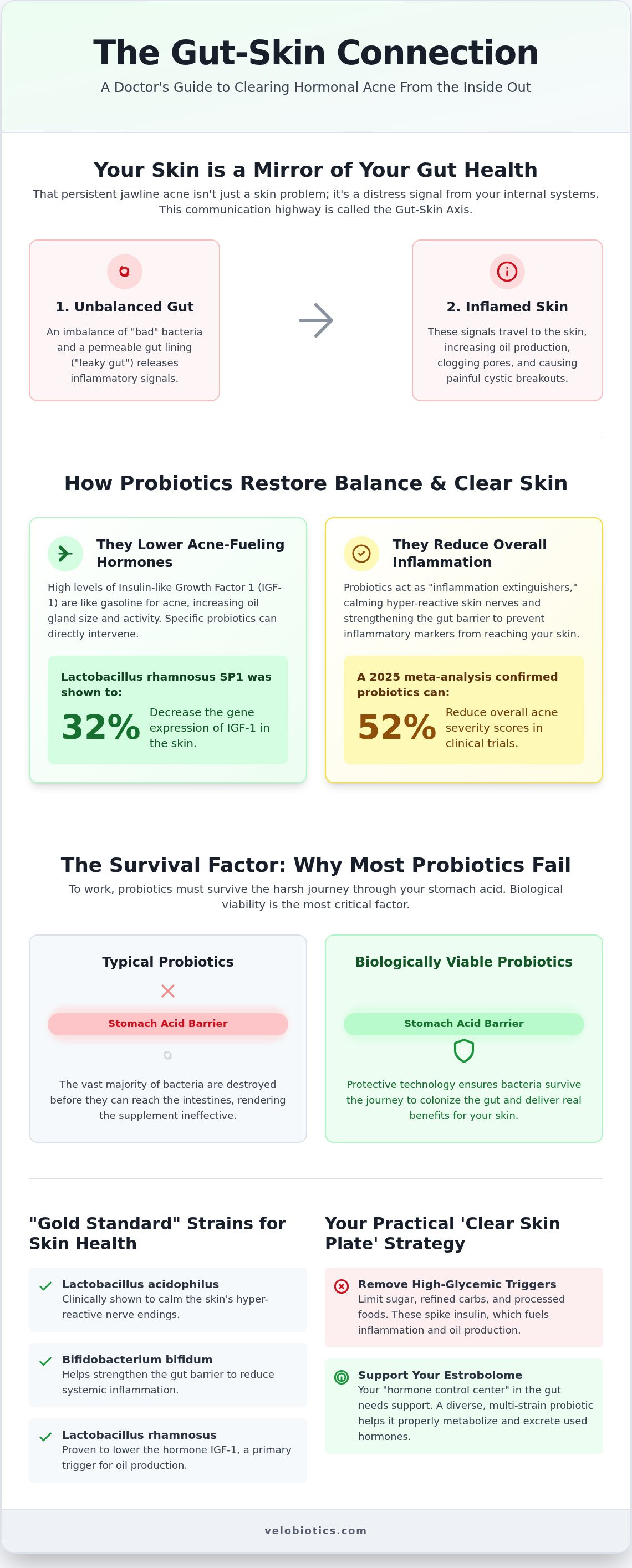
What if the secret to stopping those painful cystic breakouts isn't in your skincare cabinet, but deep inside your digestive tract? If you're struggling with persistent adult acne, you've likely tried every expensive cream on the market only to be met with another flare-up during your cycle. The science is now clear: your skin is a mirror of your internal health. Recent clinical data shows that specific probiotics for hormonal acne breakouts, such as Lactobacillus rhamnosus SP1, can actually decrease the gene expression of IGF-1, a hormone directly linked to acne, by as much as 32%.
I understand how exhausting it is to deal with mood swings and skin that refuses to clear, even when you're following a strict regimen. You're looking for a solution that addresses the root cause rather than just masking the symptoms. This guide will help you discover the scientific link between your gut health and hormonal breakouts, and you'll learn how to choose probiotics that actually survive to clear your skin. We'll break down the latest 2026 research on the "estrobolome," the role of biological viability in supplement efficacy, and practical ways to balance your hormones and digestion simultaneously.
Key Takeaways
- Understand why recurring jawline acne is actually a "cry for help" from your internal systems and how the gut-skin axis influences your complexion from the inside out.
- Learn how specific probiotic strains act as "inflammation extinguishers" by lowering IGF-1 levels to naturally reduce oil gland size and activity.
- Discover why biological viability is the most critical factor when choosing probiotics for hormonal acne breakouts to ensure they survive the harsh stomach acid barrier.
- Identify the "Gold Standard" bacterial strains, including Lactobacillus acidophilus and Bifidobacterium bifidum, that are clinically proven to calm the skin's nerve endings.
- Implement a practical "Clear Skin Plate" strategy by removing high-glycemic triggers to support your estrobolome and maintain long-term hormonal balance.
Beyond the Surface: Understanding the Gut-Skin Axis and Hormonal Acne
As a doctor, I often see patients spending thousands on high-end topical retinoids while ignoring the biological "fire" burning in their intestines. Your skin isn't an isolated organ; it's a billboard for your internal health. We call this communication network the gut-skin axis. It's a high-speed, bidirectional highway where your gut bacteria send chemical signals that dictate how much oil your pores produce and how quickly your skin cells turn over. When this highway is congested with "bad" bacteria, the results show up in your mirror as persistent inflammation.
That stubborn, deep, cystic acne along your jawline and chin is a classic physiological distress signal. In clinical terms, your gut functions like a "second liver." While your actual liver filters toxins, your gut microbiome ensures that spent hormones are properly metabolized and excreted. If your gut health is compromised, these hormones don't leave the body. Instead, they get a "second life" in your bloodstream, leading to the painful flares we all dread. This is why choosing the right probiotics for hormonal acne breakouts is about much more than just fixing a "stomach ache"; it's about reclaiming control over your endocrine system.
The Estrobolome: Your Gut's Hormone Control Center
Think of the estrobolome as your body's hormone management team. It's a specific collection of bacteria tasked with metabolizing and clearing estrogen. When this team is understaffed or imbalanced, an enzyme called beta-glucuronidase unbinds "dead" estrogen, turning it back into an active form that recirculates through your blood. This leads to estrogen dominance, which triggers your sebaceous glands to go into overdrive. More recirculated estrogen equals more sebum, providing the perfect environment for acne-causing bacteria to thrive. You can't scrub this away; you have to balance it from the inside.
Inflammation: The Fuel for Breakouts
When the lining of your gut becomes permeable, a condition often referred to as "leaky gut," pro-inflammatory markers escape into your general circulation. These markers travel straight to your skin, making it hyper-reactive to every minor stressor. This systemic inflammation is also why your skin might look angry after a high-sugar meal. Insulin resistance and gut health are deeply intertwined, and both act as fuel for hormonal flares. Using probiotics for hormonal acne breakouts helps seal those intestinal gaps, effectively lowering the systemic "heat" that turns a small clogged pore into a painful cyst. To support this internal environment, a diverse, multi-strain approach like Velo16 Probiotic Digestive Capsules can help populate the gut with the beneficial bacteria needed to manage these complex inflammatory pathways.
The Science of Clear Skin: How Probiotics Regulate Hormones
If you think probiotics are just for digestion, let's look at the cellular level of your skin. When you use targeted probiotics for hormonal acne breakouts, you're essentially turning down the volume on your skin's inflammatory signals. One of the most powerful mechanisms is the reduction of "Substance P." This is a neuropeptide that makes your skin nerve endings hyper-reactive and triggers oil production. Probiotics act as a biological buffer, calming these signals before they can cause a flare-up. A 2025 meta-analysis of randomized controlled trials confirmed that probiotics can reduce acne severity scores by 52%, proving that internal bacterial balance is a primary driver of skin health.
Another heavy hitter in the science of clear skin is the regulation of Insulin-like Growth Factor 1 (IGF-1). High levels of this hormone are like gasoline for acne; they increase the size and activity of your oil glands. Clinical trials in 2024 showed that the strain Lactobacillus rhamnosus SP1 decreased IGF-1 gene expression in the skin by 32%. This isn't magic; it's biochemistry. By populating your gut with a diverse array of beneficial bacteria, you create a state of competitive inhibition. Good microbes physically crowd out the C. acnes bacteria that lead to painful infections. This is why a 16-strain approach is far superior to a single-strain supplement. You need a full team of "good guys" to maintain this complex balance. For those seeking a comprehensive solution, the Velo16 Probiotic Digestive Capsules offer the 16-strain diversity required to handle these multiple hormonal pathways.
Managing Androgen Sensitivity via the Gut
Your gut health directly influences the 5-alpha reductase enzyme, which converts testosterone into DHT, the primary hormone responsible for greasy skin. In conditions like PCOS, where microbial diversity is often low, this conversion runs wild. Probiotics help regulate this enzyme, acting as a natural buffer against stress-induced cortisol. When your gut is balanced, your skin doesn't overreact every time you have a stressful day or a hormonal shift.
Probiotics as Internal Antioxidants
Choosing the right probiotics for hormonal acne breakouts requires looking past the marketing fluff and focusing on clinical "Gold Standard" strains. I always look for Lactobacillus acidophilus and Lactobacillus rhamnosus first. These aren't just generic fillers; they are the heavy lifters that help maintain the intestinal barrier and reduce the systemic inflammation that triggers cystic flares. L. rhamnosus, in particular, has shown a remarkable ability to lower the skin's sensitivity to stress-induced signals. When you pair these with Bifidobacterium bifidum, you're essentially deploying an inflammation extinguisher. This specific strain works by modulating the immune response, preventing your skin from overreacting to minor hormonal shifts that would otherwise lead to a painful breakout.
Look for these three specific bacterial strains in your supplement:
- Lactobacillus acidophilus: Supports the structural integrity of the intestinal barrier.
- Lactobacillus rhamnosus: Clinically shown to reduce skin sensitivity to hormonal stress.
- Bifidobacterium bifidum: Acts as a systemic inflammation extinguisher to calm angry cysts.
Don't overlook the essential minerals that act as co-factors for these bacteria. Zinc is the perfect partner for any probiotic regimen because it acts as a natural anti-androgen, effectively slowing down the oil production that feeds acne bacteria. It works similarly to some prescription medications but without the harsh systemic side effects. However, even the most potent bacteria need fuel to survive the journey. This is where prebiotics, like inulin, come into play. They provide the necessary nourishment for your "good guys" to colonize and thrive once they reach their destination. When selecting probiotics for hormonal acne breakouts, prioritize formulas that focus on biological viability to ensure the bacteria actually reach your gut alive.
The Power of Multi-Strain Formulations
A diverse microbiome is a resilient one. While some generic brands offer just one or two strains, a 16-strain formulation provides a much broader spectrum of support for your estrobolome. Different strains target different stages of the acne cycle, from the initial surge in sebum to the final inflammatory phase. You want a team that can handle estrogen metabolism, cortisol buffering, and gut lining repair all at once. For comprehensive microbial support, I recommend Velo16 Probiotic Digestive Capsules, which provide the high-level diversity needed to keep your internal systems in check.
Collagen and Probiotics: A Clear Skin Duo
We also need to talk about structural support for both your gut and your skin. Collagen peptides do more than just plump your complexion; they are vital for repairing the delicate gut lining. A strong gut lining prevents "leaky gut" from spilling inflammatory markers into your bloodstream, which is a major hidden cause of adult acne. Additionally, Type I and II collagen are essential for healing post-acne scarring and maintaining skin elasticity during the recovery process. You can find this synergistic combination in 16 Strains Probiotics Collagen Peptides, which helps rebuild your skin's foundation while supporting your internal health.
The Survival Factor: Why Most Probiotics Fail and How to Choose One That Works
You can buy the most expensive probiotics for hormonal acne breakouts, but if they don't survive the gastric acid bath in your stomach, they're essentially useless. Your stomach is designed to be a hostile environment with a pH between 1.5 and 3.5. This acidity is a fantastic defense against pathogens, but it's a death trap for standard probiotic capsules. Most generic supplements lose 90% to 99% of their active cultures before they even reach the small intestine. When you're trying to heal your skin from the inside, you need live, viable bacteria, not a graveyard of microbial debris.
Many people fall into the "CFU trap," believing that a higher number of colony-forming units automatically translates to better results. In reality, a supplement with 100 billion CFUs that lacks a delivery system is often less effective than a smaller, protected dose. It's not about how many bacteria you swallow; it's about how many arrive at the site of action. To read a label like a doctor, you must look beyond the strain list and identify the specific technology used to ensure biological viability.
The Velobiotics Difference: Micro-encapsulation Technology
We solved this survival problem by using proprietary micro-encapsulation. Think of it as a microscopic, acid-resistant "space suit" for every single bacterium. This shield prevents the stomach acid from penetrating the core until the probiotic reaches the neutral pH of the lower GI tract. Clinical data confirms that this technology allows for Probiotics That Survive Stomach Acid, delivering 1000x more live bacteria to your gut compared to standard capsules. This level of potency is non-negotiable when you're using probiotics for hormonal acne breakouts to modulate systemic inflammation.
Shelf Stability and Potency
There's a common myth that "refrigeration required" is a hallmark of quality. In many cases, it's actually a red flag indicating the strains are incredibly fragile and likely to die the moment they sit on your counter or enter your warm body. True clinical-grade probiotics should be shelf-stable and protected by moisture-proof packaging. Moisture is the enemy of dormancy; once a probiotic is exposed to humidity, it "wakes up" and dies without a food source. Choosing a product with a technological seal ensures that the potency on the label is exactly what you're getting in every dose.
If you're ready to stop wasting money on supplements that don't survive your digestion, you can explore our clinically-validated delivery systems to start your journey toward clearer skin.
Implementing Your Clear Skin Routine: Diet, Lifestyle, and Targeted Supplementation
Taking high-quality probiotics for hormonal acne breakouts is a massive step forward, but you'll see the best results when you treat your gut like a high-performance engine that needs the right fuel. The "Clear Skin Plate" focuses on cruciferous vegetables like broccoli and kale, which contain compounds that help your estrobolome metabolize estrogen more efficiently. Pair these with high-fiber legumes to keep things moving; if your digestion is sluggish, those spent hormones can't leave your body. I tell my patients that cutting out dairy and high-glycemic sugar is non-negotiable. These foods spike your insulin levels, which triggers the exact hormonal cascade that leads to oily skin and clogged pores.
Patience is your best clinical tool. I follow the 3-month rule: your gut microbiome didn't become imbalanced overnight, and it won't recalibrate in a week. While your skin cells turn over every 28 days, your internal bacterial colonies need about 90 days to establish a new, stable baseline. A solid morning routine sets the stage for this success. Start your day with a large glass of filtered water and your micro-encapsulated probiotic on an empty stomach to maximize delivery. Follow this with a mineral-based SPF, as your skin will be working hard to repair itself and needs protection from inflammatory UV damage.
Lifestyle Habits That Support Your Probiotics
Your microbes actually have their own circadian rhythms. If your sleep is erratic, your gut bacteria become stressed, which directly increases cortisol levels. This "stress hormone" is the primary enemy of your jawline; it signals your pores to produce thick, sticky sebum. To optimize your results, try "cycle syncing" your routine. This means increasing your focus on anti-inflammatory foods and perhaps adding a targeted supplement like Her-Biotics Probiotics Original Multivitamin during your luteal phase when your skin is most vulnerable to flares.
Tracking Your Progress
In the first 30 days, don't just look for fewer pimples. Watch for improved digestion, less bloating, and a reduction in overall skin redness. Some people experience a brief "purge" phase where the skin looks slightly worse before it gets better. This is often a sign that your system is clearing out old cellular debris and shifting its microbial balance. However, if you don't see a change in texture or inflammation after 12 weeks, it may be time to consult a dermatologist to see if there are other underlying factors. For most, sticking with a science-first gut protocol is the key to finally breaking the cycle of adult acne.
Take the Final Step Toward Biological Balance
We've explored how the gut-skin axis serves as the internal command center for your complexion. You now know that clear skin isn't just about what you apply topically; it's about how effectively your estrobolome processes hormones and manages systemic inflammation. Most importantly, we've identified that the real secret to using probiotics for hormonal acne breakouts is ensuring those beneficial bacteria actually survive the journey through your stomach acid. Without proprietary micro-encapsulation, even the best intentions can't fix a biological imbalance.
Healing your skin is a marathon, not a sprint. By combining a nutrient-dense diet with a delivery system that offers 1000x better viability than standard capsules, you're finally addressing the root cause of those painful flares. My doctor-formulated approach uses 16 clinically-studied strains to provide the diverse support your microbiome needs to thrive. Shop our Doctor-formulated 16-Strain Probiotic Collagen for Clear Skin and reclaim your confidence. You don't have to settle for persistent breakouts when science offers a way to balance your body from the inside out. You've got this.
Frequently Asked Questions
How long does it take for probiotics to clear hormonal acne?
It typically takes 8 to 12 weeks of consistent use to see a visible reduction in hormonal flares. While your skin cells turn over approximately every 28 days, your internal ecosystem requires about three full cycles to stabilize and recalibrate your hormone metabolism. Patience is vital; skipping doses can reset the clock on your gut's recovery process.
Can probiotics make my acne worse before it gets better?
You might experience a brief "purge" phase as your internal bacterial balance shifts and begins to crowd out pathogenic strains. This isn't your acne getting worse in the long term; it's a physiological sign that your system is clearing out pro-inflammatory markers. These temporary breakouts usually resolve within two weeks as the beneficial bacteria begin to dominate your microbiome.
Is it better to take probiotics for acne on an empty stomach?
It's generally best to take your supplement on an empty stomach, ideally 30 minutes before your first meal. This timing ensures the bacteria move quickly through the stomach when acid production is at its lowest. When you use probiotics for hormonal acne breakouts that feature micro-encapsulation, this window provides the most efficient path to your lower GI tract for maximum viability.
Should I stop my topical acne creams while taking probiotics?
You don't need to stop your topical treatments when starting a gut-health protocol. Think of probiotics as the foundation of your house and creams as the paint on the walls. As your internal inflammation decreases, you will likely find you need less aggressive topicals, but it's best to transition slowly to avoid shocking your skin's surface barrier.
If you're looking for a cleaner topical approach to use alongside your internal protocol, you can learn more about Mono Skincare and their innovative, 100% natural dermo-cosmetic tablets.
Can I get enough probiotics for acne from yogurt and fermented foods?
You likely won't get enough targeted support from yogurt alone to resolve chronic hormonal issues. Most fermented foods don't contain the specific, clinically-studied strains in the high concentrations needed to modulate your estrobolome. Additionally, food-based bacteria lack the protective delivery technology required to ensure they survive the harsh journey through your stomach acid to reach the gut alive.
Are there specific probiotic strains that target jawline breakouts?
Strains like Lactobacillus rhamnosus and Bifidobacterium bifidum are particularly effective for lower-face issues. These microbes target the hormonal pathways and "Substance P" signals that specifically trigger deep, cystic acne along the jawline. Using a multi-strain formula ensures you are covering all the bases of estrogen metabolism and cortisol buffering simultaneously.
Can men use these same probiotics for hormonal acne?
Men can absolutely use probiotics for hormonal acne breakouts to achieve a clearer complexion. While we often associate "hormonal" with female cycles, men's skin is heavily influenced by the conversion of testosterone into DHT. A healthy gut microbiome helps regulate the enzymes responsible for this process, effectively reducing the excess oil production that leads to male adult acne.
What happens if I stop taking the probiotics once my skin clears?
If you stop taking your probiotics entirely, your microbiome will eventually revert to its previous state of imbalance. Your gut is a dynamic environment that requires ongoing support to maintain its protective barrier against systemic inflammation. Once your skin clears, you can often transition to a maintenance dose, but stopping completely usually leads to a slow return of hormonal flares.

Disclaimer
Information and statements regarding dietary supplements/products have not been evaluated by the Food and Drug Administration, MCC/SAHPRA, MHRA, TGA or any other drug regulatory authority and are not intended to diagnose, treat, cure, or prevent any disease. Information on this website is provided for informational purposes only and is a result of years of practice and experience by the author. This information is not intended as a substitute for the advice provided by your physician or other healthcare professional or any information contained on or in any product label or packaging. Do not use the information on this website for diagnosing or treating a health problem or disease, or prescribing medication or other treatment. Always speak with your physician or other healthcare professional before taking any medication or nutritional, herbal, or homeopathic supplement, or using any treatment for a health problem. If you have or suspect that you have a medical problem, contact your healthcare provider promptly. Do not disregard professional medical advice or delay in seeking professional advice because of something you have read on this website.