

The Doctor’s Guide to Buying Zinc: How to Choose the Right Supplement for Your Microbiome
The most expensive zinc supplement in your cabinet might be the very thing throwing your mineral balance into chaos. You might think a high-dose pill is the ultimate shield for your immune system, but for many of my patients, it's actually the source of daily digestive distress. It's a common frustration to buy a bottle hoping for vitality only to end up with stomach cramps. I've seen countless people struggle with the "probiotic gap," where the zinc they take never actually survives the journey to reach the gut in a way the body can use effectively.
I agree that the sheer variety of chemical forms on the market today is enough to make anyone's head spin. You shouldn't need a medical degree to understand why a 50 mg tablet might be doing more harm than good. I'll show you how to apply medical-grade precision to your supplement shelf using practical, founder-led advice. We will explore why the National Institutes of Health set the tolerable upper limit at 40 mg in January 2026. You'll learn to identify the most bioavailable forms and how to time your dosage so it supports your microbiome without depleting your copper levels.
Key Takeaways
- Learn why this mineral is the "biological spark plug" your metabolism needs to power 300+ enzymatic reactions every single day.
- Identify the most bioavailable forms of zinc. You don't want to waste money on supplements that just pass through your system.
- Discover how to use specific dosages for targeted health goals, like managing PCOS or supporting testosterone levels.
- Master my 5-point buying checklist. That's how you spot misleading label numbers and learn why copper is a non-negotiable companion.
- See how our expert-curated solutions ensure your nutrients reach your gut alive for ultimate vitality.
Why Zinc is the Biological Spark Plug of Your Body
Imagine your body is a high-performance engine. If enzymes are the gears, then this mineral is the spark plug that gets everything moving. It's involved in over 300 different enzymatic reactions, meaning without it, your metabolism basically stalls. From the way you break down a steak to the speed at which your brain sends signals, the role of zinc in the body is foundational. It's especially critical for DNA synthesis. Every time your cells divide to repair skin or build muscle, they're looking for a "green light" from this nutrient. This is why I often call it an anti-aging powerhouse; it keeps your cellular blueprint from becoming a blurry photocopy.
Your immune system also relies on it for more than just fighting off a seasonal sniffle. It acts as a primary signaling molecule that tells your white blood cells exactly where to go when an invader arrives. Without this clear communication, your immune response becomes sluggish and disorganized. It's not just about "boosting" immunity; it's about orchestrating it with clinical precision.
To better understand this concept, watch this helpful video:
Even if you're eating "clean," you might be facing what scientists call "Hidden Hunger." This is a state where you're getting enough calories but starving for micronutrients. Modern agricultural practices have significantly depleted our soil. In fact, some research suggests mineral content in vegetables has dropped by as much as 40% since the mid-20th century. This makes it increasingly difficult to hit your recommended daily allowance through food alone, leaving a gap that requires smart supplementation.
The Zinc-Microbiome Connection
One of the most exciting areas of research is how this mineral interacts with your gut. It's essential for maintaining the "tight junctions" in your intestinal wall. Think of these as the security guards of your digestive tract. When zinc levels are low, these guards fall asleep, leading to a "leaky gut" where undigested food particles slip into your bloodstream. I always recommend pairing your mineral intake with Velo16 Probiotic Digestive Capsules. This synergy helps your beneficial bacteria flourish while ensuring the intestinal lining stays robust and protected.
Signs You Might Be Running Low
How do you know if your "spark plug" is failing? Look for subtle clues in your daily life. If a simple paper cut takes weeks to heal, or if you've noticed a sudden loss of taste and smell, your levels might be crashing. Skin issues like persistent acne or dermatitis are also classic red flags. Because our modern food chain is so depleted, these symptoms have become incredibly common. If you find yourself catching every bug that goes around the office, it's time to look closely at your mineral status and the quality of your supplements.
Understanding Zinc Forms: Which One Actually Reaches Your Cells?
Most people walk into a pharmacy, grab the cheapest bottle of zinc, and assume their immune system is now bulletproof. In my clinic, I tell patients that if they're taking the oxide form, they might as well be eating a handful of sand. Bioavailability is the medical term for how much of a nutrient actually enters your bloodstream. If the compound doesn't cross the intestinal barrier, it's just expensive waste that ends up in the toilet. Since the FDA updated labeling regulations in late 2025, it's easier to see what's inside, but you still need to know which molecules actually work.
As a physician, my top pick is the picolinate form. It's bound to picolinic acid, which helps it glide through the cell membranes of your gut. Research from the National Institutes of Health updated in January 2026 notes that different forms vary significantly in absorption. While gluconate and citrate are decent middle-ground options for a budget, stay far away from oxide in your supplements. It's fantastic for protecting your skin from UV rays, but its absorption rate in the gut is abysmally low, often failing to reach your cells in any meaningful way.
Chelated vs. Non-Chelated Zinc
Think of chelation as a "chemical hug." We wrap the mineral molecule in an organic acid or amino acid. This protection prevents it from reacting with other substances in your stomach, like phytates from grains, which usually block absorption. It's a similar principle to how we design probiotics that survive stomach acid; if the delivery system isn't robust, the active ingredient won't reach the target alive. Chelated versions are much gentler on the stomach, reducing that common "nauseous" feeling many people get after their morning vitamins.
The Delivery Format: Capsules, Tablets, or Lozenges?
The way you take your mineral matters for your specific goal. Lozenges are great if you feel a scratchy throat because the ions work locally in the pharynx. However, for systemic health, I prefer capsules because they protect the delicate stomach lining from irritation. Tablets often contain binders that slow down dissolution, sometimes passing through before they even break open. If you've ever tried liquid zinc and winced at the metallic taste, you've experienced the "zinc tally" test. A strong metallic taste usually means your body is sufficient, while no taste at all suggests a deep deficiency. For those looking for comprehensive gut health that works in tandem with these minerals, checking out our Velo16 Probiotic Digestive Capsules is a great next step to ensure your microbiome is ready for absorption.
Zinc for Targeted Needs: Skin, Fertility, and Immunity
Think of zinc as the master switch for your hormonal and structural health. While we've discussed how it powers enzymes, its specific impact on different organs is where the clinical magic happens. For women, this mineral is a cornerstone of hormonal harmony. It plays a vital role in regulating the menstrual cycle and is frequently used in the clinical management of Polycystic Ovary Syndrome (PCOS) to help reduce insulin resistance and unwanted hair growth. For men, the prostate gland actually contains the highest concentration of this mineral in the entire body. It's essential for testosterone synthesis and maintaining healthy sperm counts, making it a non-negotiable part of a man's daily wellness routine.
Beyond hormones, I call this the "skin mineral." It works like a natural internal astringent by regulating oil (sebum) production. If you're struggling with adult acne or slow-healing blemishes, your skin cells might be starving for this nutrient to help with collagen repair. As we age, our cells face constant oxidative stress. The Harvard T.H. Chan School of Public Health notes that this mineral is a key component of an antioxidant enzyme called superoxide dismutase. This enzyme protects your DNA from the "rusting" process of aging, helping you maintain vitality at a cellular level for years to come.
Zinc for Fertility and Pregnancy
In my practice, I often say that healthy conception begins months before a positive test. This mineral is critical for supporting healthy egg development in women and sperm motility in men. During pregnancy, the demand for nutrients skyrockets as the fetus builds its own immune system from scratch. This is exactly why we formulated Pregbiotics Conception with a medical-grade dose of this mineral. It ensures that the "biological blueprint" of fetal growth is supported by proper cell division and immune programming from day one.
Metabolic Support and Weight Management
Have you ever wondered why some people have an "iron will" against sweets while others struggle with intense sugar cravings? It often comes down to insulin sensitivity. Zinc helps your body store and release insulin properly, which keeps your blood sugar stable. When your levels are low, your metabolism becomes inefficient, leading to those 3 PM energy crashes and cravings. To bridge this gap, I recommend integrating a high-quality mineral supplement into a routine that includes GutSlim Probiotics Tummy Toner. This combination supports both your metabolic rate and a healthy gut environment, making weight management a much more achievable goal.
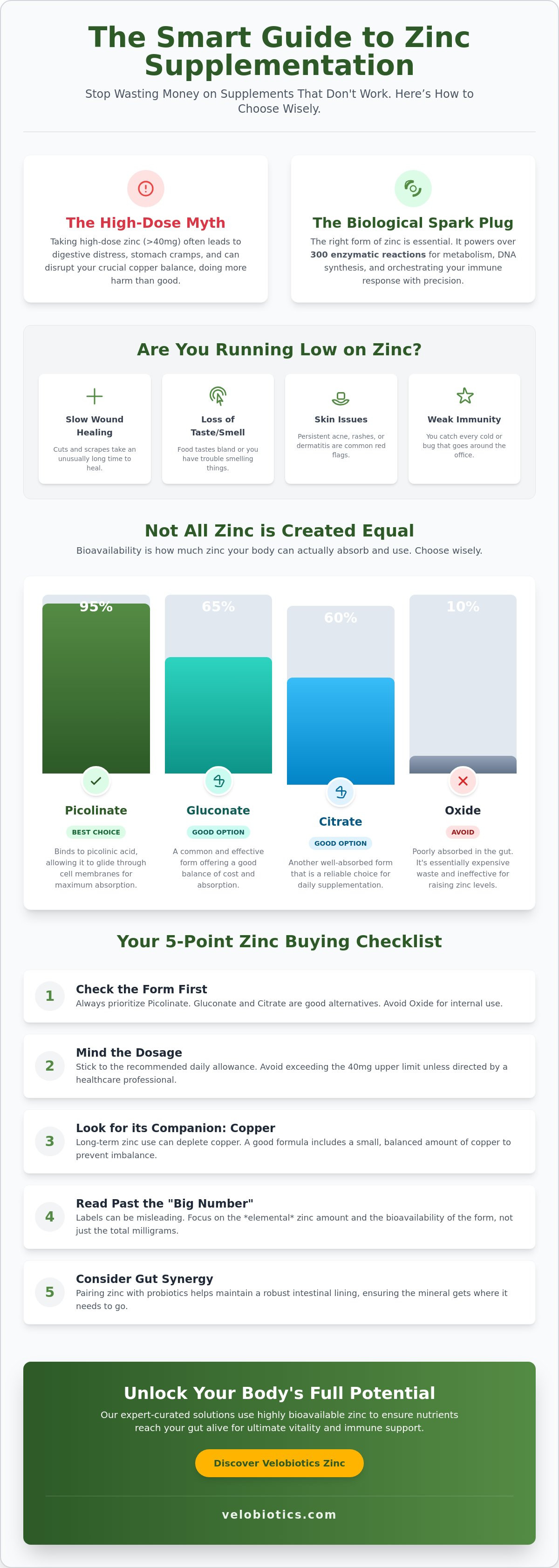
The Buying Checklist: 5 Things to Look for on the Label
Don't let a flashy label trick you into buying a sub-par supplement. When you're standing in the vitamin aisle, you need to look past the marketing and focus on the clinical data. Most people make the mistake of choosing a bottle based on the largest number they see on the front. However, as a physician, I look for five specific markers that separate medical-grade quality from retail-grade fillers. If a brand isn't transparent about their sourcing or testing, they're likely hiding a "probiotic gap" in their own manufacturing process.
- Elemental Zinc vs. Total Compound Weight: This is the most common trap. If a label says "50 mg Zinc Gluconate," you aren't actually getting 50 mg of the mineral. You're getting the weight of the entire compound. In this case, only about 14% is actual elemental zinc. Always look for the amount of "elemental" mineral listed in the supplement facts box to ensure you're hitting your targets.
- The Copper Balance: Long-term use of high-dose minerals can deplete your copper levels because they compete for the same absorption pathways. I recommend a ratio of roughly 15:1. If you're taking a high dose for more than a few weeks, ensure your supplement includes a small amount of copper to maintain this delicate equilibrium.
- Purity and Fillers: Flip the bottle over and check the "Other Ingredients" list. Avoid products packed with magnesium stearate, titanium dioxide, or artificial colors. These additives offer zero health benefits and can sometimes interfere with how the active ingredients break down in your gut.
- Third-Party Testing: Look for seals like NSF, USP, or Informed-Choice. These certifications prove that a third-party lab has verified that what's on the label is actually in the bottle, free from contaminants like lead or mercury.
- Doctor-Founded Formulations: There's immense value in clinical oversight. When a doctor designs a formula, they're looking at how ingredients interact with your biology, not just what's cheapest to produce. You can learn more about our commitment to medical-grade precision on our About Us page.
Avoiding the "Zinc Burn"
If you've ever felt a wave of nausea after taking your vitamins, you've experienced the "zinc burn." This mineral is highly reactive and can irritate the gastric lining if taken on an empty stomach. I always tell my patients to take their supplement mid-meal. The presence of food acts as a buffer, slowing down the release and protecting your stomach. For optimal results, take it during your largest meal of the day, but avoid taking it at the same time as your morning coffee.
Common Mistakes to Avoid
More isn't always better. The National Institutes of Health set the Tolerable Upper Intake Level at 40 mg per day on January 6, 2026. Exceeding this for long periods can suppress your immune system instead of supporting it. Also, be mindful of your morning brew; the phytates and polyphenols in coffee can block mineral absorption by up to 50%. Finally, don't ignore the synergy between your mineral intake and probiotics for digestive health. A healthy microbiome is the foundation that allows these nutrients to be absorbed and utilized by your cells.
The Velobiotics Zinc Collection: Expert-Curated Solutions
Now that you've mastered the clinical nuances of mineral absorption, it's time to put that knowledge into action. I didn't just want to write a guide; I wanted to create a solution that solves the "probiotic gap" and the absorption issues we've discussed. The Velobiotics Zinc Collection is the result of years of research into how nutrients actually survive the journey through your digestive system. We don't just throw ingredients into a capsule and hope for the best. We use our patented technology to ensure 1000x more delivery of active ingredients compared to standard supplements. It's about making sure your investment actually reaches your cells alive and ready to work.
Every product in our range is selected based on clinical survival rates. We prioritize the picolinate and chelated forms I mentioned earlier because your body deserves the highest bioavailability possible. For men specifically, our His-Biotics formulation includes zinc to support prostate health and male vitality. It's a perfect example of how we bridge the gap between complex laboratory breakthroughs and your daily medicine cabinet. By protecting the mineral within our micro-encapsulation shield, we reduce the risk of the "zinc burn" while maximizing the health benefits for your microbiome and beyond.
Standout Products for Your Routine
If you're a busy professional, our multivitamins with zinc offer an all-in-one approach that simplifies your morning. You get the foundational minerals you need without having to manage ten different bottles. For those facing specific immune challenges, our targeted picolinate options provide a concentrated dose that's still gentle on the gut. We also offer zinc-fortified probiotics. These provide dual-action support by helping your beneficial bacteria flourish while simultaneously strengthening your intestinal barrier. It's a comprehensive strategy for total body protection.
How to Get Started
I always recommend consulting with a health professional to determine your specific needs before starting a new regimen. Everyone's biology is unique, and your ideal dose might differ from your neighbor's. When you do start, begin with a lower dose to assess your stomach tolerance. This is a practical way to ensure your body adjusts comfortably to the increased mineral intake. You can explore the full range of 16 specialized products in our Zinc Collection to find the exact match for your health goals. Whether you're looking for skin clarity, fertility support, or a stronger immune system, we have a science-backed solution waiting for you.
Master Your Mineral Routine for Ultimate Vitality
You now have the clinical tools to stop guessing and start supporting your biology with precision. Remember that the right form of zinc is only half the battle; the delivery system is what determines if those nutrients actually reach your cells alive. By prioritizing chelated forms and maintaining the critical copper balance, you're protecting your metabolism from the "hidden hunger" found in today's nutrient-depleted food chain.
At Velobiotics, I've combined my medical expertise with our patented micro-encapsulation technology to solve the absorption problem once and for all. Every supplement in our collection is third-party tested for purity and provides 1000x more delivery than standard retail options. This ensures your body gets the exact support it needs for immunity, skin health, and hormonal balance. Don't settle for supplements that just pass through your system when you can choose science-backed excellence.
Shop the Doctor-Curated Zinc Collection at Velobiotics today and give your microbiome the biological spark plug it deserves. You're just one step away from a more balanced, vibrant life.
Common Questions About Zinc and Your Health
What is the best form of zinc to take for immune support?
Zinc picolinate is the superior choice for immune support because it's bound to picolinic acid, which significantly enhances transport across cell membranes. Clinical studies show this form is absorbed much more effectively than gluconate or citrate. By choosing picolinate, you're ensuring the mineral actually enters your bloodstream to activate white blood cells. This prevents the "probiotic gap" where nutrients are consumed but never utilized by the body's defense systems.
Can I take zinc every day, or should I take breaks?
You can take a maintenance dose of 8 to 11 mg daily, but I recommend "pulsing" higher doses only during winter months or times of metabolic stress. Continuous high doses exceeding 40 mg can lead to mineral imbalances and copper depletion. A common strategy is to take a higher dose for 14 days when you feel run down and then return to a lower daily amount. This approach maintains your baseline without overwhelming your body's regulatory systems.
Why does zinc make me feel nauseous, and how can I stop it?
Zinc causes nausea because it reacts with the stomach lining to create a mild inflammatory response when taken alone. To stop this immediately, always take your supplement mid-meal rather than on an empty stomach. The proteins and fats in your food act as a chemical buffer. If you still feel sick, try a chelated form, which is designed to be gentler on your digestive tract and much easier for your microbiome to handle.
Do I need to take copper if I am taking a zinc supplement?
You absolutely need to balance your intake with copper if you're supplementing with 50 mg or more of zinc for longer than 6 weeks. These two minerals compete for the same absorption sites in the small intestine. A chronic excess of one will inevitably lead to a deficiency of the other. Aim for a ratio of 15 mg of the mineral to 1 mg of copper to keep your levels in a healthy equilibrium.
How much zinc should a woman take daily vs. a man?
The National Institutes of Health updated their guidelines on January 6, 2026, recommending 8 mg daily for adult women and 11 mg for men. Women might need more during pregnancy (11 mg) or lactation (12 mg) to support fetal development and immune programming. Men require a slightly higher baseline because the prostate gland uses significant amounts of this mineral for testosterone synthesis and reproductive health.
Can zinc help with acne and skin health?
Yes, it's highly effective for acne because it regulates sebum production and reduces the inflammatory response in the skin. Clinical trials have shown that patients taking 30 mg of the elemental mineral daily saw a 50% reduction in inflammatory lesions after 12 weeks. It works similarly to a natural internal astringent, helping to clear pores and accelerate the repair of collagen in damaged skin tissue for a more radiant complexion.
What foods are highest in zinc if I want to get it naturally?
Oysters are the undisputed champions, providing 74 mg in just six medium sized shellfish, which is 673% of your daily value. Other excellent natural sources include grass fed beef, which offers about 7 mg per serving, and pumpkin seeds, which provide 2.2 mg per ounce. If you're following a plant based diet, remember that phytates in legumes can block absorption, so soaking your seeds and nuts is a practical necessity.
How long does it take for zinc supplements to start working?
You will typically see an increase in blood serum levels within 14 days of consistent supplementation. However, for visible results in skin health or hormonal balance, it usually takes about 12 weeks of daily use. Your cells need time to incorporate the mineral into new DNA synthesis and enzymatic reactions. Consistency is the most important factor in achieving long term vitality and immune resilience.

Disclaimer
Information and statements regarding dietary supplements/products have not been evaluated by the Food and Drug Administration, MCC/SAHPRA, MHRA, TGA or any other drug regulatory authority and are not intended to diagnose, treat, cure, or prevent any disease. Information on this website is provided for informational purposes only and is a result of years of practice and experience by the author. This information is not intended as a substitute for the advice provided by your physician or other healthcare professional or any information contained on or in any product label or packaging. Do not use the information on this website for diagnosing or treating a health problem or disease, or prescribing medication or other treatment. Always speak with your physician or other healthcare professional before taking any medication or nutritional, herbal, or homeopathic supplement, or using any treatment for a health problem. If you have or suspect that you have a medical problem, contact your healthcare provider promptly. Do not disregard professional medical advice or delay in seeking professional advice because of something you have read on this website.