

The Estrobolome: How Your Gut Health Dictates Your Menstrual Cycle
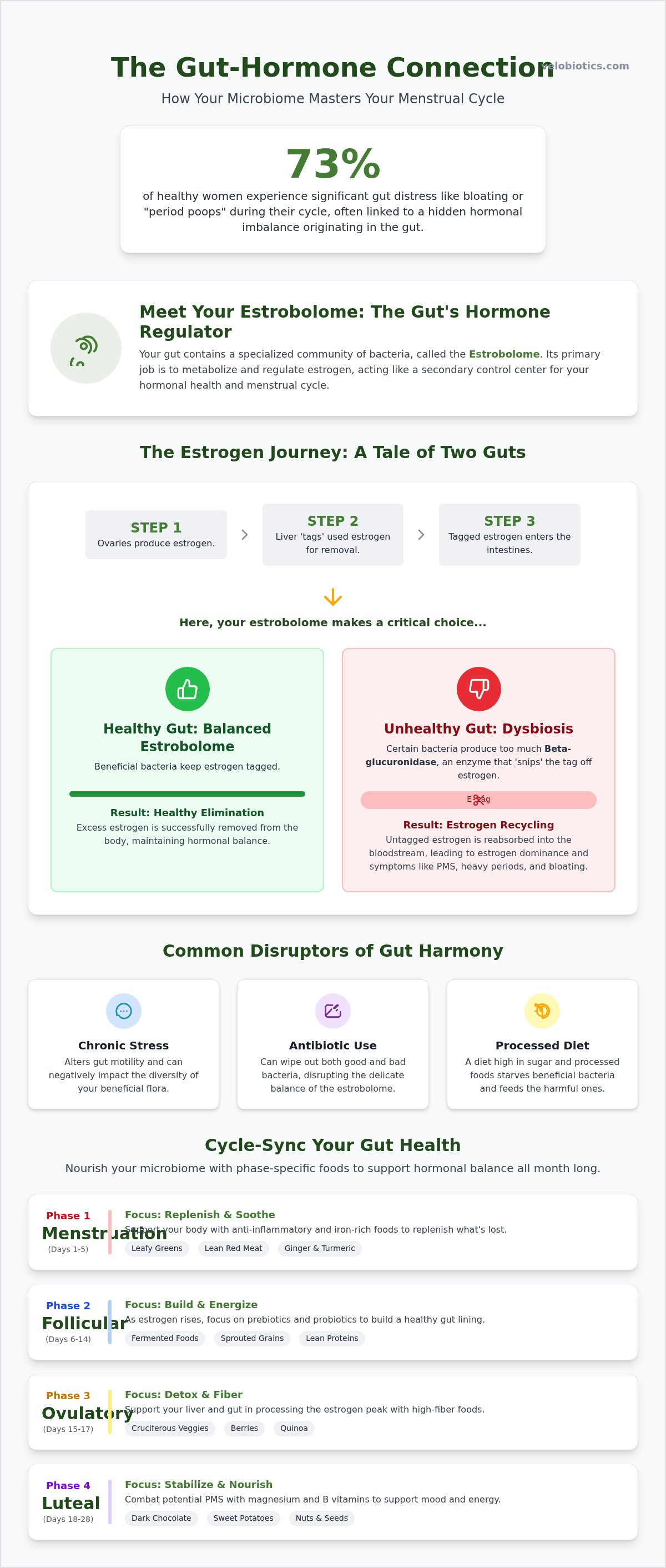
Did you know that 73% of healthy women experience significant gastrointestinal distress, like those dreaded "period poops" or painful bloating, right before or during their cycle? It's incredibly frustrating when your body feels like it's betraying you every month. You're likely tired of navigating unpredictable mood swings and skin breakouts while trying to sift through conflicting nutritional advice that never seems to stick. Many women don't realize that the secret to a smoother month lies in understanding how gut health affects the menstrual cycle through a specialized bacterial community we call the estrobolome.
As a doctor, I've seen how often the link between your microbiome and your hormones is overlooked. Your gut isn't just a digestive pipe; it's a secondary endocrine organ that dictates how estrogen is processed. In this article, I'll show you the scientific connection between these systems and how ensuring the biological viability of your gut bacteria can lead to a more predictable, pain-free cycle. We'll explore the mechanics of estrogen recycling and provide practical, actionable steps to optimize your internal environment. By the end, you'll know exactly how to support your body for clearer skin, better digestion, and a more balanced life throughout the month.
Key Takeaways
- Identify the estrobolome, your gut's specialized bacterial team that regulates estrogen levels to keep your hormones in a healthy balance.
- Discover the science of how gut health affects the menstrual cycle, including the "un-tagging" process that can lead to hormone recycling if your microbiome is out of sync.
- Uncover the link between prostaglandins and "period poops," and learn how balancing your gut can dampen these uncomfortable inflammatory signals.
- Master the art of cycle-syncing your gut health with phase-specific strategies, such as focusing on iron-rich foods during menstruation and prebiotics during your follicular phase.
- Learn to bridge the "viability gap" by choosing probiotics with micro-encapsulation technology that ensures active ingredients actually reach their destination.
The Estrobolome: Your Gut’s Secret Hormone Regulator
Think of your gut as more than just a place where lunch disappears. It's actually a high-functioning command center for your hormones. The Estrobolome is the specific collection of gut bacteria tasked with the critical job of metabolizing and regulating your body's estrogen levels. It’s a fascinating, living system that works around the clock to keep your cycle on track. Understanding how gut health affects the menstrual cycle starts with this bacterial community; it is part of a complex "Gut-Hormone Axis" that functions like a two-way conversation between your brain, your ovaries, and your intestines.
I often see patients who eat a "perfect" diet but still struggle with heavy periods and PMS. If your estrobolome is in a state of dysbiosis, even the best nutrients can't fix the hormonal imbalance. This leads to a process called "Hormonal Recycling," where estrogen that should have been flushed out is instead reactivated and sent back into your bloodstream. This is the primary driver of estrogen dominance, a state where estrogen levels are too high relative to progesterone, leading to many of the cycle issues we want to avoid.
Why Your Microbiome Is a Secondary Endocrine Organ
We used to think only glands like the thyroid or ovaries produced hormones. Science now shows that your gut bacteria act as a secondary endocrine organ. These microbes produce and secrete signals just like your internal glands do. They communicate directly with your pituitary gland, which is the master controller of your reproductive system. By regulating the amount of circulating estrogen, your gut effectively holds the remote control for your entire cycle, deciding how much hormone stays active and how much is cleared away.
Dysbiosis and the Menstrual Cycle Connection
Dysbiosis is simply a medical term for an imbalance where "bad" bacteria outnumber the "good" guys. It's a common issue because our modern lives are full of disruptors. When you look at how gut health affects the menstrual cycle, you have to consider what disrupts that delicate balance. Common culprits include:
- Frequent or unnecessary antibiotic use that wipes out beneficial strains
- Chronic, unmanaged stress that alters gut motility and flora
- Diets high in ultra-processed foods that starve good bacteria
An imbalanced gut creates a "leaky" system of hormone regulation that allows excess estrogen to recirculate rather than exit the body.
The Gut-Cycle Loop: How Bacteria Influence Estrogen Levels
To truly grasp the connection between your belly and your period, we need to follow the journey of an estrogen molecule. It's a multi-stage process that starts in your liver and should end with a trip to the bathroom. Your liver performs the initial heavy lifting by "conjugating" estrogen. Think of this as putting a "trash" tag on the molecule so your body knows it's time for disposal. This tagged hormone travels through the bile and into your intestines, waiting for its final exit.
However, the exit isn't guaranteed. This is where the estrobolome takes over. Certain bacteria produce an enzyme called Beta-glucuronidase. If your gut is out of balance, these bacteria produce too much of this enzyme, which acts like a pair of molecular scissors. These scissors snip the "trash" tag off the estrogen, reactivating it. Once the tag is gone, the estrogen is no longer destined for the exit. Instead, it slips through the gut lining and heads right back into your bloodstream. This "recycling" is a core mechanism of how gut health affects the menstrual cycle, leading to a surplus of estrogen that your body never intended to keep.
When this recycled estrogen begins to accumulate, it creates a state of estrogen dominance. You'll feel this physically. It often manifests as heavy, painful periods, persistent breast tenderness, or even the flare-up of conditions like endometriosis. This scientific review on the gut microbiome and estrogen confirms that this microbial activity is a major player in your systemic hormonal health.
Beta-Glucuronidase: The 'Recycling' Enzyme
The liver's job is to make estrogen water-soluble so it can be flushed out easily. When Beta-glucuronidase breaks that chemical bond, it reverts the hormone into a fat-soluble form. Your body eagerly reabsorbs fat-soluble substances. High levels of this enzyme mean your gut is essentially hoarding waste. It's a classic case of a biological "on" switch being stuck in the wrong position, causing your hormone levels to spike when they should be dropping.
The Estrogen-Progesterone Balance
Your cycle relies on a precise ratio between estrogen and progesterone. This balance is especially critical during the Luteal Phase, the two-week stretch after ovulation. If your gut is constantly leak-feeding recycled estrogen back into your system, progesterone can't do its job properly. This imbalance is the primary culprit behind the mood swings and bloating that define PMS. Supporting your microbiome with a targeted solution like Her-Biotics Probiotics helps maintain the microbial diversity needed to keep those recycling enzymes under control. It's a practical step toward ensuring your hormones stay on their intended path.
Period Poops and PMS: Why Your Gut Mimics Menstrual Symptoms
Most women are intimately familiar with the sudden digestive shift that arrives alongside their period. In fact, research shows that 73% of healthy women experience at least one significant gastrointestinal symptom during their cycle. This isn't just a coincidence; it's a direct result of how gut health affects the menstrual cycle. While your uterus is busy shedding its lining, it releases hormone-like compounds called prostaglandins. These chemicals are specifically designed to make your uterine muscles contract, but they don't always stay localized to the reproductive system.
There is a distinct difference between "normal" cycle-related changes and "gut-driven" dysfunction. A mild change in bowel habits is common. However, when you experience debilitating cramps and severe digestive distress, your gut bacteria are likely amplifying the inflammatory signals. A balanced microbiome helps break down these inflammatory markers, whereas a state of dysbiosis leaves the "volume" turned up high, making every contraction feel significantly more intense.
Prostaglandins and Digestive Distress
When prostaglandins migrate to the nearby smooth muscles of your colon, they trigger the same contraction signals they gave the uterus. This results in the infamous "period poops," which can manifest as increased frequency, urgency, or diarrhea. To manage this, I often advise patients to focus on increasing their intake of anti-inflammatory probiotic strains. These beneficial microbes produce metabolites that help soothe the gut lining and regulate the colon's response to prostaglandin leakage. By calming the local environment, you can reduce the severity of these monthly digestive interruptions.
The Gut-Brain-Skin Connection
Have you noticed your skin flaring up exactly when your mood starts to dip? This is the gut-brain-skin axis in action. What many people call "hormonal acne" is frequently "gut-hormone acne." If your gut isn't efficiently clearing out the "recycled" hormones we discussed earlier, those toxins seek other exit routes, often manifesting as breakouts along the jawline. A healthy gut ensures these hormones are processed and eliminated properly, rather than being pushed out through your pores.
The connection to your mood is equally profound. Your gut produces about 95% of your body's serotonin, the neurotransmitter responsible for feelings of well-being. When your microbial balance is disrupted, your production of these "feel-good" chemicals falters. This drop creates the emotional volatility and irritability often associated with PMS. By stabilizing your gut flora, you aren't just helping your digestion; you're providing the chemical foundation for clearer skin and a more stable mood throughout your entire cycle.
Cycle Syncing Your Gut Health: Actionable Steps for Every Phase
Your biology doesn't stay the same from week to week, so your gut support shouldn't either. Mastering how gut health affects the menstrual cycle requires a phase-specific approach that works with your fluctuating hormones rather than against them. By tailoring your fiber, nutrients, and habits to your internal calendar, you provide your estrobolome with exactly what it needs to process estrogen efficiently. This proactive strategy ensures that your microbiome is always prepared for the next hormonal shift.
During the Menstrual Phase (Days 1-5), focus on replenishment and soothing. Blood loss can deplete iron, so prioritize iron-rich foods like spinach or grass-fed beef. Since inflammation is naturally higher, focus on soothing the gut lining with warm, easily digestible foods like bone broth. As you transition into the Follicular Phase (Days 6-14), estrogen begins its steady rise. This is the time to load up on prebiotics like flaxseeds and pumpkin seeds to feed the bacteria that will eventually need to metabolize that estrogen.
In the Ovulatory Phase (Days 14-17), estrogen reaches its peak. You want to maximize detoxification to prevent a sharp spike that leads to mood swings. Bitter foods like arugula, dandelion greens, and radishes are excellent here because they stimulate bile flow, which is the primary vehicle for moving "tagged" estrogen into the gut. Finally, during the Luteal Phase (Days 18-28), progesterone rises and slows down your digestive transit time. This is when many women experience constipation. Increasing insoluble fiber and maintaining high hydration levels are your best defenses against "hormonal" bloating and are key to managing how gut health affects the menstrual cycle effectively.
Phase-Specific Nutritional Support
- Follicular: Flaxseeds and sprouted grains provide the specific lignans and prebiotics needed for rising estrogen.
- Ovulatory: Cruciferous vegetables like broccoli and kale support the liver's Phase II detoxification pathways.
- Luteal: High-fiber berries and leafy greens help combat progesterone-induced sluggishness.
Incorporating "bitter" foods during ovulation supports the liver-gut connection by ensuring your gallbladder releases enough bile to carry out hormonal waste. Hydration is easily the most underrated gut-hormone tool because without enough water, your digestive tract can't effectively flush the toxins your liver has worked so hard to process.
Lifestyle Habits for a Happy Estrobolome
Your gut bacteria follow a circadian rhythm just like you do. Poor sleep disrupts this internal clock, which can impair the estrobolome’s ability to metabolize hormones. Moderate exercise, like a brisk 20-minute walk, helps "move" hormones through the digestive tract by stimulating peristalsis. If you struggle with luteal phase constipation, try a simple two-minute abdominal massage: use your fingertips to trace a large "U" shape across your belly, starting at the bottom right, moving up to the ribs, across to the left, and back down. This physical stimulation helps move waste toward the exit.
To give your microbiome the diverse support it needs throughout these shifts, you can optimize your hormonal health with Her-Biotics.
The Science of Survival: Choosing Probiotics That Actually Reach the Gut
After exploring the mechanics of estrogen metabolism, the next logical step is implementation. You can't optimize how gut health affects the menstrual cycle if the beneficial bacteria you consume never make it past your stomach. This is what I call the "Viability Gap." It's the stark difference between the colony-forming units (CFUs) listed on a supplement label and the actual number of live bacteria that successfully colonize your large intestine. For your estrobolome to function, those microbes must arrive alive.
Why Delivery Systems Matter for Hormones
Stomach acid is incredibly harsh; it typically maintains a pH between 1.5 and 3.5. This environment is designed to break down food and kill pathogens, but it's also lethal to most standard probiotic strains. If your supplement lacks a specialized delivery system, up to 90% of those delicate, hormone-balancing microbes may be destroyed before they ever reach the estrobolome. Micro-encapsulation acts as a sophisticated biological shield, protecting each strain until it reaches the alkaline environment of the gut where it can actually go to work.
This survival is the difference between a supplement that works and one that's a waste of money. We focus on "viable delivery" rather than just high CFU counts. When bacteria survive the transit, they can effectively perform the enzymatic work required to prevent estrogen recycling and maintain a healthy hormonal baseline. This is especially true for the 16 diverse strains found in Her-Biotics, which are chosen specifically to support the female hormonal landscape.
For many women, intimate wellness also requires addressing the synergy between the gut and the vaginal microbiome. Using a targeted solution like Femina Probiotic Cookie Fresh alongside gut support ensures that your internal environment is protected from every angle. When these systems work together, you'll notice more than just better digestion; you'll see the results in your skin, your mood, and your monthly comfort.
The Velobiotics Approach to Women's Wellness
The Velobiotics story is rooted in a commitment to solving this survival problem through clinical innovation. As a doctor, I've seen how often standard treatments fail because they ignore the fundamental biological challenge of delivery. We've moved away from generic wellness promises to focus on empirical evidence and proprietary technology that ensures our active ingredients reach their destination.
By combining a wide diversity of strains with our micro-encapsulation seal, we provide a comprehensive solution for how gut health affects the menstrual cycle. Empower your estrobolome today. When you provide your body with viable, scientifically backed support, you're taking the most critical step toward a smoother, more predictable, and more balanced life.
Reclaiming Your Cycle Through Gut Science
Understanding how gut health affects the menstrual cycle is the first step toward ending the monthly struggle with painful bloating and unpredictable mood swings. We've explored the critical role of the estrobolome in metabolizing estrogen and identified how phase-specific support can transform your monthly experience. However, the most important takeaway is that your efforts only matter if your probiotics actually reach their destination. Most standard supplements fail because they lack the protection needed to survive the stomach's acidic environment.
As a doctor, I founded this brand to bridge that gap with scientific rigor. Our formulations use proprietary micro-encapsulation technology to ensure 10x better survival of every beneficial microbe compared to standard capsules. With 16-strain comprehensive support, you're finally giving your body the viable tools it needs to maintain hormonal equilibrium. Don't settle for vague wellness promises when you can choose a clinical solution designed for your unique biology.
Optimize your gut-hormone axis with Her-Biotics today and start experiencing the predictable, comfortable cycles you deserve. You've got the science on your side now; it's time to feel like yourself again every day of the month.
Frequently Asked Questions
Can poor gut health cause irregular periods?
Yes, gut dysbiosis can lead to irregular cycles by interfering with the estrobolome's ability to clear and recycle estrogen. When your microbiome is out of balance, it can lead to erratic spikes in estrogen or a failure to maintain the progesterone-estrogen ratio required for regular ovulation. This disruption is a primary example of how gut health affects the menstrual cycle. Restoring microbial diversity helps stabilize these biological signals for more predictable timing.
What are 'period poops' and are they normal?
"Period poops" refer to the sudden change in bowel habits, often diarrhea or increased urgency, occurring right before or during menstruation. They are biologically normal because they are triggered by prostaglandins released from the uterus. However, severe symptoms often indicate an underlying gut issue where bacteria are amplifying inflammatory signals. Supporting your gut lining can help dampen these contractions, making your monthly experience significantly more manageable and less disruptive.
How long does it take for probiotics to affect my menstrual cycle?
Most women begin to notice subtle improvements in digestion within two weeks, but hormonal shifts typically take two to three full menstrual cycles to stabilize. It takes time for new bacterial colonies to establish themselves and influence the enzymatic processes of the estrobolome. Consistency is vital during this period. Ensuring your probiotics have high biological viability allows these beneficial strains to survive and begin the long-term work of balancing your systemic hormone levels.
Can probiotics help with hormonal acne?
Probiotics are highly effective for managing hormonal acne because they address the root cause: poor estrogen clearance. When your gut doesn't eliminate excess hormones, they can recirculate and trigger sebum production in your pores. By improving the detoxification process within the intestines, you reduce the toxic load that often manifests as jawline breakouts. This is a practical demonstration of the gut-skin axis working to protect your complexion from the inside out.
Is there a link between leaky gut and endometriosis?
Research suggests a strong link between intestinal permeability, or "leaky gut," and the systemic inflammation associated with endometriosis. When the gut barrier is compromised, bacterial toxins can enter the bloodstream and trigger an immune response that may worsen endometrial lesions. Addressing your microbiome health is a critical component of a comprehensive management plan. Reducing gut-driven inflammation can help mitigate the chronic pain and immune dysfunction often seen in these complex cases.
What is the best probiotic strain for estrogen balance?
There isn't a single "miracle" strain; instead, you need a diverse ecosystem. Strains from the Lactobacillus and Bifidobacterium families are particularly important for producing the enzymes that regulate estrogen. This is why a 16-strain comprehensive support system is superior to single-strain products. Diversity ensures that your estrobolome has multiple pathways to process hormones, providing a more robust defense against the imbalances that lead to estrogen dominance and PMS.
Does bloating before my period mean I have a gut issue?
While mild bloating is a common response to rising progesterone, excessive or painful distension usually points to a gut-related imbalance. Progesterone naturally slows down your digestive transit time, which can lead to fermentation and gas if your microbiome isn't optimized. If you find your bloating is severe enough to change your clothing size, it's a sign that your gut requires better support to handle these monthly physiological shifts efficiently.
Can birth control pills damage my gut microbiome?
Oral contraceptives can indeed alter the composition of your gut flora and may lead to a depletion of key B vitamins and minerals. These changes can impact how gut health affects the menstrual cycle even after you stop taking the pill. If you are on birth control, it's especially important to focus on bacterial viability. Using a high-quality, doctor-founded probiotic can help maintain your microbial diversity and protect your gut lining from these long-term pharmaceutical disruptions.

Disclaimer
Information and statements regarding dietary supplements/products have not been evaluated by the Food and Drug Administration, MCC/SAHPRA, MHRA, TGA or any other drug regulatory authority and are not intended to diagnose, treat, cure, or prevent any disease. Information on this website is provided for informational purposes only and is a result of years of practice and experience by the author. This information is not intended as a substitute for the advice provided by your physician or other healthcare professional or any information contained on or in any product label or packaging. Do not use the information on this website for diagnosing or treating a health problem or disease, or prescribing medication or other treatment. Always speak with your physician or other healthcare professional before taking any medication or nutritional, herbal, or homeopathic supplement, or using any treatment for a health problem. If you have or suspect that you have a medical problem, contact your healthcare provider promptly. Do not disregard professional medical advice or delay in seeking professional advice because of something you have read on this website.