

Vaginal Odor After Period: A Doctor’s Guide to Resetting Your pH in 2026
What if that lingering post-period scent isn't a lack of hygiene, but a simple math problem involving your vaginal pH? It is a common clinical reality: you finish your cycle and suddenly notice a persistent fishy smell but no infection is present. You aren't imagining things, and you certainly aren't "dirty." I have seen many patients feel immense anxiety about being smellable to others, often reaching for harsh soaps that only sabotage their delicate microbiome further.
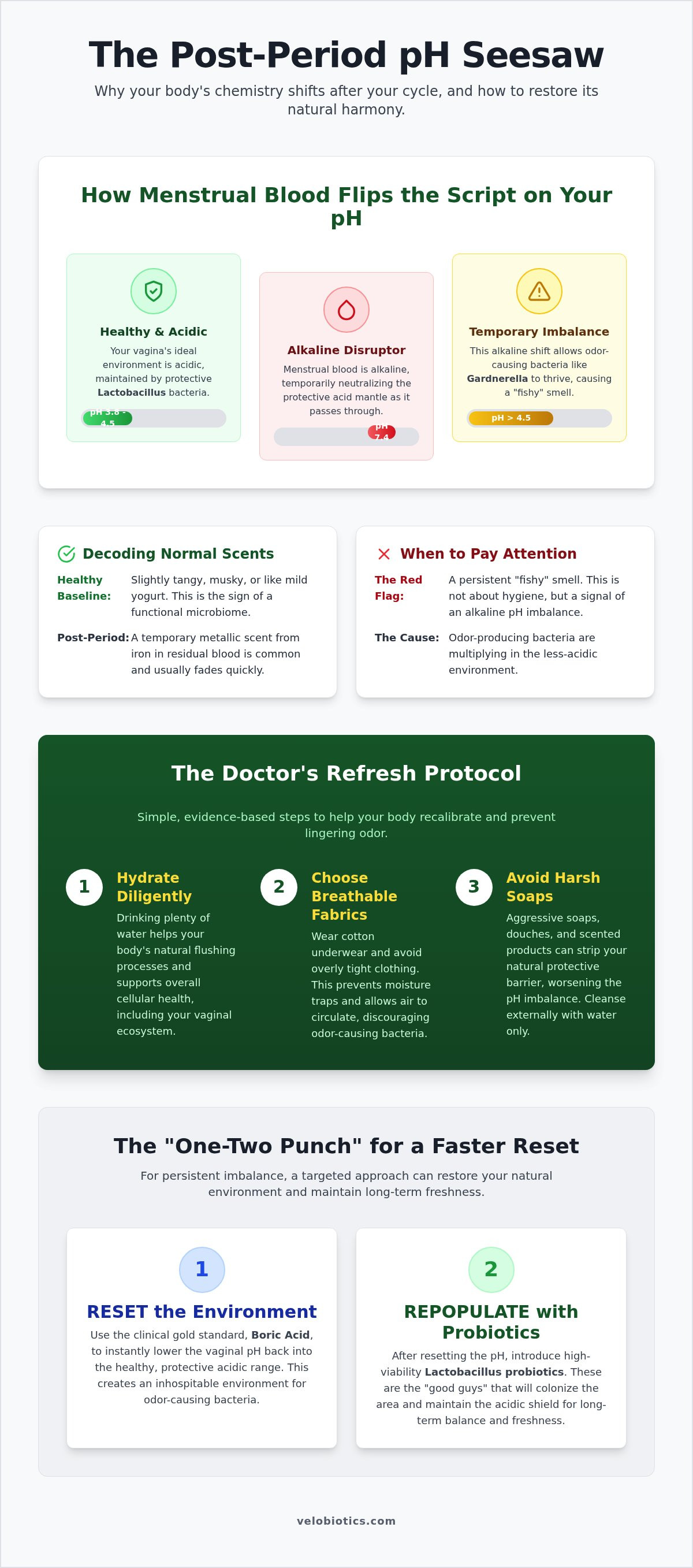
I understand the frustration of feeling like your body is out of sync. Menstrual blood has a pH of about 7.4, which is significantly more alkaline than the vagina's preferred acidic range of 3.8 to 4.5. This monthly alkaline wave can trigger a microbial seesaw that leaves you feeling less than fresh. In this guide, I will show you exactly how to restore your natural balance using evidence-based clinical steps. We will explore the science of the post-period reset, identify when an odor requires medical intervention, and discuss how to maintain long term biological viability for your protective bacteria.
Key Takeaways
- Learn how menstrual blood’s alkaline pH of 7.4 temporarily neutralizes your protective acid mantle, causing a biological seesaw effect.
- Identify the difference between a normal metallic scent and a fishy smell but no infection to determine if you need a simple reset or medical intervention.
- Implement the Doctor’s Refresh Protocol by using hydration and breathable fabrics to prevent moisture traps and scent concentration.
- Discover why clinical-grade boric acid is the gold standard for instantly lowering vaginal pH back to its healthy, acidic baseline.
- Understand the "One-Two Punch" method of resetting your internal environment before introducing high-viability probiotics to maintain long-term freshness.
The Science of Scent: Why Your Vagina Smells Different After a Period
It is completely normal to notice a shift in your scent profile as your period winds down. In my years of clinical practice, I have spoken with countless women who feel a sense of panic when they detect a fishy smell but no infection is present. Rest assured, by 2026, we have mapped the biological pathways that explain exactly why this happens. Your body isn't failing; it is simply navigating a complex hormonal and chemical transition. This "post-period funk" is often a transient phase, but if you don't provide the right support, that temporary shift can turn into a lingering nuisance.
The Self-Cleaning Ecosystem
Think of your vagina as a high-tech, self-cleaning ecosystem. Under ideal conditions, it maintains a delicate balance of microorganisms, primarily dominated by Lactobacillus. These helpful bacteria are the heroes of The Science of Scent. They consume glycogen and convert it into lactic acid, which creates a protective acid mantle. This acidic environment, usually sitting between a pH of 3.8 and 4.5, acts as a natural shield against unwanted germs and pathogens. A healthy scent is often described as slightly tangy, musky, or even like a mild yogurt. This isn't a problem to be solved; it's the smell of a functional immune barrier. When your microbiome is robust, it can handle minor stressors with ease.
When Normal Becomes Noticeable
The trouble starts when this balance is disrupted by the exit of menstrual blood. Since blood has a pH of approximately 7.4, it is much more alkaline than your natural state. This alkalinity acts like a wet blanket on your acid production. You will likely find that the 48-hour window immediately after your period stops is the peak time for disruption. During this phase, estrogen levels are also beginning their slow climb, which influences how much glycogen is available for your good bacteria. If the pH stays too high for too long, you might experience a fishy smell but no infection, simply because the "bad" bacteria are having a temporary party while the "good" bacteria are suppressed.
It is important to distinguish this subtle shift from a clinical issue like bacterial vaginosis. In a normal post-period transition, the odor is often faint and disappears as your pH naturally resets. However, when the alkaline blood neutralizes your acid mantle for several days in a row, it creates a vacancy. You are essentially stuck in a microbial no-man's land where your protective shield hasn't quite rebooted yet. Supporting this transition with targeted tools like Femina Probiotic COOKIE FRESH Suppositories with Boric Acid can help bridge that gap and restore the acidic environment your body craves.
The pH Seesaw: How Menstrual Blood Flips the Script
Visualize a playground seesaw. On one side, you have your protective acidity, ideally sitting between a pH of 3.8 and 4.5. On the other side, you have alkalinity. Most of the month, the acidic side is firmly on the ground, keeping your microbiome stable and protected. But then your period arrives. Menstrual blood has a pH of approximately 7.4, which is significantly more alkaline than your vaginal environment. When this fluid flows through the canal for several days, it effectively "tips" the seesaw. This neutralization of your natural acid mantle is the primary reason you might experience a fishy smell but no infection once your flow stops.
Blood as a Biological Disruptor
Blood is more than just a pH shifter; it is a complex biological fluid that acts as a nutrient source for the wrong kind of microbes. The iron found in menstrual blood acts like a buffet for anaerobic bacteria, while simultaneously being toxic to certain protective strains of Lactobacillus. As the pH rises toward the neutral zone of 7.0, your "good" bacteria begin to die off or enter a dormant state. To make matters worse, lingering tissue and microscopic blood particles at the very end of your cycle can get trapped in the vaginal folds. This provides a temporary, high-pH sanctuary where odor-producing bacteria can multiply rapidly before your body has a chance to recalibrate its chemistry.
The Gardnerella Takeover
The most common resident waiting for this alkaline shift is a bacterium called Gardnerella vaginalis. In a healthy, acidic environment, Gardnerella is like a quiet neighbor who stays within their property lines. However, when the pH seesaw tips toward alkalinity, this bacterium begins to thrive and produce chemicals called amines. These amines are the direct cause of that characteristic fishy smell but no infection. It is a biological byproduct of their metabolism, not a sign of poor hygiene. For many of my patients, this is the exact moment where Targeted Support becomes necessary to force the seesaw back to the acidic side.
If you find yourself reaching for "pH-balanced" soaps to fix the issue, you might be accidentally making things worse. Most commercial soaps are balanced to a pH of 5.5 to match your external skin. While that is great for your arms and legs, it is still nearly 100 times less acidic than your vagina's required 3.8 baseline. Using these products can keep the seesaw stuck in the neutral zone, prolonging the odor and preventing your natural defenses from rebooting. Instead of washing away the problem, you can use a clinical reset like Femina Probiotic COOKIE FRESH Suppositories with Boric Acid to drop the pH back to a healthy level instantly. If you want to stop the seesaw from getting stuck every month, it is vital to proactively manage your internal chemistry as soon as your period ends.
Normal vs. Not Normal: Deciphering the Post-Period Odor Code
Self-diagnosis starts with your sense of smell. While I've explained how the pH seesaw works, you need to know what those chemical shifts actually smell like to distinguish between a simple cycle change and a clinical issue. Think of your nose as a first-line laboratory tool. Most post-period scents fall into three specific categories on our Scent Map. Understanding these differences helps you decide if your body is just finishing its monthly housekeeping or if you are dealing with a fishy smell but no infection that requires a clinical reset.
Use this quick guide to decipher what your body is telling you:
- Metallic or Copper: This is the "penny smell" caused by iron in your blood. It is biologically normal during and immediately after your flow.
- Fishy or Foul: This scent indicates that anaerobic bacteria like Gardnerella have begun to overgrow because your vaginal pH balance is too high.
- Sweet or Yeasty: Often compared to bread or beer, this scent suggests a potential Candida (yeast) overgrowth, which can happen when hormonal shifts alter your sugar levels.
The Penny Smell: Why You Smell Like Metal
I tell my patients to think of this as the "iron signature." It is a direct result of the hemoglobin in your menstrual blood. As your period ends and you transition into the spotting phase, the iron remains in the vaginal canal. This scent is biologically expected and should fade within two to three days after your flow completely stops. If that metallic scent lingers for more than a week, or if it's accompanied by a heavy or "full" sensation, it's worth getting a checkup to ensure no tissue is lingering in the cervix.
The Fishy Red Flag: When It’s More Than Just Your Period
In the clinic, we use something called the "whiff test" to identify bacterial vaginosis (BV). When the pH rises, certain bacteria release amines, which produce that characteristic odor. If you notice this fishy smell but no infection has been formally diagnosed yet, you are likely in the "pre-BV" stage where your pH is high but the bacteria haven't fully colonized. Keep an eye out for other red flags like thin, greyish discharge or a burning sensation during urination. These symptoms suggest that your microbiome has moved from a simple shift into a state of dysbiosis. To learn more about managing these microbial colonies, you can explore my guide on Probiotics for BV: A Doctor’s Guide to Restoring Your Vaginal Microbiome in 2026.
The Doctor’s Refresh Protocol: 5 Steps to Reset Your Balance
Fixing a fishy smell but no infection requires a shift from aggressive cleaning to strategic support. When your pH seesaw is stuck in the alkaline zone, your goal is to recreate the acidic environment that Lactobacillus bacteria need to thrive. I have developed this five step protocol to help you transition from the "blood phase" back to your natural, healthy baseline. This isn't about masking an odor; it's about restoring biological viability to your internal defenses.
- Hydrate for Dilution: Your hydration levels dictate the concentration of your scent. When you are dehydrated, your body produces more concentrated secretions, which can amplify any minor chemical shift occurring after your period. Aim for at least two liters of water daily to keep your system flushing efficiently.
- The No-Soap Rule: Stop using "feminine washes" inside the labia. Your vulva only needs warm water. Introducing even "pH-balanced" soaps can strip away the few remaining protective bacteria you have left after a cycle.
- Prioritize Cotton: Synthetic fabrics like polyester trap heat and moisture, creating a literal petri dish for anaerobic bacteria. Stick to 100% cotton underwear to allow for proper gas exchange and cooling.
- Frequent Changes: Even if your liner or pad isn't "full," change it every three to four hours during the tail end of your period. Lingering blood is a buffet for odor-causing microbes.
- Probiotic Priming: You must actively replenish the "good" colonies that were suppressed by the alkaline blood.
External Habits for Internal Health
Your lifestyle choices act as the foundation for your microbial health. I often tell my patients to "let the ecosystem breathe" by sleeping without underwear. This simple habit reduces moisture traps and allows your skin to recalibrate overnight. Additionally, be mindful of your sugar intake during the 48 hours after your period. High blood sugar can alter the glycogen levels in your vaginal tissue, which can inadvertently feed yeast or unwanted bacteria. These small external adjustments prevent the "neutral zone" from becoming a permanent residence for the wrong microbes.
Internal Restoration: Why Probiotics Matter
While external habits are vital, the real battle happens at the cellular level. To truly end a fishy smell but no infection, you need to re-colonize the canal with high-viability Lactobacillus. However, not all supplements are created equal. Most standard oral probiotics are destroyed by stomach acid before they ever reach their destination. For a supplement to be effective, it must utilize advanced delivery systems to ensure the bacteria remain alive and active. You can read more about Probiotics That Survive Stomach Acid: The Science of Effective Delivery in 2026 to understand why technology is the key to results.
For my patients who struggle with recurring post-period shifts, I recommend a targeted approach that combines high-strain probiotics with protective extracts. Using a solution like Femina™ Probiotic Capsules with Cranberry Extract provides the internal support necessary to keep your pH in check year-round. If you are ready to stop the monthly guesswork and take control of your vaginal health, explore our clinically-backed formulations today.
Targeted Support: When to Reach for Boric Acid and Probiotics
Sometimes, lifestyle adjustments aren't enough to correct the biological momentum of a high-pH environment. If you have implemented the refresh protocol and still detect a fishy smell but no infection, you need a clinical intervention to force the pH back to its acidic baseline. This is where medical-grade boric acid and high-viability probiotics become your most effective tools. I call this the "One-Two Punch" strategy: we use boric acid to clear the field of odor-causing anaerobes and then immediately re-seed the area with protective Lactobacillus colonies. Medical-grade quality is non-negotiable when choosing suppositories because many over-the-counter options lack the purity required for sensitive vaginal tissue. By choosing science-led formulations, you ensure that you are treating the biological cause of the odor rather than just applying a temporary cosmetic fix.
The Role of Boric Acid in pH Management
Boric acid has been a clinical gold standard for decades because of its unique ability to inhibit the growth of unwanted bacteria while respecting the host environment. Research indicates that boric acid suppositories are between 65% and 70% effective for addressing recurrent bacterial imbalances when first-line treatments haven't been successful. It acts as a mild antiseptic that specifically targets the microbes that thrive in alkaline conditions. When you use it immediately after your period, it serves as an emergency reset button for your acid mantle. It effectively drops the pH from that problematic 7.4 blood level back toward the 4.0 range in a matter of hours. For those who need a pure pH correction without additional ingredients, I recommend Femina COOKIE FRESH Boric Acid ONLY Suppositories to take control of your internal chemistry.
The Femina Advantage: Probiotics Meet Boric Acid
The real breakthrough in vaginal health isn't just lowering the pH; it's ensuring that the "good" bacteria can take over once the environment is right. This is the logic behind the Femina Probiotic COOKIE FRESH Suppositories with Boric Acid. By combining these two steps into one application, you aren't just clearing out the bad bacteria. You are simultaneously delivering a robust 16-strain probiotic formulation directly to the site where it is needed most. This approach solves the common problem of "empty space." If you only lower the pH with boric acid, you leave a microbial vacuum that unwanted bacteria might fill again. By re-seeding the canal with probiotics that use proprietary micro-encapsulation technology, you ensure that the bacteria are actually viable and ready to colonize. Don't just mask the scent with perfumes or wait for your body to struggle through a slow reset. Fix the biology and maintain your fresh, natural balance by choosing a protocol backed by clinical research.
Empower Your Microbiome for Long-Term Freshness
Your period is a natural biological process, but the alkaline shift it causes shouldn't leave you feeling out of sync. If you've been frustrated by a fishy smell but no infection, you now know that it's a simple matter of chemistry, not a hygiene failure. By managing the pH seesaw with hydration, breathable fabrics, and clinical-grade resets, you can maintain your fresh, natural balance throughout your entire cycle. Understanding these transitions is the first step toward reclaiming your confidence.
I founded this company to bridge the gap between complex laboratory breakthroughs and your daily routine. We are doctor-founded and science-backed, utilizing proprietary micro-encapsulation to ensure maximum potency of our formulations. Thousands of women trust Femina for intimate wellness because our technology focuses on biological viability and real results. You don't have to settle for temporary fixes when you can support your body's natural defenses with confidence. Stay fresh, stay balanced, and trust the science of your own body.
Restore your balance with Femina Cookie Fresh Probiotic & Boric Acid Suppositories
Frequently Asked Questions
Is it normal for my vagina to smell like onions after my period?
An onion-like scent usually stems from a combination of sweat and the shifting chemistry of your microbiome. While a metallic smell is the standard post-period signature, an onion odor suggests that your pH is high enough to allow specific bacteria to flourish. It's a sign that your self-cleaning ecosystem is struggling to reboot. Implementing a hydration protocol and using breathable cotton fabrics can often help resolve this scent shift quickly.
How long does post-period odor usually last?
A normal metallic scent should dissipate within 48 to 72 hours once your flow completely stops. If you detect a fishy smell but no infection is present, the odor might linger for five to seven days as your body attempts to lower its pH. This extended window of alkalinity is when you're most vulnerable to overgrowth. If the scent doesn't resolve within a week, your natural acid mantle needs targeted support to recover.
Can I use boric acid suppositories every month after my period?
Using boric acid as a monthly reset button is a common clinical recommendation for women with recurrent pH issues. Since menstrual blood is significantly more alkaline than your vaginal environment, a one to three day course of Femina COOKIE FRESH Boric Acid ONLY Suppositories can instantly restore acidity. This prevents the pH seesaw from staying tipped toward the neutral zone. It's a proactive way to maintain your protective barrier before unwanted bacteria can colonize.
Does wearing tampons make vaginal odor worse than pads?
Tampons can sometimes exacerbate odor because they hold alkaline menstrual blood in direct contact with the vaginal walls for several hours. This creates a stagnant, high-pH environment where bacteria can multiply rapidly. Pads offer more airflow but can trap moisture against the vulva. The key to preventing scent concentration isn't the product itself, but the frequency of changes. I recommend swapping out your tampon or pad every three to four hours for optimal hygiene.
Why does my discharge turn yellow and smell after my period?
Discharge often turns yellow when white blood cells and old menstrual tissue mix with a microbiome that is currently out of balance. If you experience a fishy smell but no infection is detected, the yellow tint suggests your body is working overtime to clear out the alkaline remnants of your cycle. This is usually a transitional phase. However, if the discharge becomes thick or causes irritation, it may indicate that a simple shift has progressed.
Can probiotics really stop vaginal odor from coming back?
Probiotics are essential for maintaining the acidic environment that keeps odor-producing bacteria in check. By replenishing Lactobacillus colonies, you ensure a steady production of lactic acid, which acts as a natural shield. For long-term success, use a supplement like Femina™ Probiotic Capsules with Cranberry Extract. These formulations focus on biological viability, ensuring that the good bacteria actually survive and colonize the area where they're needed most to prevent recurring scent issues.
When should I see a doctor about my post-period smell?
You should seek medical advice if your post-period odor is accompanied by persistent itching, pelvic pain, or a fever. While a temporary scent shift is biologically expected, an odor that lasts longer than seven days after bleeding stops is a red flag. If your discharge changes to a greyish hue or if you experience burning during urination, a clinician can perform a proper diagnostic test to rule out bacterial vaginosis or other underlying infections.

Disclaimer
Information and statements regarding dietary supplements/products have not been evaluated by the Food and Drug Administration, MCC/SAHPRA, MHRA, TGA or any other drug regulatory authority and are not intended to diagnose, treat, cure, or prevent any disease. Information on this website is provided for informational purposes only and is a result of years of practice and experience by the author. This information is not intended as a substitute for the advice provided by your physician or other healthcare professional or any information contained on or in any product label or packaging. Do not use the information on this website for diagnosing or treating a health problem or disease, or prescribing medication or other treatment. Always speak with your physician or other healthcare professional before taking any medication or nutritional, herbal, or homeopathic supplement, or using any treatment for a health problem. If you have or suspect that you have a medical problem, contact your healthcare provider promptly. Do not disregard professional medical advice or delay in seeking professional advice because of something you have read on this website.